Video game preorders are useless

Default_picture
Thursday, May 10, 2012
EDITOR'S NOTEfrom Eduardo Moutinho

I only preorder games that really matter to me -- usually collector's editions of my most highly anticipated titles. Amazingly, I've had the horrific experience of preordering something that ended up not being guaranteed, which really turned me off from the practice.
Max Payne 3 1

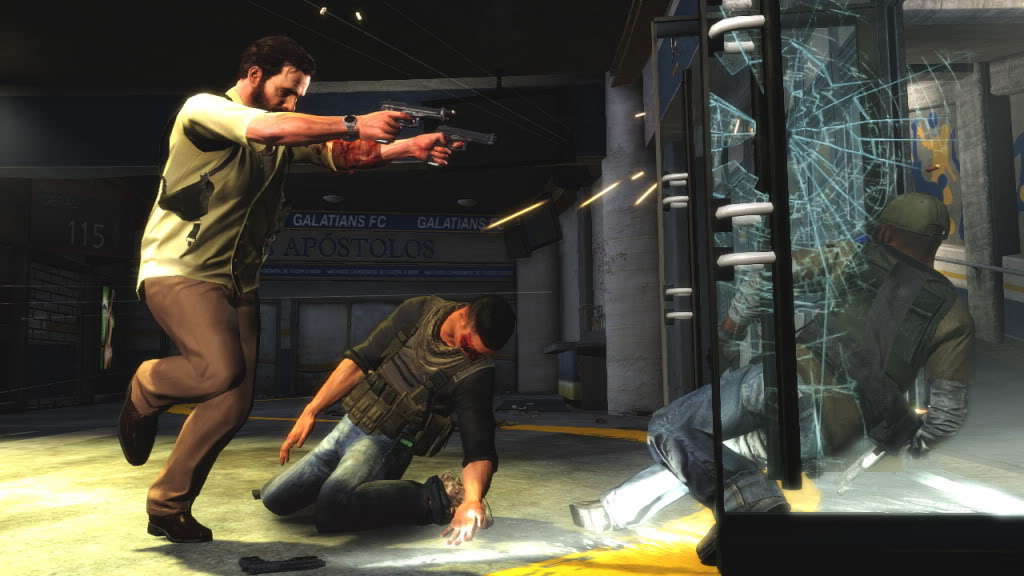
Recently, an explosion of Max Payne 3 ads has hit all over. This is fine. It actually makes me more excited for the game when I am at work, and I look out the window to see Max Payne's face on the side of a bus. What does bother me are all of the Gamestop ads and commercials saying that I can get an exclusive map if I preorder the game. 

Let me state that I understand how useful preordering a game can be to a customer. Some people like having a guaranteed copy on release day. But I don't like the aggressive nature of retailers trying to get customers to preorder titles.

To me, preordering a title is pointless. All you get from stores is a guaranteed copy on launch day and maybe an exclusive map or weapon. I used to preorder years ago until I realized that people who were walking in off the street asking for the same game would get a copy at launch as well. So I stopped preordering, and most of the time when I would go into a Gamestop on release day, not only do I get a copy of the game I'm looking for, I also tend to get the preorder bonus. If I can still get the bonus content and receive a copy on day one, what's the point of a preorder? And these so-called exclusive maps and weapons are nothing special. Do I really need the add-on graveyard map for Max Payne 3? No, I don't. I will be too busy experiencing Max's story to care. 


Some might argue that preordering is good for developers. Preorder numbers help them determine the demand for their upcoming releases. This might be true to some extent, but the way I see it, preorders are nothing more than a way for retailers to get early money from their customers. They make sales look good by being able to sell something that hasn't even come out yet. With Gamestop's relentless push for preorder numbers, every time you walk into a store, an employee harasses you about preordering a game. This is why I no longer shop there.

Enough about my hatred toward Gamestop. It's not the only retailer who pushes for these types of sales.

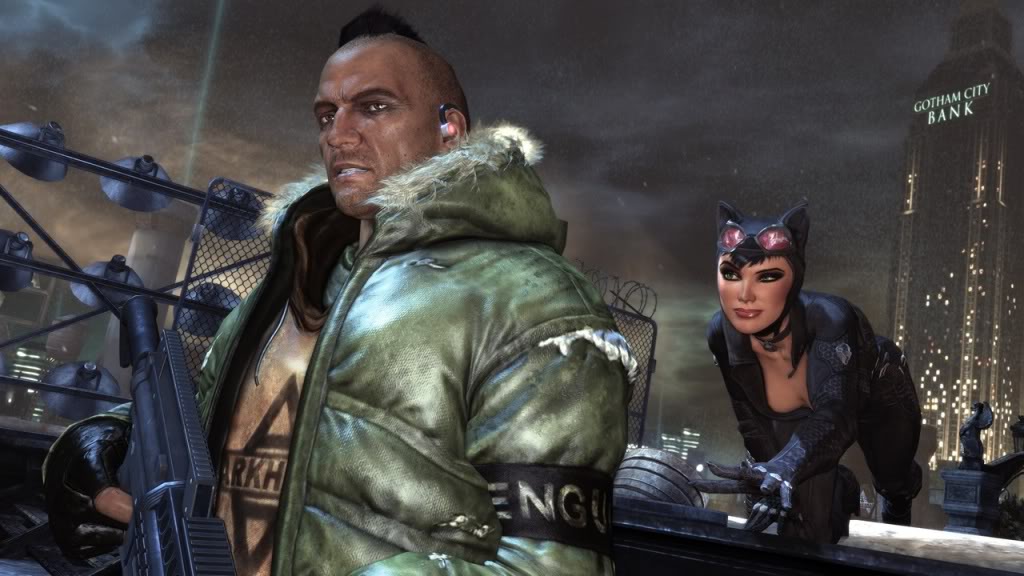
The preorder exclusives that retailers throw in our faces feel silly. Take Batman: Arkham City for example. Gamestop, Best Buy, Walmart, and Amazon all had different exclusive content for the game. These additions were nothing more than extra costumes or different characters for the challenge portion of the game. The content added nothing to the actual experience.

So why do outlets keep offering preorder content when the content itself is pointless? It must be because gamers keep preordering. I can't blame a customer for preordering their most anticipated titles, but are gamers actually reserving games for the bonuses alone? After a few months, these elements usually end up as downloadable content to all players. If these incentives are important to gamers, then a few developers have certainly noticed.
Batman Arkham City 1

Some exclusive-content deals aren't tied to preorders, just to new copies of a release. Both Arkham City and Kingdoms of Amalur: Reckoning went this route. If you bought these titles new, you would have access to a code that unlocked a playable Catwoman in Arkham City and a faction quest line in Reckoning. Both games used this tactic well. Neither of the elements were game breaking if you didn't have them, but they were still compelling enough to encourage customers to buy new. These efforts are smart moves by developers pushing for better sales. Say what you want about used games, but they are hurting studios and publishers. So if they want to reward players for buying new, they have every right to do so.

The difference here is that with pre-order exclusives, retailers are looking for fast cash while developers are still making the games in question. New-game bonuses, on the other hand, help developers sell more new copies while receiving higher sales. 


Agree? Disagree? Leave a comment below.

 
Problem? Report this post
BITMOB'S SPONSOR
Adsense-placeholder
Comments (18)
Default_picture
May 06, 2012

I think it's worth mentioning that not all pre-order bonus's are just cosmetic. Take Steam's preodrer bonus for purchasing MAx Payne 3 for example- Yes they have retro multiplayer avatar skins, a weapon pack, and some exclusive items  (Which I'm kind of against because it seems it might give an advantage to those who jump on the opportunity) but there's also the incentive of recieing Max Payne one and two for free. If you ask me, that (the free games) is a great way to reintroduce people to the series, as well as bring new players up to speed.

Default_picture
May 07, 2012

I had no idea Steam was offereing the first two Max Payne games for free. You're right that is a great incentive. Once again proves why Valve is five years ahead of everyone else in this industry.

Default_picture
May 10, 2012

....I already read this exact article idea and opinion on Kotaku today.

Cool story, bro. 

Default_picture
May 10, 2012

I have to say... eh. This is not a problem, or, even, an annoyance, really. It's just a thing that doesn't matter one way or the other, unless the bonus is good, then it's a good thing.

For Steam, another one of the great things about pre-ordering is that you'll often get to download the game as much as a week early, so you're not waiting in a download queue with a million other people all trying to download it on launch day, weeping in frustration as the 6 gigs takes hours to download through the clogged tubes.

Lolface
May 10, 2012

Preordering might not be neccesary in order to guarantee a copy, but if you're preordering from Gamestop, it guarantees that they won't open up a game, take the disk out of the case and throw it in a drawer, then sell you the game as new. Or, you could just shop at a store that doesn't do that.

Preorder bonuses don't neccesarily bother me. With Arkham City, Best Buy offered Robin as a playable character in the challenge mode, which I was all for. It doesn't make a huge difference, but I really like Robin, and the DLC seperatly would have cost $8. In addition, around the time that Arkham City was released, Best buy had a promotion where you preordered 5 games and got $100 back after you picked up all 5 games, so that was a bit of extra incentive to preorder games that I was going to buy at launch anyway.

Amazon also regularly offers $10 or so credit when preordering certain games.

Default_picture
May 10, 2012

I can't blame retailers for offering preorder incentives that cost them next to nothing and are essentially pointless.  Digital distributors such as Steam and low-cost shippers such as Amazon have the potential to completely eliminate many video game stores. Stores have to try to differentiate products that are identical to what everyone else is selling.

100media_imag0065
May 10, 2012

"Say what you want about used games, but they are hurting studios and publishers."

No, they aren't. This is why no data exists to prove it, because it simply isn't true. The only proof you need is this...Used business has literally been around as long as business itself. As far back as history can show us (I have studied a LOT of history), people have been selling their used items to others. More recently, we sell our cars. We sell our old TV's. We have garage sales and sell our old clothers and toasters.

We sell our old iPod or iPhone to help pay for a new one. We buy used cars to save some cash. We buy used DVD's and second hand records from that tiny music store on the corner. We as a human race have been buying as selling used products since, well, as long as history can show us. Name one industry that closed its doors because of used sales. Just one.

Not to drag this into the ground, but there is a reason people use the "Car" analogy. It is true. Ford is never going to remove the tires off of the used Pickup you just bought and demand money for it back. Samsung isn't going to block your used TV from working until you pay them. General Mills isn't going to take the sugar off of your cereal and demand money for it back. Every single one of these companies has massive costs associated with their products after they leave the warehouse, and video games are no different.

Yet, the video game companies claim that server costs are too expensive and Online Passes are needed. Funny how no other industry on the face of the planet needs to steal from buyers of used products by removing features and demanding money for their return. Funny how every other business manages to do just fine, even if their products are available for purcahse used all around the world. I don't see anyone worrying about the poor film editor who won't get his royalites check from the production company on the used DVD you bought the other day.

Yet, I am supposed to feel bad for buying my games used? No, never. Used business does not hurt the video game industry. It was a lie that they started over a decade ago, and it has gotten out of control. They are lying to you and manipulating you to feel sorry for them. They want you to buy new all the time at $60 a pop, and feel terrible about yourself if you don't. Don't fall for the song and dance. The smartest industries in the world figured out how to profit off of their own used products after they leave the warehouse, like the auto industry.

What has the video game industry done besides hassle, lie to, manipulate, rob, and deceive the gamer at every opportunity? When you buy used, you are contributing to the economy, and that is all that matters.

Default_picture
May 11, 2012

A couple things...

Why are you buying used cereal? Do you get it from the waste reclamation center? How much sugar is in poop, really?

About online passes, however, servers ARE expensive. I want you to take a used car to the appropriate dealership and see if they'll honor the warranty on it. Go ahead, see what happens.

Obligatory Penny Arcade: http://www.penny-arcade.com/comic/2010/8/25/

And accompanying news post: http://www.penny-arcade.com/2010/8/25/

Robsavillo
May 11, 2012

Heh. It's funny you should link to that Penny Arcade comic/editorial. I wrote something around its publication here on Bitmob deconstructing their arguments.

But to your point about servers: If I buy a game, I am using the game's servers. But if I sell a game to you, I am no longer using the game's servers -- you are. From the perspective of the publisher, what difference does it make that either you or me own the game? The number of customers it needs to serve remains exactly the same: one.

And, yes, warranties do transfer owners for cars and many other goods. I bought a used iPhone recently and had to send it in for repair. Guess what? The original 1-year hardware warranty transferred to me. No "online pass"-like additional fees applied.

Default_picture
May 11, 2012

I never feel bad for buying used games. I'll buy a used game if it is a good deal. However, I am not going to wait six months to buy Mass Effect 3 just so I can save $10 - $20. I want the game when it comes out.

Secondly, you say there is no proof that used games hurt the publishers and studios. Yet you offer no proof that it doesn't hurt them. You give examples of other industries, thats nice and all but they aren't the video game industry. Just because something works with cars does not mean it can work with video games.

Lastly, you say that humans have been selling used items for a long time. This is true, but here is the difference that you are missing. None of those products that you mention are digital. Once these physical produts are created the company who made them no longer have control over them after they are sold. With digital media however, this changes. Publishers can still control THEIR product. Look at the music industry and how people who are pirating "used" music has almost destroyed their industry. 

Robsavillo
May 11, 2012

Mark, you have a couple misconceptions there. I'd encourage you to look at what actual academic studies on filesharing say, not what the RIAA claims (without providing any sort of suppporting evidence). Zeropaid has been running an ongoing series looking at these (particularly of interest would be part 2, "P2P Has No Effect on Music Sales").

(P.S. One doesn't need to prove a negative -- if the games industry claims that used games hurt them, then it is up to them to prove it. They have yet to do so.)

Default_picture
May 11, 2012

Rob, you're missing the point. Why should they allow you to use their servers when you are not their customer? It's like walking into a restaurant and saying, "Hey, I bought this cheeseburger down the street, can I eat it at one of your tables?" (Or, I suppose more precisely, "Hey, I bought this cheeseburger from a guy coming out of your restaurant, can I eat it at one of your tables?")

And, while some warranties do transfer, a lot of warranties do not. Many car warranties, for example, do not transfer ownership, which is one of many reasons to read all the fine print when buying a used car (or a used anything else, for that matter). A lot of the warranties that do transfer don't transfer completely, and you'll be "under warranty" but on the hook for parts.

Default_picture
May 11, 2012

Fair points Rob. I would like to take that article "P2P has no effect on Music Sales" and apply it to the Video game industry. At the end, Drew Wilson states, "In essence, the music industry needs to change its buisness model to adapt to the technological realities of today". Isn't that what publishers like EA are doing with the online passes? They are finding new innovative ways to make money on their products. Even if the used game market is not hurting the publishers; is it wrong for them to add new ways to make money? 

Robsavillo
May 11, 2012

Sam, but you are. (And by your logic, you're not a customer of the publisher when you buy new, either. You're a customer of a retail chain.) Publishers aren't doing themselves any favors by pretending otherwise. I can't think of many successful businesses that make a point of being antagonistic toward consumers.

But the warranty discussion is merely a side point. I've spoken to Brad Wardell (CEO, Stardock) about this -- solutions exists. Server vitualization costs nearly nothing and is scalable.

Mark, no, it's not wrong in a moral sense. But it doesn't make me want to buy from them. I hope the industry takes a more consumer-friendly approach in the future (see the film industry, which continually adds value to home video purchases, much unlike the trajectory I see the games industry on).

Default_picture
May 11, 2012

When you buy new, money goes to the publisher, therefore, you are a customer of the publisher.

When you buy used, money does not go to the publisher.

If you are not giving money to the publisher, you are not their customer. QED

Robsavillo
May 11, 2012

Unless you're buying wholesale from the publisher, your money doesn't go to them. It goes to the retailer. The retailer already paid for all those copies in its stock. It is reselling (new!) those games to you. (And yes, I'm sure that in the case of GameStop, the retailer uses money earned from used sales to buy new product from publishers to sell in its stores. Shock!) Your whole line of reasoning is incredibly narrow and simplifies a complex supply-chain dynamic.

Your logic is flawed still, though, because it completely ignores the entire phenomenon of branding, which is vitally important to any business.

And I'm done.

Default_picture
May 11, 2012

Thing is, publishers are quick to devise ways to hurt the second-hand buyer; buy they're still figuring out how to reward the original buyer.

May 11, 2012

" retailers are looking for fast cash while developers are still making the games in question"

That $5 dollar deposit isn't being thrown into a vault where they sit there and just start counting it. It is just like any form of deposit that is refundable if you decide to not pikc it up. The $5 is collateral if you decide not ot pick it up, wihch every retailer does a great job of contacting you and reminding you to come get your game.

It isn't like the retailers are charing you $5 to guaratnee a copy at their store and then when you walk in they charge you the full price of the game. They earn that money the moment you pick it up, or give it back the moment you cancel it. 

I worked at Gamestop for five years and only once did we cancel reserves, but that was in 2011 and we were cancelling Madden 2007 or any sports game from around that time. We then sent them an e-mail that gives them the $5 to every game. So yes, at that point Gamestop did cash in that reserve, but they didn't pick it up for four years even after constant reminders, but at least they still have it to spend on something else. 

You must log in to post a comment. Please register if you do not have an account yet.