
Still not a bad word: "Gamer"

Me
Friday, March 18, 2011
EDITOR'S NOTEfrom Demian Linn

Post-PAX, Dennis considers the fluid definition of "gamer" and why he's not ready to abandon the term. This ever-simmering debate has bubbled up a lot lately -- for more on a related topic, check out Zynga and Rovio's assault on the "casual gamer" term.
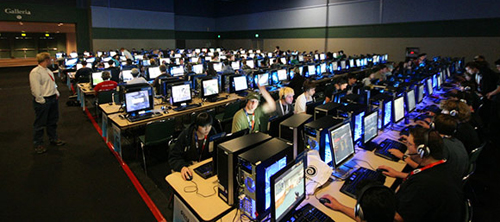
PC Gamers at PAX

In her column on Kotaku this month, which anyone invested in gamer culture really ought to make time to read, Leigh Alexander argues that the word “gamer” has become more divisive than useful for our culture, tied as it is to narrow definitions that don’t embrace the wide variety of gamers. Perhaps it was the column's subtitle, “‘Gamer,’ No More,” that made me think Alexander was suggesting we abandon the word "gamer" altogether.

When I asked her about that, she responded that her point was to let the word mean what it means to me, and let it mean what it means to everyone else, and not worry about it. I do worry about it, though, because the word “gamer” is part of my self-definition, and I imagine that a large part if not most of the Bitmob audience feels the same way. Therefore, I want the word to mean something concrete at some level and in some context, even if it stretches to include multiple definitions outside of that one, basic meaning.


A friend of mine recently asked me how I defined a "hardcore gamer." I told him, "Someone who plays a lot of video games, without worrying about what kind of games they are." Farmville is certainly some kind of video game, and I know people who play it for three or four hours a day. I think that's fairly defined as "hardcore."

But then I thought about PAX, and how it is meant to be a celebration of "gamer culture.” They’re not just talking about video games. Collectible card games, board games, tabletop wargames, and pen-and-paper role-playing games all have their place and representation at PAX. So, is a "hardcore gamer" someone who is really, really into any of those kinds of games?

On the one hand, I have no problem with “gamer” meaning “video gamer” by default, because I’ve waited a long time to have my chosen pastime validated in any larger sense. When I was a kid, there was no word for someone who went to the arcade to drop first quarters, and then tokens, into the coin-op machines. The people who bought Atari 2600s, and then Commodore 64s, and then Nintendo Entertainment Systems weren't part of a group; not in any recognized way. Maybe they were "people who like video games," but more often than not they probably would have just been "nerds." Social rejects. The bottom of the youth culture barrel.

Others have surely done a better job of writing about the rise of geek culture than I could, so I'll just take it for granted that everyone here in the Bitmob audience realizes the degree to which the tables have turned, even if they're young enough not to know what a Commodore 64 was, or how the rubber grips always, ALWAYS, fell off those damned Atari 2600 joysticks. I think a big reason why those tables have turned is because we finally have a word for ourselves collectively and the culture of which we are a part: "gamer." And because I so easily fit into the normative use of the word as “someone who plays video games,” I’m okay with maintaining the status quo on a selfish level.

On the other hand, I think about Wil Wheaton's keynote speech at PAX East 2010, which reflected on the idea that everyone who had assembled for the event was a gamer, and they were all gathered at PAX to celebrate their communal, gamer culture. He wasn’t just talking about video games. He spent a lot of time talking about playing Dungeons & Dragons with his childhood friends, and how those friendships stood the test of time into the present day. I felt the spirit of community he was trying to convey, and that’s what I think we need to get at with the word “gamer.”

Yet even at PAX, video games define the space. Almost all of the panels have to do with video games. The size of the exhibition floor, which is almost entirely populated by video game publishers and developers, is massive compared to the smaller spaces allotted to collectible card games, tabletop role-playing games, wargames, and board games. My wife, the social justice activist, who is ever curious about the experiences of marginalized groups of people, says that she spoke to plenty of “analog gamers” who felt ostracized at PAX, or who, after stating that they were attending the Expo mostly to play analog games, were quick to add, “But I play video games, too.”

I don’t see the word “gamer” exiting our lexicon anytime in the near future. The word itself may even be the hinge upon which our culture revolves. I’m therefore not satisfied with the idea of just letting the word mean whatever it wants to mean to anyone and not worrying about it, as Alexander suggests, because while I agree with the idea conceptually, I don’t think that’s enough. I also disagree that “gamers” aren’t one, unified audience, because at some basic level, I feel that we are.

The guy playing Magic: The Gathering has something very specific in common with the guy playing Halo, and the guy painting Warmachine models, and the guys playing Risk, and the LARPers wearing full period costume and hitting each other with fake swords. I don’t know what that commonality is, but I feel it exists because I believe in the idea of “gamer culture” that PAX espouses, and I would not point at any of these groups of gamers who aren’t primarily video gamers and say that they didn’t belong at PAX.

If the word “gamer” has become troublesome for invested cultural observers like Leigh Alexander, I think that’s an alarm bell that needs to be recognized and acted upon. If cultural observers can figure out where the common bonds lie between all the different kinds of gamers that are part of our collective group, we can claim ownership of the word and define it accordingly. Because I have no intention of ever giving up my identity as a “gamer,” it’s a conversation I’d like to have.


Dennis Scimeca is a freelance writer from Boston, MA. He has written for Gamasutra, GamePro, The Escapist, G4TV.com, Joystick Division, and @Gamer magazine, and maintains a blog at punchingsnakes.com. Follow him on Twitter: @DennisScimeca. First Person is his weekly column on Bitmob.

 
Problem? Report this post
BITMOB'S SPONSOR
Adsense-placeholder
Comments (13)
Photo_159
March 18, 2011

I think I have to agree with Leigh. For me “gamer” is a term that I have never particularly cared for - but that doesn’t mean I think it’s wrong to take some kind of pride in applying the term to yourself. Like Leigh mentioned, the word is going to have all kinds of connotations and meanings according to different people.

The term is ambiguous as you pointed out above with examples of all the variations of people who play games.

I play a ton of games but if somebody asks me if I am “gamer,” I generally try to say no in a polite way or just say, “yeah something like that.” The word in general is just really silly to me. We don’t call comic book enthusiasts “comic-ers.”

Sure, I participate in game cultural on the regular but personally I feel the term “gamer” really lacks to describe anything significant about who I am.

Default_picture
March 18, 2011

This reminds me of the casual vs. core gamer debate. Whatever we call them, I've found that "casual gamers" care nothing for labels. "Core gamers" are usually the ones who care about the distinction. I could be wrong, but Farmville players (at least those who *only* play Farmville) probably don't care about the "gamer" title. I'm a proud gamer but I recognize that others simply have no opinion on the matter. 

Default_picture
March 19, 2011

When I hear the word gamer I think of someone who defines themself by playing videogames.  That is, someone who is really boring.

Scott_pilgrim_avatar
March 19, 2011

Evan raises one of the points I would have made, and it's a good one. Why do we insist on labeling people who play video games when we don't for other mediums? Sure "film buff" and "book worm" exist, but those are old terms that hardly ever became as popular as "gamer" already is. Arguably, however, we do have terms for people who read comics; just ask my comics class at the beginning of the semester how they would label people who read comics. "Nerds" is the most common response. In some ways, "gamer" is a step up, haha!

I will say this for the debate. Whether we do or do not have a label is secondary to whether or not we unite as a community. When Scott McCloud wrote Understanding Comics in '91, he was as much about explaining the basics of comics to the masses as he was about showing creators that they were all on the same team. And this was major step forward. Anything that makes us feel like we're separated from one another is, in my opinion, a step back. It's for this reason that I hate the "casual vs. core" debate or assuming that analogue games are somehow fundamentally different from digital ones. Equally frustrating is when someone tries to remove audiences from the community, such as the recent Angry Birds' creator's assertion that console gaming is dead or David Cage's claims that Heavy Rain is the new model by which games should be made. They try to redefine "gamer" as it suits them, and that's where the term becomes unhelpful.

Bithead
March 19, 2011

I agree this is a conversation worth having, but only so that arbitrary, inconsequential labels don't continue to separate the larger community in the same way "hardcore" and "casual" did/do.  I'm with Evan, Ben, and Ms. Alexander...  we all have opinions on what certains words mean or connote, and no one can come in and define them in a singular, universal way.

Also: I disagree with the notion that "The people who bought Atari 2600s, and then Commodore 64s, and then Nintendo Entertainment Systems weren't part of a group; not in any recognized way. Maybe they were 'people who like video games,' but more often than not they probably would have just been 'nerds.' Social rejects. The bottom of the youth culture barrel."  A bit harsh, no?  Most of my friends grew up playing NES, and we were the norm, everyone from the future jocks to class president to art-school weirdo.  I don't think there's some public backlash against people that play or played video games.  But maybe I didn't see it, being within the group itself.  Who knows.  All I know: PAX East '11 was awesome.

Me
March 19, 2011

@ Ben - I don't think it's a label. I think it's a word that the community has accepted amongst themselves. "Label" implies imposition from without, IMHO.

This sort of thing doesn't happen in a vacuum. If the word has been accepted, there's a reason why...and I am all for hearing other theories besides my own, which is based on personal experience rather than evidence...but there's a reason the word stuck. Maybe that's another conversation altogether, but I've tossed out my hypothesis. :)

@Jon - I'll cede that childhood experience of playing video games is going to vary widely from person to person. When I was a kid, video games hadn't mainstreamed enough yet for the sorts of conditions you're describing to hold true. It wasn't until I was in college that I began to see people who I wouldn't have described as "gamers" back then playing mostly sports games on the SNES.

I suspect that I'm much older than most of you, however. Where's my cane...

Scott_pilgrim_avatar
March 19, 2011

That's a fair point, Dennis. However, I do sort of feel the term "gamer" can be imposed from without, since the community (as this debate shows) has not made a blanket adoption of it.

Sexy_beast
March 19, 2011

I find it insane that people still debate the meaning/applicability of the word "gamer" in this day and age. It's a dead term and has almost no use during a time when over half of the U.S. population plays video games. People who watch films aren't called "film watchers" because the medium has become so ingrained into the culture that such a term wouldn't represent an individual group; the same should be considered for the word "gamer".

The only reason this term still exists is because there was a sense of pride behind playing games, especially if one was a social outcast and wasn't very good at other things -- especially group activities or team sports. Now that video games have become more mainstream, that identity is being adopted by the very people that "gamers" proudly distinguished themselves from, and they're merely fighting to hold on to whatever significance they can find for themselves within this hobby.

I say we just let it go. Who cares?

Me
March 19, 2011

I don't think that these comparisons to people who only watch movies are appropriate. Just like I wouldn't call someone who plays a video game once every two months a gamer.

People who have devotion to film the way gamers have devotion to games are usually called "film buffs." There actually are comparable terms to people who get equally ensconsed in a culture around a leisure time activity. Buffs, connisseurs, etc.

I disagree with the notion that games are mainstreamed. It's coming, but it's not there yet. I'll reconsider the position when I see video games being discussed in the entertainment sections of newspapers, and not the business and technology sections, for example.

Sexy_beast
March 19, 2011

We already have a term that is synonymous with "film buff", it's called a "hardcore gamer". The majority of popular hobbies and passtimes out there have their special words for people who take extreme interest in those hobbies and passtimes. Again, we no longer need a word like "gamer", especially due to the fact that over half of the U.S. population plays games. We don't even need to label them as "casual" either, because, by default, anyone who isn't "hardcore" is casual, anyhow. Our parents are "casual moviegoers". The majority of people out there are "casual book readers".

Just because games don't get the same amount of attention (or the right kind) as other mediums, that doesn't mean they have yet to reach mainstream status. Mainstream is another word for something that is a "common trend", and games have become common enough in the American lifestyle to be considered as much a part of it as film and music. Perhaps not everyone plays games are regularly as you and I do, but they play them, nonetheless. Even so, video games are now one of the most lucrative industries in the U.S., even more so than film.

And the reason why games aren't discussed in newspapers is because the majority demographic that plays games obviously doesn't get any of their news from a source like the paper, so there's no incentive to feature such material in them. That's pretty obvious, and isn't even close to an indication that games aren't "mainstream" enough.

"Gamer" is a useless term, in this day and age, that does nothing but create confusion and needless debate as to what constitutes as a "real gamer". Hardcore gamers should just let this go.

Photo_159
March 19, 2011

To clarify I grew up with a 2600 stick in one hand and an NES controller in the other.  I have been playing as many games as I can get my hands on ever since. On average I consume roughly the same amount of games at the same pace as someone who reviews games for a living. (Of course instead of making way for review copies I usually hit up the backlog while I am waiting for an official release date)

Needless to say, I also remember a time when the term gamer didn’t exist. I am 25. Now you could maybe argue that I am still too young to have a valid opinion on the subject or you could acknowledge that I play games and have (at the very least) a decent understanding about game culture without having to label myself a “gamer.”

For me the term itself stems from a time during the growth of interactive media where mass media outlets and marketers needed to label and categorize a new generation of consumers.

Places like Hot Topic and EB games needed an edgy buzz word to cannibalize on a cultural phenomenon like punk rock or gaming and give a false sense of meaning or community to make it cool to buy t shirts with mario on them. Thus “gamer” is born.

That doesn’t mean the term hasn’t transformed into something else and taken on new values since it’s inception but it does still fee a little bit dirty to me. My solution is to acknowledge the term and other peoples definition of the term but personally try to avoid using the word to describe myself or other people who enjoy games in any form.

As for games being mainstreamed - I think we are almost beyond that point. After launch, a single Call of Duty title generates more revenue then any other piece of media in history. I also don’t know how much more main stream you can get after Master Chief has been on slurpy cups, game trailers are played in movie theaters, and even Entertainment Weekly has a top ten games of the year list.

Sure, there is a difference between people who play games every 2 months and someone who is passionately in love with the industry but I don’t think the differentiating term is “gamer.”
 

Sexy_beast
March 19, 2011

I love you, Evan.

Me
March 20, 2011

@Evan - I'd just say that I'm over a decade older than you are and so our perspectives on this are very different. It's entirely possible that you weren't playing games during the time when we had no established culture, short of whatever existed in the arcades that were pretty much not what they were by the time you probably got into them. Hence the word has more meaning to me because I don't take it for granted that we have a culture at all, if that makes sense. Your perspective on the question is just as valid, but it's also informed by growing up at a time when games were much more mainstreamed than they were when I first started gaming. My father bought me an Atari 2600 the day the system was released. Yes, I am old. :)

You must log in to post a comment. Please register if you do not have an account yet.