Home
Home

The Bitmob community has spoken (see recent articles by Josiah Renaudin, Steven Sukkau, and staff writer Rus McLaughlin), and the idea that games have to be fun to also be good is again under question. One might conclude that we're all just a bunch of killjoys, but I say that we're on to something.
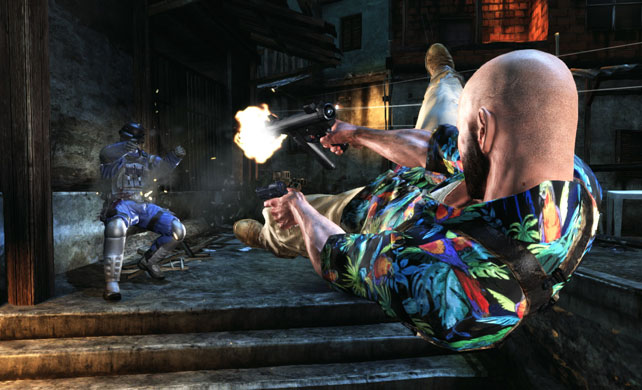
Taking a glance at all the Max Payne 3 coverage recently, I began to notice an odd disconnect: People were claiming the story was dark and rich with Rockstar's trademark social commentary, but when Max Payne 3 cut to gameplay, I saw a man in a Hawiian shirt dual weilding uzis and flying through the air in slow motion.
That's not something I neccessarily associate with dark, audience-challenging stories. Max Payne looks like a great game, don't get me wrong, but it left me longing for a game that was able to truly take itself seriously.
Dear Esther, the latest genre-defying experiment from The Chinese Room, is a perfect example of this kind of movement. Anyone who's given it a cursory glance can tell you it will leave you asking yourself: "Did I just play a game?" For some, this will fill them with a sense of wonder and thoughtfulness; others are left wanting that hour and a half of their lives back (not to mention their 10 bucks).
For those of you who haven't given it a look, it's best explained as a sort of adventure game. You'll treck across an abandoned island as poetic prose narrates a very confusing but intruiging tale.
One thing stuck out to me: The most significant criticism of the game was that it simply wasn't fun.
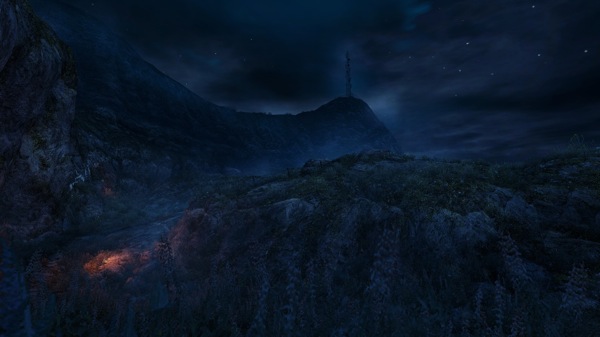
There are a myriad of issues leading to this, I understand. The walk speed is painstakingly slow. Your interaction with the world is limited, and there's very little to actually do as you hike up through the island.
All these things though are key to the experience; to enjoy it, you have to sit back and soak it in. You could say that it's a rollercoaster, but that would imply speed and predictability. Dear Esther is slow and borderline Lynchian. The poetry of it all sometimes felt a little pretentious to me, and though it didn't immediately suck me in, I couldn't help but enjoy the experience. I was enjoying it without having fun.
Why is that significant? Shouldn't enjoyment be directly related to fun? Well, no -- not really. A couple years ago, I went to see the film adaptation of Cormac McCarthy's The Road. When the credits rolled, I felt awful. I got home and went straight to bed (at four in the afternoon). But the next day, I couldn't stop thinking about it. I realized that as claustrophobically depressing as the movie was, I actually enjoyed it.
It's that kind of mature storytelling that pushes a novel into "literature" and a film into a "classic." Shindler's List. The Shawshank Redemption. 1984. None of them are "fun," but all of them are powerful, gripping experiences.
Now, many people will point out here that games are not films or books or music, and they would be right. Yes, games should be judged on their own merits, but the stories we tell are the same in any medium. The problem we face with games is that these stories are forced around the skeleton of gameplay and lose something in the process. What is so great about Dear Esther is not that it sounds like a poem or looks like an art film but that it does these things while allowing you to explore (in whatever limited capacity) the world the developer has created with the character you control. You play the game.
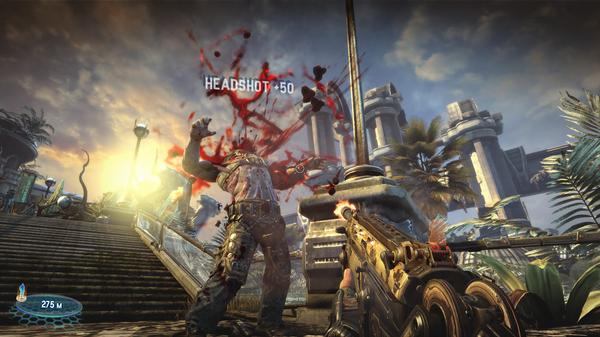
As I write this I'm getting ready to play Heavy Rain. Looking at coverage for it, I can't think for a minute that the game will be "fun," but I'm pretty sure I'll enjoy it. Now, I love to have a good time. Having just finished Bulletstorm, I can confirm that there's definitely still a huge place to celebrate the sheer glee of reckless power that only games can give you, but maybe not everything needs to be that way.
Games started as toys -- inoffensive distractions to amuse computer scientists and their families -- but among the week of repetitive-strain-injury-inducing Diablo runs and the twitch shooting of Max Payne, I'm waiting for something a little slower.
Super Mario Bros., the mascot of gaming to the masses, was a great jumping off point: limitlessly approachable and fun at its very core. But I can't wait for the day when we're producing such rich and engrossing stories that how "fun" the game is won't matter.