Home
Home

Editor's note: Some developers secretly or not-so-secretly think you better know your B-splines from your framebuffers before you pass judgment on their games. But the history of criticism across multiple artistic mediums says otherwise. Michael weighs in.... -Demian
A few weeks ago, I sat in on the Grubb on Games live stream, hosted by Bitmob's own Jeffrey Michael Grubb. I left for a bit to take a break, and when I came back, Jeff was playing an odd Flash game that I had never seen before. I wasn’t quite sure what to make of it. The art style consisted mostly of dull greys and blacks, and from what I could tell, the character's movement lacked precision. “What is this?� I asked. “Rocketbirds Revolution,� several people in the chat channel replied.
“This game looks underwhelming,� I declared. Jeff and a few others asked if I was trolling, which confused me at the time. As it turns out, one of the people viewing the stream was an artist for Rocketbirds Revolution, and I had just insulted his game based on a three-minute visual demo.
I felt really raw about it. I know what it's like to have people trash your work, and to have it done to your face is one of the worst feelings a creative type will ever experience. My guilt worked its way past the foot in my mouth, stirring up some deeper issues about the role of critics in the game industry. What gives me -- or anyone else in the enthusiast press, for that matter -- the right to critique the work of others, especially when most of us lack the skill to make our own games? Would I still have said what I said if I knew a member of the development team was in the room? And really, how fair was it for me to form an opinion in such a short time, without having touched the game personally?
I thought about it over the past few days. Eventually, I came to some conclusions.
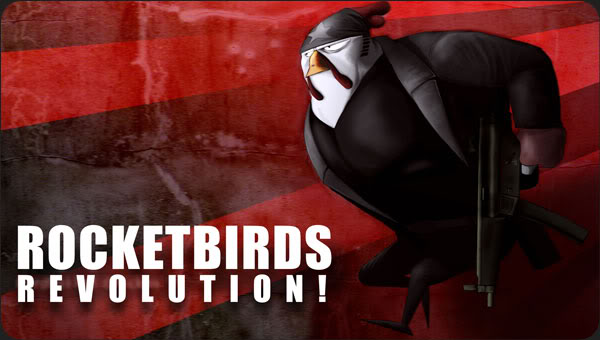
Flash game, or pathway to catharsis? You decide.
Read more >>