Home
Home
Paul's in-depth look at the burgeoning trend of game cloning -- and the relationship between Radical Fishing and Ninja Fishing in particular -- is a fascinating read.
In mid-August, Ninja Fishing hit #7 in the iPhone App Store. That’s Angry Birds territory. And no matter which side you fall on, the game owes at least some of its success to Vlambeer on some level. Thousands upon thousands of dollars might've wound up in Vlambeer's coffers if things had been resolved differently.
Clearly, Vlambeer doesn't see money as a motivating factor. Sure, they’re upset that what they consider their idea, their game -- unleashed in the App Store by a rival company, spreading like wildfire and inspiring a host of fanatical tweets and comments, receiving mountains of acclaim for being as addictive as heroin by thousands of fans clamoring for new achievements and content -- is lining the pockets of total strangers.
As indie developers, the mad scientists and starving artists of the industry, guys who spend their days trying to make filet mignon games with the McDouble with Cheese cash they have to spend, yeah -- they’re definitely pissed about that. But the larger, more disturbing issue at the heart of the dispute between Vlambeer and Gamenauts, though, is the effect of stories like this on this corner of the industry’s brain trust.
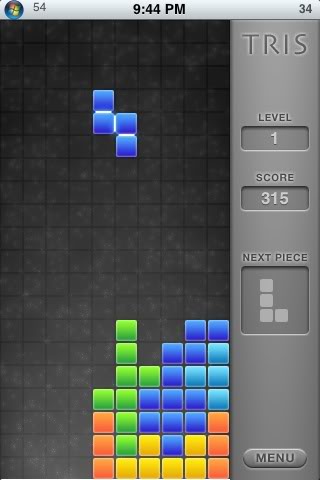
The democratization of cheap and user-friendly design software means that just about anyone with enough time on their hands can throw a simple mobile game together. But with such a basic level of know-how and zero creative vision, these armchair Miyamotos usually end up remaking shameless copies of existing pocket games -- Schmetrises and Shiny Wings and Schmejeweled Shlitzes.
Most indie developers see no problem with this. The low barrier for entry makes the mobile market appealing to hobbyists and start-ups alike. Annoying when you‘re cycling through the App Store, sure -- but innocuous.
Ismail is well aware of this trend. "We've gotten emails from fans willing to remake, port, and clone our work," he says. "We always decided on a per-case basis whether we'd feel comfortable with that. It might be naïve , but you expect people to be polite and ask.”
It does strike me as a bit naïve in this day and age. New developers who mean serious business enter the mobile space every day, and not all of them have million-dollar ideas. But they see this attitude fostered by years of games culture, this pervasive idea that hey, it's not about the money, man, cause we're just makin' games and doin' what we love and isn't this awesome? -- has created a business climate that has no precedent in any other form of entertainment. A climate where it's OK to just, poof -- let's say, borrow -- from somebody else, with no legal recourse. We're all gamers, dude; it's cool.
Despite all the outrage and accusations, that may indeed be a reasonable attitude. While most of the Internet saw Vlambeer as the victim of foul play, an independent game developer named Ephraim Knight offered a dissenting opinion in his Gamasutra blog post, "Copying Mechanics Isn’t Theft, Nor Is It Infringement":
"...the entirety of game design's history has been chock full of wholesale copying of mechanics with more often than not only minor changes. To claim that Gamenauts acted unethically is to claim that Square, Blizzard, EA, Activision, Bungie, Sony, and countless other big name and smaller name companies acted unethically when they copied game mechanics into their own games and found success.
What Gamenauts did was find a game they liked that was only available on the browser. They saw there was no similar game on the iPhone and no indication that that game was coming to the iPhone. So they used their considerable resources...and made it happen. They saw an untapped market and tapped it. That is not unethical. That is good business.
This is the state of the game industry. There is no reason why it should change. Did a company get beat to a market by a similar game? Yes, but that happens every day in this industry.
We don't need added protection through copyright or patents. We just need to suck it up and do what we do best and make games."
Knight's argument seems sound. Game makers have always done this; we're just condemning it now because this is a story about the big guy ripping off the little guy. Of course everybody wants to see the little guy succeed.
What kind of world would the games industry be if you could copyright a set of gameplay mechanics? Think if such a thing existed in, say, the 1970s. Could it have erased decades of progress? Would first-person shooters or platformers still be around? Wouldn’t entire genres disappear?
It’d be madness. The mod community, "sequelitis," the '80s coin-op wars -- at a glance, it's like the whole business was founded on a bunch of good-natured nerds, pilfering little ideas from one another in good faith, confident that these harmless measures were for the greater good, the benefit of the industry, the advancement of a burgeoning medium with exciting frontiers and innumerable possibilities.
So much less was at stake in the old days. Those iterative strides are a product of a bygone era where developers and modders competed for market share in pizza parlors and dark corners of the Internet. Today, every person on the planet with a smartphone is a potential customer. Small development teams dump their lives and their savings out onto a high-stakes battlefield where blog hits and phrases like "New and Noteworthy" and "Average Metacritic rating" decide who gets to be a multimillion-dollar entertainment mogul -- the new Notch, the new Rovio. The game industry has changed a lot and attitudes towards intellectual property have not. But does that mean it's time for reform?
Something ironic occurs to me as I scan hundreds of responses to Knight's post: none of these folks can easily imagine a world where game designers are constrained creatively and still make great games. I can't help but think, hasn't Vlambeer already done it by choice?
Rami Ismail says he knows there's a difference between how games inspire each other and what Gamenauts did with Ninja Fishing. "Inspired games bring new insights and solutions to design problems that had already been solved. Inspiration is seeing what is there and building ideas on top of that. Cloning is seeing what is there and building a copy of that -- when you're just looking at the solutions to the problems someone else figured out, sometimes without even knowing what the problem was in the first place."
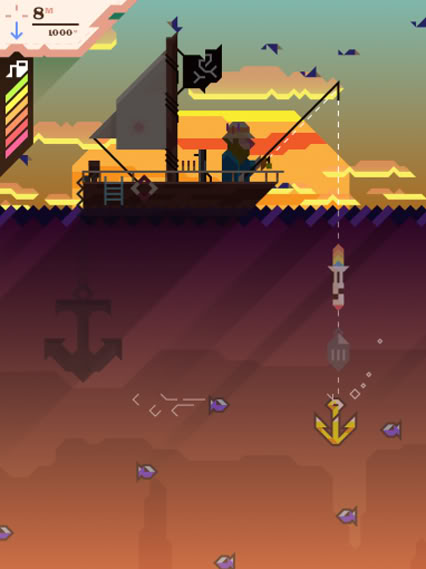
Greg Wohlwend, Ridiculous Fishing’s artist, put it more bluntly on his blog:
"Why can't (Gamenauts') game be about an alien construction worker in a huge drilling machine plunging into an endless skyscraper to retrieve office materials/workers/computers, then tossing them in the sky and picking them out of the air with nail guns? I came up with that just now and it took me about 30 seconds.
They didn't change the theme because they have no idea, really, why the game was successful in the first place. And if they do, they certainly have no clue how to reach it on their own, in earnest. If they change too much about a game they are [ripping off,] it might not have everything in it that made it a success in the first place...this is all about capitalizing on Vlambeer's creativity and prowess as top-shelf game designers."
In a later entry, Wohlwend describes his difficulty in moving past the Gamenauts debacle:
"I wake up and I can't (work on) Ridiculous Fishing without being reminded of this ugliness.... There are chunks of time, maybe 20 minutes, where I can try to forget. Those are nice but have been getting infrequent.... Today was especially hard. Ninja Fishing reached #7 in the App Store and it upset me more than I thought anything in this business could. I broke down."
In the comments section of his Gamasutra blog, Knight made yet another point that resonated with me: Radical Fishing is a really, really simple game. Ostensibly speaking, there's not much to it. Drop a line, catch some fish, blast away. It's an idea that seems ripe for extraction. If Vlambeer didn't want their game to be copied, why not spend some time making the game more elaborate?
I could sense Ismail's frustration in his answer. "Our mechanics ARE elaborate. They're endlessly prototyped. They're crafted until they're perfect."
Why not color them up, I asked. Add more narrative elements, different features? His disdain for the notion that, somehow, their creative achievement is null because it was copied easily was palpable. "Our games are an expression of our personalities and our experiences and unlike -- say -- a cloning company, we can't just randomly slap on complex storylines or more design elements or pirates, zombies, plants, birds, or ninjas. We make what we make because we feel it's right."
"If we have to force ourselves into some mold because otherwise someone might steal our work, we might as well just quit."
 1
2
1
2