Home
Home

Matt smartly breaks down the newly released Spec Ops: The Line and examines how this critically lauded first-person shooter falls short of greatness.
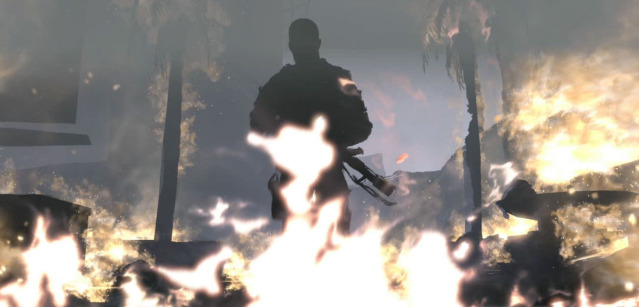
This article contains spoilers for Spec Ops: The Line.
Several years ago, Roger Ebert made a lot of people mad by saying that he believed video games could not be art. Many in the gaming community responded, unfortunately, with the same emotional effect as a kid being told by his parents that his chosen career is not a real job. Prideful resistance took hold, and gamers began trying and come up with every possible argument to prove him wrong -- many of which are so flimsy and nonsensical as to make their stance seem even more unreasonable.
Over the past week, I've seen many people hold up Spec Ops: The Line as one such argument. It has been praised for its story, and some have even gone so far as to call it our generation's Apocalypse Now. Even the lead writer of the game said in an interview before the release that this game was going to try and do things with story that had never been done before.
The community is holding this title up as a triumph for games as art, but doing so only makes Ebert's position stronger. If we use this title as an example of the medium's potential, all we prove is that games are merely capable of poor ripoffs of better works.
The creators of Spec Ops have said repeatedly that this game is inspired by Apocalypse Now, so no one can be faulted for comparing the quality of the two works. In many ways, this game falls short of the standard set by Francis Ford Coppola's war epic.
In particular, I found the lack of humanization of secondary characters to be a big problem. Spec Ops relies too much on assumed patriotism in order to make the player feel uneasy, with only a few lines of bad dialog said by guards caught unaware to try and make the waves of enemies feel like anything more than guns attached to American uniforms. Coppola spends a good solid hour letting us get to know main character Benjamin L. Willard and his crew before things go south, and it makes the sampan river boat massacre scene all the more harrowing for it.
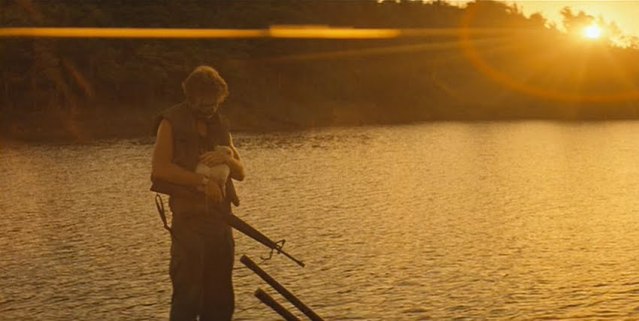
The tragic beauty lies in what comes before.
This lack of storytelling polish could be forgiven somewhat if the developers brought a unique perspective to the tale of good guys gone bad, but unfortunately, this is where the game fails the hardest. Spec Ops has one glaring flaw that supersedes all the more common complaints: It does not utilize the qualities inherent to the medium effectively.
Apocalypse Now, from which the game unapologetically cribs, is a film, and films are passive experiences. This exact quality is what makes Apocalypse Now so effective. Nothing I can do will save Willard or the crew of the Navy PBR he travels up river with; all I can do is watch as the horrors of this place strip away their humanity and turn them into monsters.
Video games, on the other hand, are interactive. I am the one pulling the trigger, and Spec Ops tries to take advantage of this by putting heavy emphasis on my responsibility in the tragedy of Dubai. The unfortunate problem, however, is that the choices given are not true choices. Thus, the game can't seem to decide if it wants me to be a true agent or a passive witness.