

Separator
The Racial Slur That Changed Games Journalism
Why__hello
Wednesday, July 15, 2009

Editor's note: I was hesitant to promote this story at first. These days, people spend more time engaging in "New Games Journalism" and less time talking about it, which I'd say is a good thing. But especially for those unfamiliar with the concept and the term, Omar's article is a good primer on what it is and where it came from. -Demian


It started at 4:06 a.m. on September 22nd, 2004 with an article dubiously entitled "Bow Nigger." The article was actually more of a story. Taking a few cues from Hunter S. Thompson and Truman Capote, the author simply related his experience as an unsuspecting tenant of a Jedi Knight 2: Jedi Outcast multiplayer server. The author (known only as "Always Black") wrote the piece after being lambasted with racial slurs by a stranger on a German server. However mundane this sounds, the story was written with such familiarity and candor that it was difficult to deny the personal power it possessed.
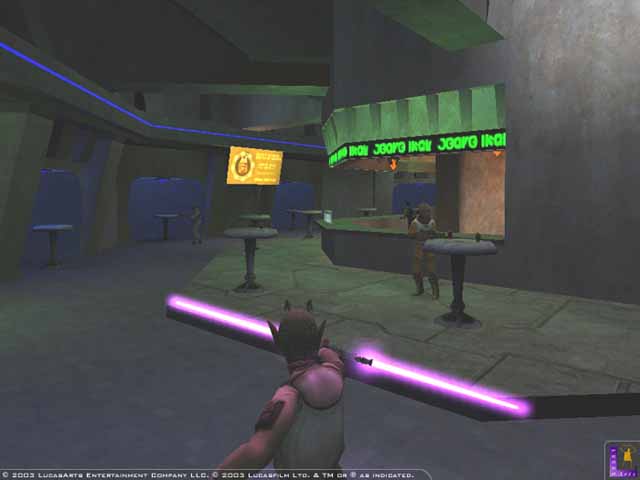
Academy
Can a number at the end of a review adequately summarize the
16 months of development by Raven Software and the ensuing
years of entertainment and devotion by fans?

A 14-year-old and a weathered veteran of the Internet, I was shocked by the sense of mystique and charisma the article was imbued with -- qualities I didn't expect from a conventional "videogame review." Rejecting journalistic standardization with each new word, the anonymous author delivered commentary on multiplayer design, the state of online gaming, and most importantly, what it was like to actually play Jedi Outcast.

There were no numerated scales, no review scores, or alphabetized grades. In 2,275 words, the readers -- whether or not they had played the game -- thoroughly understood what Jedi Outcast offered. Better than any Gamespot, Gamespy, or IGN review, "Bow Nigger" has become a sterling example of the New Games Journalism style of writing, and has since been copied, plagiarized and paid homage to.

With influences as varied as Emile Zola and Tom Wolfe, New Games Journalism is a style of news writing which I have always been enamored with. Kieron Gillen, the first videogames journalist to receive an award from the Periodical Publishers Association, has been a stylistic innovator in the emerging discipline of creative, narrative-driven games journalism. Gillen published a "Manifesto" which drew heavily from the now-famous article "Bow Nigger". The manifesto outlined in detail what he meant by "New Games Journalism," a term which he himself coined. The notion is simplistically brilliant in its meaning:

"The worth of gaming lies in the gamer not the game"


New Games Journalism uses very non-traditional tools in reviews. The writer reacts to the subjective experiences provided by the game, by interactions with other players and by concepts and events in real-life which surround the game. Keiron Gillen compares it to travel journalism. He explains, "This makes us travel journalists to imaginary places. Our job is to describe what it's like to visit a place that doesn't exist outside of the gamer's head. Go to a place, report on its cultures, foibles, distractions and bring it back to entertain your readers."

The reveal-preview-review cycle of modern games journalism is one that is strange and arbitrary when approached with an analytical lens. It appeals to the short attention-span of most Internet users and adolescent gamers [editor's note: it also appeals to the marketing departments of game publishers]. In terms of criticism, seven lines of text or a three-minute video seem to be the industry's mainstay. Those few which deviate beyond the now-common "Tweet" format still employ a formulaic template wherein gameplay, graphics, controls, sound, and story are independently reviewed. These types of reviews often lead to the same two-three page efforts which most readers avoid entirely.

I am also guilty of pandering to the restive masses of the Internet. On my own blog (and even on my Bitmob articles), I often use colourful pictures, short and precise wording, and alarmist expressions ("This is the best game ever") to ensure that readers remain interested. It's something which few of us have the nerve to avoid.

The Internet is a giant dog. It can't think for itself, and it needs to be occupied by big, flashing graphics. It is almost impossible to get it to sit still or stop panting. With an excess of energy, and a lack of focus, many websites resort to petty and unprofessional techniques (Top 10 lists, review aggregation etc.) to try and leash the Internet audience. Journalists must fight the temptation of relinquishing their integrity in the name of quick hits and sales. I don't mean to say that New Games Journalism is the only route to achieving journalistic integrity, but it certainly is favourable when compared to the stupid gimmicks which many websites employ these days.

However, format isn't the only issue. Most reviews are written in a vacuum. The editor plays the game before release and lists its features and accomplishments in bullet points. The content never seems to change. Writing reviews today simply seems to be a matter of inserting the name of the game and its score in a pre-written paragraph.

How did we get to this point? Where did this myopia begin? This site is managed by former EGM editors, and so I'm hesitant to criticize their previous reviewing scheme. I'm not a professional games journalist, a licensed publisher or even a seasoned writer. I'm a guy, on the Internet. My opinions may not have much value, and yet, I feel compelled to remind everyone about the possibilities of games journalism. As opposed to being fixated over the wearisome, impermanent ephemera of each game (How many stages? How many weapons? What are the achievements like?), we could all benefit from a more creative, and culturally-aware approach to videogame criticism.
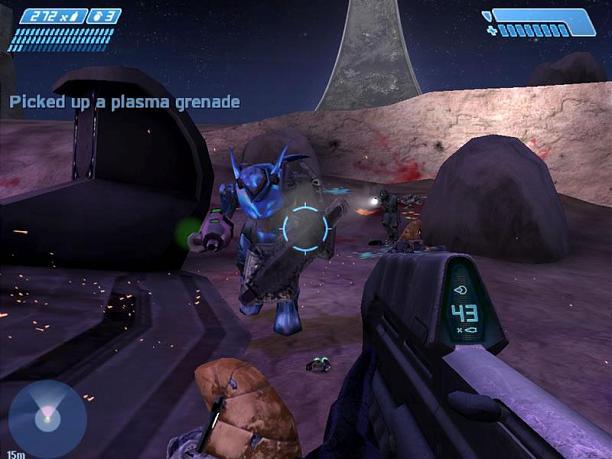
halo
If you can relay the sense of stature and importance this scene provides
to gamers, you may understand what New Games Journalism is about.

It seems "Bow Nigger" spoiled us. It showed us what matters in videogames: The overwhelming sensation and emotion which the player is subject to, the way the gamer feels, reacts, and understands. The mechanics of the game only serve to illicit those sentiments from the player, and shouldn't take center stage in a review. I won't go into the subject of "why games journalism isn't seen as being legitimate," but the childish way in which we criticize videogames is certainly symptomatic of our lack of legitimacy. How can we expect the likes of Roger Ebert to see us as equivalent in any sense, if we stick to the same uninspired, rudimentary reviewing models?

It's not all bad news. While the industry is still plagued by very demoralizing trends, there are dozens of writers who come to mind who break the mould with each new article. Even on Bitmob, I'm proud to see astouding writers who pay little attention to what's expected of them. So don't lose hope! What's most uplifting is that since the industry has witnessed some form of stagnancy in games reviewing, it may be up to newer, less entrenched writers like you or me to pull games journalism out of this rut. Wishful thinking? Probably.

As human beings, we inherently seek to be informed -- especially where money is concerned. At the same time, as Internet users, we have cultivated a sense of alarm and restlessness. We rarely have the time to enjoy a well-written article, opting instead to fall under the influence of silly numbers and letters. Maybe one day we'll all see the merit in New Games Journalism. But for now, it seems that our scared, short-sighted, impatient dispositions will dictate what we read, enjoy, and play.

 
0
BITMOB'S SPONSOR
Adsense-placeholder
Comments (15)
Default_picture
July 15, 2009
With a title like this I was reluctant to click your story. I read the original article to see what you were talking about, again with hesitation. I'm glad for the experience.

Most people who read reviews want a "yay/nay" recommendation or confirmation of previously formed opinions immediately. Most outlets must write "in a vacuum" to satisfy their largest audience's timetable. However most gamers I speak to say they decide on games based on forum discussion. This is the route I think professionals will eventually emulate.

As the traditions held in print begin to fade away this type of coverage will become more prevalent. The initial "review" will only be the starting point of a discussion that will provide the reader a solid grasp of the experience.

Finally: Shoehorning video games into mainstream movie metrics fails. If games are art they should be treated like literature or paintings. Rembrandt never received a 9.643 out of 10.
Why__hello
July 16, 2009
Very well put Bill. The reality is most people resort to review aggregators because they aren't given any other realistic option. I normally ask my friends for their suggestions, and what I get is normally a very succint story which underlines the type of experience I would likely be subject to if I buy the game upon his/her recommendation.

Video games are fun. Reviews should explain why. Telling me that you "can't skip cutscenes" or "the interface looks really nice" doesn't relay the information I need when I'm choosing whether or not to buy a game. I fear that with the death of many magazine in the past 3 years, New Games Journalism has been even further marginalized
Me_and_luke
July 16, 2009
Omar, why you aren't a professional writer for some big-top video game site or magazine is beside me. Thank you for making me think, question, and reflect with each article you post.

I would like to focus my follow-up thoughts on the movies reviews versus game reviews that you touched on. I'll cite your comment right above mine where you're not interested in skipping cut-scenes or game interfaces. Isn't the fact that video games are an interactive media influencing game reviews to perpetually differ greatly from movie reviews? I infer that (please stop me if I'm putting sour words in your month) the story, setting, and characters of a game hold the greatest importance to your enjoyment of a gaming experience... which all also happens to be all the core aspects of film. But the important thing to remember about video games is they are interactive, and if, say, the interface is clunky, it can greatly detract from the player's immersion into the game's world and story. I simply can't, in the foreseeable future, see game reviewers ever straying from mentioning seemingly elementary gameplay points.
Why__hello
July 16, 2009
Bryan. First of all, thanks for the compliments. They mean a lot to me.

As for why I'm not writing professionally, there are quite a few reasons, the first of which is I'm an analyst for the United Nations High Council for Refugees, as well as a 3rd year student in University - so I've got my hands full at the moment. Secondly, when I've applied for staff positions, I'm told that my age is an evident barrier to entry into the field. I'm only 19 years old, and I've been reminded that I don't yet have the experience to adequately write at a professional level.

As for the article. I'm certainly not espousing a completely freeform approach to games journalism. I'm simply inviting the notion of a little more creative freedom. I'm a little tired of the same bullet points with each new game. Games should never be pigeon-holed by one or two flaws. World of Warcraft was crippled at launch by it's bugs, and yet, the experience I was endowed with was awe-inspiring. No amount of bullet points could summarize how I felt about WoW when I was still playing it.
Default_picture
July 16, 2009
I'll echo Bryan's sentiments about your writing quality. What's more astonishing is the rate at which you turn out such fantastic articles - impressive, to say the least.

This was an interesting read - I most certainly will be checking out some examples of New Games Journalism. I whole heartedly agree with your thoughts on reviews these days - it's intriguing to me because I've reviewed games here and elsewhere in the past. I always avoid bullet-point summarizations, I don't break games down into separate elements, and usually I try to infer something relevant about the game outside of gameplay (for instance, with Fire Emblem I drew on it's hardcore gameplay for an increasingly casual publisher). I do summarize the game into a score at the end - it was something I debated (and never used to do), but ultimately I suppose I was too intimidated by the internet "dog". But certainly, it IS nice to have that metric.

Anyhow, great article, I'll be taking it into consideration on further reviews.
Why__hello
July 16, 2009
@Garret I've read your Fire Emblem review, and I certainly will admit that it had some "New Journalism" features in it. I think when you boil things down, the style is about communicating anectodes which belie a more important truth about a game, book or film. It's about being able to connect the reader to an experience on an elemental level.
Brett_new_profile
July 16, 2009
The best advice I can give to anyone looking for game recommendations is to find people whose opinion you trust. They can be a reviewer for IGN, some random guy on Twitter, or your best friend: if you trust their opinion, the format of the review doesn't matter as much. I admit that "New Games Journalism" can be more interesting to read, but the ultimate question is the same as a formulaic review: "Should I play this game?"

It's the same with movie reviews. For every A.O. Scott or J. Hoberman, there are a hundred hacks writing for small-town newspapers and obscure Web sites just trying to get their quote on a poster. So you find people you trust.

Or you could just play the game or see the movie anyway, critics be damned. Your hit/miss ratio probably won't be all that different than someone who meticulously pours over every review.

I also have a few pieces of constructive criticism of you. I'd consider toning down the boldfacing. It feels like you're grabbing the reader by the lapels and shouting in his face, "THIS IS IMPORTANT," rather than letting the words speak for themselves. I'd also think about changing the title. It's provocative and a little offensive for no real purpose other than to be provocative and a little offensive. You can get the point of the article across in other ways. But maybe that's just an American talking...

All that's said in the interest of seeing more great stuff from you. Keep it up!
Why__hello
July 16, 2009
I think you're absolutely right about the bold-facing. It's just, when I re-read my articles, I tend to become bored reading them and I fear that maybe I need the emboldened or underlined sentences to keep things interesting. But if it's really a concern, and if you think I could do without them - then I'll stop. I certainly welcome the suggestion.

As for the title however, you're right - maybe it's an American thing. I'm black and my friends here in Canada always use the term "nigger" to refer to me (or sometimes just because they want to), regardless of their ethnicity or race. It doesn't have the same weight I find. But in the interest of keeping everyone happy, I'll go ahead and change it.
Brett_new_profile
July 16, 2009
Hehe, you didn't have to change things on my advice alone! I'd like to think I have that much influence...

Really though, the choices are ultimately up to you. Be provocative if you want! You're coming from a black Canadian perspective, which is very different than my white Californian one.

I will say this, though: if your concern is to keep things interesting, you don't need to boldface. Your writing absolutely stands on its own.
Why__hello
July 16, 2009
@Brett. I hold your opinion in high regard. You're a really smart guy, and judging from your writing and the views which you (very intelligently) present on the podcast, I have no problems taking advice from you. If ever you feel like pointing out one of my weaknesses in writing, feel free - I'll certainly take it seriously and take it under stern consideration.

Now! I think I've commented enough on my own article. :P
Jamespic4
July 16, 2009
Very nice Omar. The cogency and insight of your article certainly belies your age.

I felt I had to throw in my lot because I find the idea of New Games Journalism, which you freely say you are quite enamored with, a bit off-putting for three reasons.

The first reason is simple. I liked this idea better when it was being called reader-response criticism in the 1960's. What Keiron Gillen describes in his now famous post more closely resembles this literary critique technique than New Journalism. While "Bow Nigger" definitely hews much closer to the concept of New Journalism with regards to Thompson or Mailer, the core concept that "The worth of gaming lies in the gamer not the game," is lifted directly from the reader-response playbook. It is important to note that the two ideas evolved concurrently, but this solipsistic concept lies fundamentally in how a work is experienced and related, the reader reads and response, whereas New Journalism concerns itself more with the dictates of form (conversational, present-progressive conjugation, viewpoint, etc). Also, it occurs to me, that game writers have perpetually conflated the terms journalism and criticism. Journalism concerns itself with real world happenings, however, as authentic as these virtual worlds may seem, they are fabricated in precisely the same way that any work of fiction is. Don't even get me started on the metaphysical ramifications of reporting about news in a fictional reality. We are critics, not journalists.

Also, I have doubts about the applicability of New Games Journalism across the board. While it may translate well into what have commonly come to be known as emergent experiences, most evident in open-world games and multiplayer games, but what uses does it have when measuring the quality of a game like Tetris? The simple counter to this, of course, is that it doesn't. Copping guilty, however, doesn't absolve this mode of critique from its limited applicability, rather, it shows precisely just what its shortcomings are.

Finally, the form itself worries me. I suppose I reveal myself of an older fashion why I say that I believe good criticism comes out of comparative and esoteric understanding of the concerned medium. I believe it is important for the critic to collate many reference points into a concise and easily digestible codification. More simply, without sounding too elitist, it is the job of the critic to be a concerned expert who can express appraisal in a palpable way. By contrast, my concern with New Games Journalism is that it only fosters the gross dilettantism that the Internet is already so rife with. If New Games Journalism seizes our community in they way you seem to wish it would, titles like Grand Theft Auto would invariably lead to an infinitude of articles about stylish getaways and near-death experiences. The only thing harder for me to read than a poorly written article is a poorly written story.

Either way, I found this piece thought provoking. I guess that's why I felt compelled to throw in my opinion. Good on you, and thanks a lot.
Alexemmy
July 16, 2009
I feel like the review in general is a dying breed. Fewer and fewer people get their game recommendations from game reviews these days. They either go to friends, read the buzz on twitter, or listen to discussions on podcasts. As the review itself becomes more pointless every day, I think we'll start seeing more writings about the actual experiences in games and how people felt while playing them. That might be the jump start that magazines need to stay relevant.
Why__hello
July 16, 2009
@James I think your points were made exceptionally well, but I've got to disagree. First of all, making note of evident A.I. and sound production deficiencies isn't exactly "esoteric knowledge". You don't have to be an expert to observe poor texture resolution or image popping. I think that journalists include those (in my opinion) almost irrelevant details because of an obsequious desire to appease tradition. Like I said, there aren't too many journalists who have the nerve to disregard what's expected of them.

@Alex, I certainly agree with you. With the freely available opinion of friends, acquaintances and internet boards, it seems like game players seek less professionally, and more emotionally delivered suggestions. It seems like less people are willing to pay for professional reviews, when they can get a rough idea of a games quality by browsing a forum or asking a friend.
Default_picture
July 17, 2009
Great article, Omar. I actually found this article to be just as insightful as that massive video game review symposium I read a few months ago. It's interesting learning about all the different styles of reviews that are out there. My reviews generally come form a more traditional approach--I prefer to write detailed reviews, but the "New Game Journalism" style of writing is certainly something to consider. I've always been in the camp that believes games are art, and that they definitely have an emotional impact on many individuals, so writing a review in the "New Game Journalism" style seems like a great idea. In the future, I'm hoping that all three styles will continue, because they all have different strengths and weaknesses.
Default_picture
July 17, 2009
I think the reason writers are so risk averse to more experimental writing is the PR side of things. Any outlet gets review copies because a publisher or PR firm representing on their behalf wants exposure to a buying market.

While I have yet to find a PR rep that actually reads any of the reviews they're involved with, I think writers are hesitant to really jump out there when they know their review is more or less payment for a review copy.
You must log in to post a comment. Please register or Connect with Facebook if you do not have an account yet.