Home
Home

Developing a successful massively multiplayer game isn't something easily accomplished. Sony Online Entertainment made a name for themselves with EverQuest and continue to support the game 11 years after its launch. Their dedication to the MMO model is undeniable, and it has completely altered how they approach making a game.
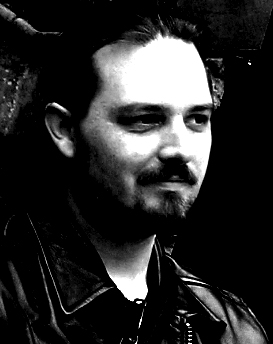
SOE is now applying that approach to DC Universe Online, their just-released superhero MMO. I contacted SOE's John Blakely, VP of Development and head of their Austin studio, in an effort to shed some light on the particulars of MMO development.
Bitmob: How is MMO development different from console game development?
John Blakely: Fundamentally, it is the number of players and the freedom you give them. In console development you have limited resource budgets, but in traditional games you also have ultimate control over what you present to the player and what is in the scene at any given time.
In a successful MMO, you want to provide the players with as many options as you can so they can express themselves in unique and fun ways as they play through the content.
You also want to provide them freedom to assemble, socialize, work together and against each other so they can connect and share their experiences -- that is unique to the online space. It's in these situations that we essentially lose ultimate control of what gets into a scene and have to rely on our many systems (written by very talented engineers) to ensure that our game remains playable and the players are able to do what they want.
With the fixed resources console games provide, that can be a tough challenge, and it really forces you to work hard to innovate. For DCUO, our team really delivered that experience to the console. It will be a lot of fun to see console players discover this for the first time as they play through DCUO.
Bitmob: What keeps MMO developers at the same studio longer than console guys?
JB: It's really about the team at the end of the day, regardless of product. We work really hard here at SOE to support and invest in our talent. Making games is a team sport and a great game starts with a great team.
Perhaps our MMO heritage is what has shown us that keeping a team together long term is better for everyone. With a successful MMO, you really never stop working on it but build a service that carries on for years and years, which means you need to work hard to retain the best talent so you can continue to entertain your existing player base and look for new opportunities in the market.
Bitmob: Does a long-form production cycle inspire more dedication to a project, or does the concept for the project draw in dedicated developers?
JB: Every project cycle has its challenges, but I believe that ultimately people are looking for a great team to work with. SOE works hard as an organization to get the best opportunities for our teams, then invest in those projects to make sure they are successfully supported in all aspects (platform, operations, marketing, PR, etc).
That kind of long-term thinking is attractive to talent looking for a team they know will support them as well a project they know will challenge them professionally. Making online games presents some of the toughest challenges in any industry -- which naturally attracts the best talent -- but at the end of the day, we all want to make the best games with the best people, and at SOE we offer that with the benefit of the long-term stability of building entertainment service. EverQuest is in its eleventh year of uninterrupted operations – which provides a stable base from which to operate.
Bitmob: Is MMO development a separate design philosophy?
JB: Yes and no. At the end of the day, for any game to be successful, it has to be fun. If it does not entertain your players, they will go elsewhere. That does not change for the MMO space. We practice a philosophy at SOE where we “prove through play,” meaning if we play our own game and it's not fun, we go back and work on it until it is.
What's different about the online space is that it's a service, and you have to think long term with your decisions. For an online game to be successful, it means that it will run longer than it takes to develop, so while building the initial launch product you have to construct a solid foundation because you will continuously be adding and improving the product for years to come.
If you don’t have that foundation, then you will not be able to effectively respond to your players and your product will suffer for it. These games are constantly changing and growing.
I can take one of the single-player games I worked on almost 15 years ago, install it on a machine, and it plays the same as the day it shipped. That is not the case for any online games. They take on a life of their own after launch, and all the decisions you made affect players and developers every day for years after.
That is probably the biggest single difference in philosophy between developing a more traditional game versus an online-based game.