


Editor's note: Matthew delivers a detailed analysis of the rise and fall of the stealth genre, looking at how today's "stealth" games compare to stealth games of yesteryear. Do you think the stealth genre is primed for a resurgence, or have gamers moved on? -Brett
The last three games I played prior to writing this manifesto -- Uncharted 2: Among Thieves, Assassin's Creed 2, and Ghost Recon Advanced Warfighter 2 -- all claim to be, at least in part, stealth games. But as a veteran stealth gamer, I wouldn't call them that -- at least not in the traditional sense. For younger people playing games today, Assassin's Creed 2 might well be the benchmark for a stealth game, but for anybody that's been around a little while longer, games like Hitman and Metal Gear Solid represent classic stealth titles, games where under no circumstances may players be discovered.
So what happened? Why are games no longer stealthy?
As it turns out, it's your fault.
Defining Stealth
For the purposes of the later examination of games that have stealth gameplay at some conceptual level, a definition of stealth as a criterion must be discussed. This is a very personal definition -- it's not at all an authoritative one, and it might be flawed. To my mind a stealth game requires an unbroken stretch of stealth gameplay, ranging from a stealthy approach to a mission to a stealthy dispatching of targets or objectives. Furthermore, a stealthy game requires or allows the player to carry out a mission without being discovered or without entering combat.
Stealth Is Now Dead
In 1998, stealth was a genre. You played a stealth game. In 2010, stealth is merely a method of gameplay, a modus operandi. In GRAW 2, I can choose to be stealthy if I wish, but I can also run in with guns blazing. That's a key idea to understand: There are no longer any stealth games. Stealth is just a tactic now. Stealth is just an option. Games that force the player to be stealthy suffer rather than prosper.
The Problems with Stealth
As modern gamers, we like blowing stuff up. Modern Warfare 2, 50 Cent: Blood on the Sand, Killzone 2, Uncharted 2, Halo 3: ODST -- these are all games where vehicles or barrels or even humans inevitably find themselves flying up in the air, propelled by the countless bullets you've fired. I enjoy that kind of gameplay too, so don't take my targeting personally. It's fast. It's satisfying. It's fun. But it has destroyed the stealth genre.
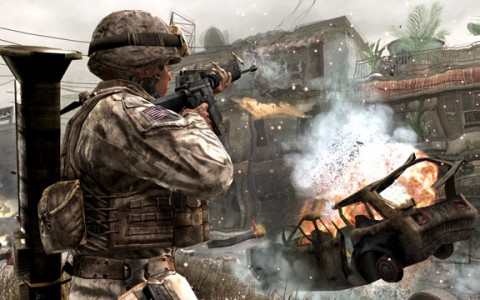
Stealth is boring. Today we get games where the men and women we play as are unstoppable. Uncharted's Nathan Drake could do it all with one hand tied behind his back and one eye missing. As players, we feel larger than life, empowered. Few people would contend that Uncharted 2 isn't entertaining, and for good reason -- such an argument is nearly impossible to defend.
Imagine, if you will, that Uncharted 2 was the first game you ever played, the game that got you into gaming. Now imagine going back to play the original Metal Gear Solid after completing Uncharted 2. All of a sudden the gameplay feels stiff and restrictive, and there is an annoying parameter that states that you're not actually supposed to kill anybody. Although we understand that Metal Gear Solid is a very different game, it pales next to Uncharted 2 and the entertainment it offers. Face it: It's no longer 1998.
In 2010, game worlds are much more open and accessible, the action is quick, the enemies are intelligent, and the gameplay is diverse. A straight port of Metal Gear Solid onto current consoles wouldn't work. Games without 3D cameras are unplayable by today's standards. Games without aiming in a first-person view or an over-the-shoulder view are unplayable.
But those action mechanics break stealth games. Classic stealth games worked by limiting gameplay so that the player found it difficult to kill the enemy cleanly. Today's gamers no longer stand for that. Once you give players a gun, they expect to be able to kill. They expect to be able to move quickly and shoot quickly and hide when they need to regenerate health. We no longer play by the game's rules -- the games play by ours.
Reviving Stealth
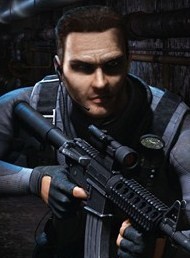 So classic stealth games worked by limiting several dimensions of gameplay. Today, limiting dimensions of gameplay is not an option. Players expect to be able to look around their environment and control the camera at their will; moreover they expect to be able to shoot straight.
I'm not a game designer. I don't claim to know how to make games. But here are some ideas as to how I would like to see stealth implemented:
Making stealth imperative is a mistake. I like to choose how to play my game. If you want the player to be stealthy all the time, make sure that you build in gameplay to ensure that. For example, taking all guns away from the player is a good idea if you want a stealth game. Don't give me an assault rifle and expect me not to fire it. It's telling that the missions in Assassin's Creed 2 and Uncharted 2 that force you to be stealthy are the most frustrating parts of both those games -- the game worlds weren't constructed for mandatory stealth.
Let the player choose the game. If the game is a third-person action game with guns, let me decide if I want to be stealthy or not, but make it clear that both options are available. I am willing to understand and accept that if I run into a room with all guns blazing I will likely take a lot more damage and waste more ammunition -- I'm fine with that. But if you give me both options and let me decide, then the game ends up being much more satisfying to me.
Don't overly punish the player for screwing up. Games aren't as difficult as they once were, for better or for worse. But I can think of nothing worse than penalizing players because they strayed into an enemy's line of sight. A good example of this is Metal Gear Solid 4 (though it certainly isn't the worst offender). In Metal Gear Solid 4, the player's actions are tempered by the Psyche Gauge, which seriously limits aiming capacity and health regeneration if the player uses their weapons and kills too many people too often. Fine, but then why include guns and the capacity to shoot at all?
Evaluating the Current Crop of "Stealth" Games
Even though the stealth genre is dead, there are many examples of games that try to use stealth or claim to be stealth-oriented. But how do they execute stealth, and is it successful? Let's take a look at a handful of games from the past few years. (Please note that this is not a comprehensive list of every stealth-oriented game, just a number of games that integrate the concept of stealth in one way or another.)
Assassin's Creed 2
 The Assassin's Creed series claims to be stealthy, but strictly speaking it isn't. The story character should be assassinating victims quietly and without being noticed, but by in large this just isn't the case. The original Assassin's Creed required the player to be stealthy when moving about, as guards, more often than not, were on the lookout for the player. But in Assassin's Creed 2, the player can move about freely. Moreover, a stealthy approach to main story assassination targets is not required. The game is very combat focused, with the entire combat system being based around countering. I found the two or three instances during the main story arc in Assassin's Creed 2 where the player is required to be stealthy to be frustrating and arduous, especially toward the end of the game. The game fails the player immediately for being spotted, at which point the player is sent back to the last checkpoint after a lengthy load time. Perhaps a system where the game said, "Alright, there's an assassin coming after our man so let's move him around to make him harder to target, and let's hide him in a new location, perhaps even indoors," would be more rewarding and would push the stealth message in a better and more realistic manner as opposed to simply failing the player.
Stealth analysis: Half-hearted attempt at stealth.
Infamous
 Infamous is not a game known for its stealth, but I've included it because of certain sequences in the game. There are several missions where the player must save a group of hostages that are being held by a group of terrorists. In such a situation, a stealthy approach would surely be a logical way to execute such a task, but Infamous doesn't even penalize the player for killing the hostages, even if you're attempting to go for a "Heroic" rating. There are missions where one hostage is being guarded by three terrorists, and if the player is discovered the hostage is killed, resulting in a failed mission. But the game doesn't actually need you to be stealthy -- you execute the terrorists using an ability that slows down time, allowing you to make accurate kills before the enemy even reacts. Not stealth, just super powers.
Stealth analysis: No stealth whatsoever, stealth not an option.
Metal Gear Solid 4: Guns of the Patriots
 The Metal Gear Solid series started as the epitome of the stealth genre, but the fourth iteration attempted to modernize the series for more action-oriented audiences. On harder difficultly levels, players must take a more stealthy approach, but I find that on anywhere up to and including the Hard difficulty it's actually easier for me to play the game as a pseudo Gears of War over-the-shoulder action shooter. The inclusion of the Drebin Shop and the one-size-fits-all M4 Custom makes it easy to plow through enemy soldiers and boss fights without many negative repercussions -- apart from the very irritating Psyche Gauge, which punished the player for attempting to shoot or for entering an area with many enemies.
Stealth analysis: Attempt at stealth, but action overwhelms.
Silent Hill: Shattered Memories
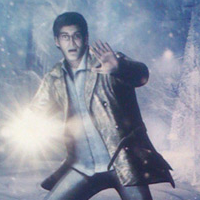 The latest outing in the Silent Hill series takes the ability to fight back away from players. No weapons, no melee combat -- all you can do is run away from monsters or avoid them altogether. Despite these limitations, the game is still enjoyable. Players understand that they aren't meant to target the enemies and should avoid them at all costs. Why? Because, very simply, players cannot attack the enemy. The same mindset can be applied to action stealth games. Imagine a tactical spy game in World War II or in a modern setting where players can't and shouldn't attack, where their goal is simply to gather intelligence. It may sound counter-intuitive at first, but perhaps Silent Hill: Shattered Memories proves that if such a method of stealth is done well it can be very enjoyable.
Stealth analysis: Stealth is encouraged and necessary.
Tom Clancy's Ghost Recon Advanced Warfighter 2
 Of all the games here, GRAW 2 makes a stealthy option the most enjoyable. It's possible to blast your way through the game, but you don't have to. Instead, GRAW 2 quietly suggests that it's probably a good idea to make use of all the surveillance equipment at hand, setting up attacks using your team members that will ensure that the enemy is eliminated all at once rather than in a prolonged firefight. And yet GRAW 2 doesn't limit ammunition. It doesn't change how much damage you can take. It doesn't reward the player for taking a stealthy approach or for not taking a stealthy approach. It just makes stealth a genuinely more successful option, and the game fares much better off as a result.
Stealth analysis: Stealth is encouraged and made viable.
Uncharted 2: Among Thieves
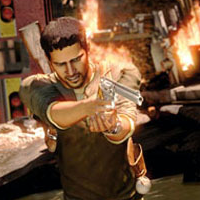 I struggle to imagine why Naughty Dog felt it necessary to make the stealth section at the beginning of Uncharted 2 so difficult. Enemies are unforgiving with their hearing and line of sight. Sure, it's realistic, but it's just not fun. Case in point: On my first time through the game on the normal difficulty setting, I failed the stealth section only once and made it through in about ten minutes. On my second playthrough on very easy, attempting to get all the trophies, I failed it a great number of times, and it took me well over half an hour -- probably closer to an hour, in fact -- to finish it. Why? Maybe I was just being too cocky and too aggressive, but that section is punishing. Uncharted 2 is good for allowing the player to use stealth in multiple situations, such as in enemy encampments, and there is a genuine benefit to using stealth to quietly take out enemies without starting a firefight, but for the life of me I can't imagine why you would want to use stealth -- it's just too easy, and moreover, too fun, to run around and let Nathan Drake be Nathan Drake. Sure, stealth is usable, but in the final analysis, the enemy AI is too hard to use stealth against.
Stealth analysis: Attempts stealth, but the action overwhelms.
The Future of Stealth
Three major stealth titles are incoming over the next year or so that may revive the stealth genre and bring it back to its classic pedigree.
Metal Gear Solid: Peace Walker
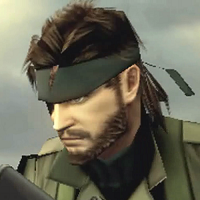 I find the prospect of Peace Walker quite interesting. From what I've played of the latest English demo (which is much harder than the previous two Japanese demos) it seems to me like Peace Walker looks to punish players for not being stealthy. Players are able to aim and fire weapons, but enemies swarm when an alert is triggered, and they are ruthless. My concern is that the stages seem extremely linear, almost to the point where they are corridors, and often I felt as if I needed to attack to break through because I couldn't see any other option. Inevitably I'd trigger an alert and die. Also, you can't pause in the game, and that's very debilitating in a stealth action game with active patrolling enemies. But it's curious that Peace Walker appears to be a return to a style of gameplay not seen since the time of Metal Gear Solid 2 -- players appear to suffer legitimately frightening consequences when they are being chased and are close to dying. That's enticing, to be sure, but there's also the massive chance of everything going wrong.
Metal Gear Solid: Rising
We know nothing about Rising, so there's little point theorizing about it. The reality is that Rising could be anything. Is its Metal Gear title a reference to the Metal Gear universe and the Metal Gear story, or is it a reference to the Metal Gear stealth gameplay? When confronted with the idea of a ninja Raiden it's hard not to think of a Devil May Cry or a Bayonetta. My hope for Rising is that, like with GRAW 2, there is the option of being stealthy, but there's also the option of running in there and just cutting some dudes up. My primary fear is that Kojima Productions will include provisions such as a Psyche Gauge that punish the player when it's just not necessary.
Splinter Cell: Conviction
 Splinter Cell has never pulled any punches when it comes to stealth. When it was clear that the stealth formula was growing old after the release of Double Agent, Ubisoft took four years off to refine the game and modernize the formula. The result is that we will be graced with what should be stealth action gameplay that requires the player to hide from enemies but also allows the player feel empowered. Will it also slow down movements and limit ammunition as the past Splinter Cell games did? Perhaps, and perhaps that's for the better. The important thing is that Conviction makes it clear to players that stealth is best, but they can use action-like movements such as the excellent Mark and Execute feature to level the playing field.
Once More with Feeling
I'm happy for stealth to evolve. I'm fine with never playing the Metal Gear Solid style of stealth ever again. My one wish is for stealth to be integrated into games intelligently and in a manner that's not aggravating. This is especially important when games rely entirely on stealth as a mechanic. In saying that, I wonder what the future will hold for the Metal Gear franchise. Will Metal Gear evolve along with stealth, an evolution begun with Metal Gear Solid 4 (albeit an evolution mostly in the wrong direction), or will a break be necessary, like the break taken by the Splinter Cell franchise? Only time will tell.


Wow. I feel like I've submitted this article for publication at some magazine. This is the first time I've logged in since the month or two back when I wrote this. Bates completely changed this article up! Not that I'm complaining or anything; it doesn't really bother me. Just funny to see.
On Arkham Asylum - I haven't played it yet. Sorry. I'll get around to it, I promise.
But GRAW 2 is still the best stealth game of the seventh generation.