
Separator
The 3D bubble is ready to burst
Photo3-web
Thursday, April 14, 2011
EDITOR'S NOTEfrom James DeRosa

Is 2011 the year we stop caring about 3D technology? Jason thinks it's pretty likely. (Pssst! I secretly think so, too.)
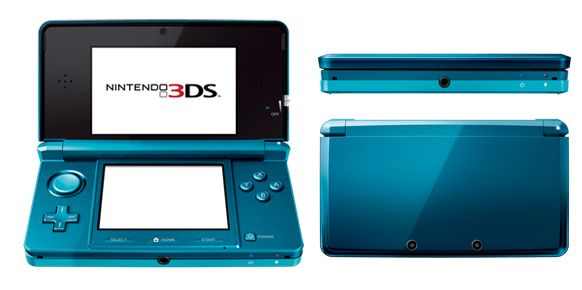
Nintendo 3DS

Something’s wonky in the consumer-electronics market. Captains of industry are betting the house on a technology that no one seems to want, and consumers are letting out a collective, disinterested sigh. Meanwhile, the press has begun reversing opinion on the 3DS, moving from giddily ecstatic to cautiously optimistic. The miracle of autostereoscopic 3D is suddenly looking fallible. Through it all, the industry continues to promote a technology that is actually little more than an optical illusion. To me, it looks like a certain three-dimensional bubble is on the verge of bursting.

James Cameron bestowed 3D upon us, whether we wanted it or not. And judging by the 3D TV’s lackluster performance, it’s becoming increasingly obvious that we don't. But that hasn’t stopped the Oscar-winning director from surging ahead. Cameron has partnered with Avatar cameraman Vince Pace to form a venture focused on “driving the widespread adoption of 3D technology in episodic television, sports, and advertising.”

Says Cameron, “3D is just how all broadcast entertainment will be done. Sports, episodic drama, scripted and unscripted -- we haven't seen anything yet that doesn't have a great degree of value added by being in 3D.”


But the purveyors of 3D haven't yet adequately explained how it improves an experience. Stereoscopic 3D isn’t a natural phenomenon. The industry loves to point out that we don’t see the world in "2D.” But we don’t see it in “3D,” either. In reality, we see two 2D images, and our brains combine them; it's not a manner of focusing the eyes in an unnatural way. 3D is, and always has been, an optical illusion -- a trick that manipulates our eyes into perceiving added depth.

Nintendo’s 3DS provides an interesting microcosm of the 3D phenomenon. The autostereoscopic handheld (rumored to utilize display tech from Sharp) uses a parallax barrier to create an illusory 3D effect, without the need for special glasses. At its unveiling, the 3DS’ autostereoscopic capabilities floored journalists almost universally. A few of us were skeptical, but I digress.

Now that the system has launched, many of these same analysts have changed their tune. Suddenly, they’re a bit more cautious about the system’s gimmicky claim to fame. They’ve suddenly realized that the 3DS' narrow “sweet spot” is extremely problematic for a portable device -- especially one that incorporates accelerometer technology. And they’ve also abruptly discovered that 12 percent of the population can’t even perceive 3D properly.

Even Nintendo backpedaled a bit. Prior to launch, 3DS producer Hideki Konno downplayed the notion that 3DS games would require the utilization of 3D. “We want to get software out to as many people as possible, and there are some people who just can’t see 3D," he said in a Wired interview. "We’re moving away from any stance that says if you don’t use the 3D functionality you can’t play this game.” Essentially, Nintendo was waving the white flag. The 3DS’ biggest selling point, it turns out, was merely an added bonus.

The 3DS is emblematic of the industry’s heedless push for 3D, irrespective of consumers’ lukewarm reception. The technology dominated the past two Consumer Electronics Shows. Industry giants begged consumers to swap their "obsolete" LCD, LED, and plasma sets for "upgraded" 3D models. But moving from CRT to flat screen is much more dramatic than the incremental leap from LCD to 3D. Consumers aren’t biting. So the industry responded by redoubling its efforts: Consumers need to be "educated." Clearly, they just don’t see the benefits.

ASilzars, an Electronic Component News reader, points out the inherent problem with 3D: It neglects the depth cues provided by head movement and depth of focus, creating an insurmountable eye-brain conflict. In turn, this gives 3D the appearance of a high-end diorama. Objects "pop" unnaturally and counterfeit a feeling of depth. Like any optical illusion, the viewer is automatically suspicious that the image is fooling his or her eyes.

If any scenario that allows for significant market penetration exists, it will be through a Trojan-horse method. In the case of the 3DS, consumers buy into Nintendo’s good name and the promise of future installments of beloved franchises. When all new TVs are automatically 3D-ready, the stealthy invasion will be complete. Ipso facto, we’ll have a 100 percent adoption rate. But don't expect this any time soon, if ever.

 
BITMOB'S SPONSOR
Adsense-placeholder
Comments (17)
Photo-3
April 14, 2011

Well put.

Photo3-web
April 14, 2011

Thanks for the promotion, James, and for digging into one of my old pieces for the source link to the 12% stat :-)

I should've linked to that originally.

Default_picture
April 14, 2011

In a hypothetical 3D future, I will be reading a lot more books. Hopefully those don't also become 3D.

100media_imag0065
April 14, 2011

Great read. With the 3DS, when I am playing Rayman 3D, I noticed that most of the time it just simply looks as though the entire screen is pushed back about 3 inches. Apparently, that is supposed to be 3D? Nothing is popping out at me, and very rarely is there any depth between object, it just simply feels like I am looking through the 3DS's screen a few inches back.


Is that supposed to impress me?

Img_0020
April 14, 2011
I think the lackluster 3DS reception is really due to the mediocre launch lineup of it and not just necessarily the fact that the 3D isn't impressive, with the most visually impressive games being SSF4, a Year old port, and ridge racer 3D, which personally I'm really digging. It uses the 3D to create this tunnel vision thru the screen, giving the impression that what I'm seeing is larger than the boarders of the top screen. As for Nintendos comment about the necessaty of 3D on 3DS, Will there be a time when 3D is necessary to play a game? no, but the same can be said about HD. The only game I can think of where HD gives the player any sort of advantage is maybe with a Call Of Duty-esque shooter where quickly spotting far enemies that are only a few pixels wide hiding in a bush and camouflaged can mean life or death.
April 14, 2011

I'm in the 12%....  So case closed....    Plus, even if I could properly see 3D, I still wouldn't care.  It doesn't add any value for me. 

Photo3-web
April 14, 2011

@Bryant

Cinemaphiles have been expressing the same sentiment--what does 3D add to the experience? How does an optical illusion improve the existing template? Would Citizen Kane be improved with the addition of stereoscopy? Would Pac-Man be a superior experience if Blinky popped out at you?

I don't begrudge those who *can* enjoy 3D. What bothers me is when consumer electronic giants and game companies try to shove it down our throats when we clearly don't want it.

2011_03_05_22_18_48_462
April 14, 2011

Great article. I've always seen the big 3D push to be strange in the sense that it goes against the direction the entire home entertainment industry has been moving in for the past decade. It used to be all about getting the best looking picture possible with the highest resolution, but everything ends up looking really blurry in 3D. Or, at least, everything I've seen. 

Sany0276__small_
April 14, 2011

You made a good point to me Jason, specifically the "trojan-horse" method you mentioned. If you look back at consumer electronics products penetration successes, they almost exclusively piggy backed on another product. DVD and Blu-Ray found their markets with the PS2 and PS3 respectively, while motion controls snuck into our houses overnight and found popularity on the back of the Wii. 3D in the home will probably get its greatest boost in sales(if any) when the next generation consoles roll out, similar to how HD proliferated with this generation. 

Photo_203
April 14, 2011

I'm totally with you on this one. 

Pict0079-web
April 15, 2011

@Jason: For a second, I thought you were plaigarizing the same words as an NPR feature on the same 3D craze. It's probably just a coincidence. I think the conversation will probably turn out the same, no matter which article I look at. Lol.

To tell the truth, every piece of 3D imagery and reality entertainment is starting to appear like an optical illusion. Maybe this is just a reflection of our changing interests from the old-fashioned spectacle of action movies to a more substantial, storyline-driven piece of art. For instance, you wouldn't see a Disney movie with those princesses anymore, because all the young women know that the image is heavily reliant on body stereotypes and various other exaggerations. Even "reality" shows aren't really real.

I know that somehow the entertainment medium will evolve to meet our expectations. I just hope somebody eventually gets a clue.

Me
April 15, 2011

In a way, I can see how 3D technology has the capability (or at least the potential) to enhance the experience of something like a film. While the "wow" of 3D does escape me about 10 minutes after I'm watching a film, I was actually impressed when I saw "Avatar" in 3D in theaters.
Games center their experience on gameplay, though. So, unless 3D can somehow be used to enhance the gameplay of the medium (it seems like Nintendo is actively avoiding that push), then it's safe to assume this is one of those few moments where Nintendo is actively relying on a gimmick to push sales.

Default_picture
April 15, 2011

3D in all of its formats face a lot of problems, but I don't think that consumer disintrest is necessarily one of them. I think pricing and product quality play a much larger role. TVs are expensive, with 3D TVs being prohibitively so. Also, a lot of people bought new TVs within the past few years to upgrade to HD, and most people buy TVs like they buy a piece of furniture, with the expectation that it will last for years, maybe 10 or more. Combined with the lack of quality 3D content, and you get a clusterfuck of fail.

The 3DS faces a whole nother problem. The 3DS isn't just another model of the Nintendo DS but with 3D capabilities. It's a new console with a lot more power than the original DS. It's like going from the Gameboy Color to the Gameboy Advance. Unfortunately, Nintendo doesn't really advertise it like that. They just say "3D" and hope people go bonkers for it, and they haven't, as the 3DS sold under 400,000 units in the US during it's first week. With the DS Lite, DSi, and DSi XL, on the market, the 3DS just looks like another iteration of the Nintendo DS, and if Nintendo hopes to sell the 3DS, they are going to have to differentiate the 3DS from the other systems beyond just talking up the 3D. And they also need to put out some good games.

On a personal note, I like 3D, though the only good movie I've seen in 3D was Avatar (all of the others were just bad movies).I have a 3DS, and I can understand the about-face that journalists are doing, because using it for 10 minutes at E3 and having a substantial amount of time with it are 2 completely different things. That being said, I do like the 3DS and the 3D effect that it offers, though I find it odd that no one really says that the 3D on the 3DS offers an effect that is opposite to the 3D effect experienced while wearing glasses (or maybe I just missed it). Wearing 3D glasses makes objects sort of pop out of the screen, while the 3D effect on the 3DS sort of makes objects recede into the screen.

But does 3D make games or movies better? Some would argue that HD doesn't make either better, so it's very subjective. In the end, its not necessarily about whether 3D makes something better or worse, its about whether the product was good or not to begin with. In my opinion, Avatar was a good movie, with or without 3D. Super Street Fighter IV 3D Edition and Ghost Recon: Shadow Wars (the 2 3DS games I got with the system) are good games without 3D, though I do like the 3D on. Although I don't think that 3D adds anything incredibly substantial, given the choice, I prefer 3D, because it tickles my eye balls in the same way that a 1080p 120Hz LED TV does.

Photo3-web
April 15, 2011

@Jonathan

Well, everyone who's conversant in the technology probably speaks the same language. I have not read (or heard) the NPR feature you refer to. If anything, I probably plagiarized a bit of my own articles on here and on ECN. I've covered 3D extensively, and I do tend to repeat myself. And next month, I'm going to an industry trade show on displays, so I’m not slowing down anytime soon :-)

@Ryan

And the difference between the 3DS' "gimmick" and the Wii's is that the latter utilized the technology to its fullest extent, with experiences that relied on it. Whereas with the 3DS, Konno specifically said that it *won't* do that. There's no 12% prohibitive factor for motion sense technology.

@Matthew

I agree that most LED 3D TV's are prohibitively expensive. But don't underestimate consumer disinterest. In my industry, I have yet to meet a tech analyst or consumer with a positive thing to say about the stereoscopic phenomenon. Especially telling is the sale of 3D glasses which, apparently, is less than 1:1 for sales of 3D TV's. This means people are buying spiffy new TV's, but not for their 3D component.

I disagree that Avatar is the only good 3D film. Apart from all the post-converted trash (Clash of the Titans and Alice in Wonderland, among others), the Pixar movies are fine pieces of entertainment. Toy Story 3 is one of the few 3D movies I really enjoyed.

Default_picture
April 15, 2011

My thoughts on 3D.  I've worked in television as an editor for docu-reality for over ten years.  3D content is going to be the same as surround sound.  How many non-enthusiasts do you know that have a 7.2 or even 5.1 surround set up?  Yest most shows are mixed to support it. 

In terms of shooting video there's a lot more to consider to roll out 3D (vs surround sound), but I have a little insight on that.  It took FOREVER for production companies to upgrade their equipment to shoot and edit HD content.  The only reason they've done it at all is international syndication stopped accepting anything shot in SD.  As soon as that happened production companies stopped arguing to keep the show SD.  For the most part these production companies bought their cameras years ago and have just been pocketing the money on every show since.  the HD revolution dragged them back to the store to buy new equipment.

In the past year I've interviewed and turned down 3 entire series that are being shot in 3D.  The show I'm currently on is shooting a 3D special this summer.  The point of this is production companies are already looking into upgrading their cameras to support 3D shooting if requested.  They're trying to be a little more nimble.  Also, 3D doesn't require much new hardware to edit, and post production is the big cost in any show.  So its easier for the industry to adopt than HD was.

whether or not the install base of 3D tvs is there to watch any of this will change over time, it's being build in to almost every new TV.  if you like it, its there, if not, no biggie.

Default_picture
April 15, 2011

I wonder how much of the market was blind when we moved from radio to tv, how much of the market was color blind when we moved from black and white to color brodcast.  3D is no different.  If you dont' like it, turn it off.  Don't complain that some of us do like and enjoy 3D.  I bought the 3DS and am very happy with the 3D content.  If you can't see it you can't understand why it is neat.  There is definatly room for improvement in the viewing angle of the anistropic 3D screens, but that will come, just like the original LCD's had about the same viewing angle but got better, now they are awsome.

Photo3-web
April 15, 2011

@Brian

The biggest issue is not the aforementioned 12% (though when over 1/10 of your potential audience is ill-equipped, that's a problem). It's quite simply: what does 3D add to the experience? I feel it's a gimmick; nothing more than a visual trick. It doesn't advance the art, or improve the experience in any way. You are, of course, right to disagree.

The radio/TV comparison is a poor one, because we're talking about two radically different mediums involving different senses. And I have no scientific data to back this up, but I'd bet that the percentage of legally blind individuals is far smaller than those who suffer from stereo blindness.

It could also be argued that we *do* see the world in color (versus b&w), whereas we *don't* see the world in 3D. Thus, color is a natural, organic improvement, while 3D is a gimmick.

You must log in to post a comment. Please register if you do not have an account yet.