
Separator
Why I Wouldn't Miss the Used Games Market
Me
Friday, September 17, 2010

The U.S. Court of Appeals for the Ninth Circuit ruled this week that software companies have the right to prevent their products from being re-sold by consumers. The specific context of the case involved AutoCAD, which is a program often used by engineers for drafting and design purposes.

A copy of AutoCAD is not cheap -- a new copy can go for upwards of four thousand dollars. AutoCAD's developer, Autodesk, was being quite reasonable in its pursuit of this lawsuit. It is not an insignifcant concern to lose multiple thousands of dollars per copy of a program which is ubiqutious in the engineering trade 

The gaming media jumped all over this news and immediately began looking for connections to the fate of the used-games market, as the Appeals Court ruling was tied to the End User License Agreement (EULA) signed by each user of the AutoCAD software. EULA agreements are fairly standard compositions, and chances are most of us have agreed to the proposition that the game we are playing has not actually been sold to us, but "licensed" to us. In plain English, that means that we don't actually own the game, rather the publisher is allowing us to pay them $60 for the priviledge of playing it.

If I could draw comics, I would have already inked up a few panels depicting Activision sending home-brewed law enforcement commando squads into the home of everyone who owns Call of Duty: Modern Warfare 2 to forcibly remove said software, followed by the publisher shipping a new version of the same game on the market for another $60, seeing as how they have millions of gamers hooked. I clearly don't take this "threat" to the used games market very seriously, because things used to be simpler before we had a used games market.

When it came time to pick up Halo:Reach, I first took a hard look at my game shelf. I try to keep my collections tidy, and traditionally wind up with 10 titles or less for any game system once it’s past its prime. I had over 20 Xbox 360 game cases on that shelf on September 14. It was time for some judicious pruning. NHL 10 was an obvious choice as I own the more current iteration. Battlefield: Bad Company 2 was a much more difficult decision.

Battlefield: Vietnam is coming out sometime in the near future, and the Battlefield games are my favorite first person shooter franchise. Vietnam would ostensibly be something I’d indulge in…but between Halo: Reach, Medal of Honor, and Call of Duty: Black Ops, finding full squads for an old game is likely to be extremely challenging. Hence, why not just turn in Bad Company 2 and pay less cash out of pocket for Reach?

My logic was “Well, if any of my friends turn out to love Vietnam, I’ll just get Bad Company 2 off GameFly for a month, download the expansion, have my fun, and then send the game back.” On reflection, I’m not sure whether the math works out. I got $15 in GameStop credit for Bad Company 2. A monthly GameFly scrip is $16.95.  I’m potentially going to have to spend more money than what I saved on Reach in order to get access to Bad Company 2 again. I likely would have been better off just keeping Bad Company 2 until I decided whether Vietnam was worth my time or not.

I remember a time when, if I bought a video game, I didn’t have a script running in the back of my mind which said “If it doesn’t live up to the hype, I can just turn it in quickly for 50% of the value to put towards something else.” When I bought a game it was “until death do us part,” and I never suffered for it. I never had a bad game in my collection, either, and I accomplished this discerning feat with only a fraction of the video game media outlets available to us today, by relying on the tried and true method of “word of mouth.”
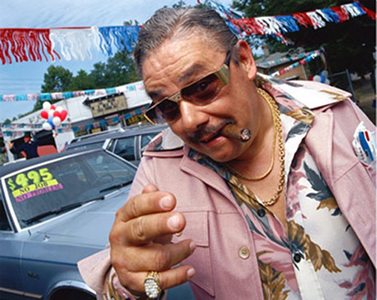
A used car salesman might offer us cash that someone else wouldn't for our trade-in, but how many of the cars on his lot are actually worth the purchase? An imperfect metaphor, but doesn't it stand to reason that we tend to keep the good games in our collection, hence a majority of the used titles on the shelves of GameStop might be of questionable quality?

I also find that store credit feels much less like the real currency it once was, or from a certain point of view actually is, such that it's easier for a gamer to justify picking up a mediocre title which they normally wouldn't look twice at as long as they are paying for it with store credit. Or they can bring back said used game within 7 days for a full store credit refund and turn GameStop into a virtual, weekly GameFly subscription. While this does create a solution to my Battlefield: Vietnam dilemma, it also adds to the perception of video games as pure, disposable product, which ultimately retards the maturation of our form and the quality of our titles simultaneously.

We don’t know the connection between the used games market and new games sales because we don’t have the data to crunch; but my historical experience suggests anecdotally that if gamers had to consider their purchases with the same sort of finality as back in the day, gamers might buy fewer games, and perhaps developers would have to better justify our spending $60 on them. Therefore, I'll be watching these legal shenanigans with a bemused but ultimately disinterested eye. Losing the used games market wouldn't be the worst thing in the world, and might actually lend us some concrete benefits.

 
0
BITMOB'S SPONSOR
Adsense-placeholder
Comments (12)
Img_0183
September 17, 2010


I really, really don't think that will be the case, to be honest. Consdering the number of people in the game industry whose jobs basically consist of iterating on Madden ad-infinatium, I suspect the trend will continue. Perhaps the only thing that will change is that prices for Madden 2015 and Call of Duty: Future Warfare 2 might go down to closer to 60-to-40 dollars, because the certain profit margin will go up.


Additionally, retailers like Gamestop may be less willing to stock games which aren't sure sales bets, because there isn't the potential opportunity to double-dip by customers trading in games which they either beat in a short span of time, or didn't like, and the retailer re-selling the game at a smaller price cut.


Just something to keep in mind.


5211_100857553261324_100000112393199_12455_5449490_n
September 17, 2010


Keep in mind the bonus of buying used at Gamestop; if you pick something up and it's a stinker, keep the receipt and turn it back in within 7 days and you get a refund.  You can't do that buying new.


But yeah, you get ripped pretty bad on trade-ins.  Like, awful-bad.  Not even hardly worth it unless there's a good special going on.


Me
September 17, 2010


@ Alexander - I think we're fooling ourselves if we suggest that prices will ever come down. I think there would be much wisdom in moving to some sort of tiered-pricing system, but even that doesn't sound likely. PC titles are being sold now for $60 instead of the traditional $50.


If the used game market vanished, I would actually wonder whether we'd have a GameStop at all anymore. They say they make a lot of money selling new games, but how many of those purchases are fueled by people paying for some of that bill with credit from used game trade ins?


@ Bryan - Yeah, I discussed the 7-day policy in the piece, but that's only for used games, not new ones; and if the used games market went away, I doubt they would continue being so generous.


Img_0183
September 17, 2010


@Dennis, in which case, a lack of a specialty games market, in terms of chains like Gamestop, would probably hurt smaller publishers like Atlus over EA and Activision.


Let me put it this way. Next time you go to Target, or K-Mart, or even Best Buy, particularly this week, when Etrian Odyssey comes out, tell me if you can see any copies of any games from Atlus, or NIS, or Square Enix games aside from Final Fantasy titles. And these aren't necessarily publishers who publish constantly iterating annual sequels, like Activision or EA. Dragon Quest only comes out every few years. Same with Final Fantasy. There was a 2-3 year gap between Persona 3's release and Persona 4, though it seems smaller because of the release of Persona 3 FES.


Big Box retailers know that Madden and Call of Duty will sell. They're less willing to take a chance on some more obscure series like Phoenix Wright, Etrian Odyssey, or Persona - especially with anime-style art and, in the case of Persona, a Mature rating. And it's not like those series would go away in Japan - Used Games are perfectly legal there, and those series do fairly well there. It's just American fans, smaller American publishers and developers (responsible for local domestic titles and translation and localization of foreign releases), and American jobs.


And that's it in a nutshell - used games save jobs, from the translator at Atlus USA, to the small game developer who gets a physical copy of his game in stores, to the publisher of the small developers game, to the clerk at Gamestop who puts it on the shelf. All of this because used game sales pad out Gamestop's bottom line.


Jason_wilson
September 17, 2010


@Dennis The ruling would support all copyright. So it could kill used book stores if publishers put language in that the book "license" is nontransferable. 


Me
September 19, 2010


@ Alexander - With all due respect, my piece wasn't about the fate of game publishers, but rather what it was like for me, as a gamer, to live in a world before the used games market exists, such that I wouldn't mind it being gone. I'm not really concerned with the fate of smaller publishers like Atlus as a gamer.  I like to see the medium as healthy as possible, but I couldn't name an Atlus title for you if you paid me, so I'm not sure what would change for them whether a used games market existed or not. In the era of digitial distribution, smaller publishers seem to be more empowered than ever to eschew the physical distribution cycle and head right over to something like Steam. If a developer has a quality product, I believe they are more empowered than ever to get their product to market.


@Jason - Speaking as the owner of copyrighted material, myself, I understand what Jerry Holkins means when he talks about caring only for that first purchase, for that new purchase which generates money for game developers. If I had a copywritten book rather than a screenplay, I don't think I'd mind so much if my book could never be purchased used anywhere, because I wouldn't see money from that used sale. Because I've worked on the creative side, myself, I can see both angles here as being perfectly valid. It depends on which hat you ask me to put on for a conversation


Robsavillo
September 20, 2010


things used to be simpler before we had a used games market.


I'm not sure what you mean by this. When did games not have a used market? Can you elaborate on how things were simpler? I'm not convinced by commentary on quality -- that's entirely subjective.


Me
September 21, 2010


When I was playing on an Atari 2600, or 7800, or NES, or SNES, or N64, I had no GameStop where I could turn in titles for store credit and get something else. There was no formal used games market like we have now. I don't know what the video game media was like at that time, but was anyone writing about "the used games market" like we are today? If not, is that because it didn't exist? Things were simpler -purely- on account of not having that variable to factor into our purchasing decisions.


I think that if we're being honest, we can come up with some objectively "bad" games for systems back then. Does anyone want to argue that E.T. for the Atari 2600 being bad was entirely a subjective assessment that we really can't hold up as being as darned close to objective reality as might be possible? There are games that are either good enough, or bad enough, that they approach that same paradigm on their respective end of the spectrum. Some games are good enough that no one in their right mind can say they are -not- good, and the debate comes down to whether they are good or great, but never bad. The same goes with bad games, unless someone is deliberately being a goof and holding up a game which is SO bad that it passes through the veil of bad and comes out the other side, like some bad movies can.


The games I used to have in my collections back in the day, before I could get rid of anything, were all on the side of "objectively good." You'll find them in retro lists of console classics for the respective systems. I wasn't some kind of game choice savant or anything, I just didn't have the money to spend on any game which I hadn't heard my friends, almost all of them in most cases, raving about. And because there was no place to sell used games, I always had friends who were less discerning and who bought the games I didn't buy, and from whom I could borrow the games because no one sold anything back them. Nowadays, if I friend of mine bought a bad game, they'd probably turn it in to GameSpot rather quickly such that I'd never get to try it.


Robsavillo
September 21, 2010


Dennis, you never had a Babbage's (which is what GameStop used to be)? How about FuncoLand (which also merged into GameStop)? Both stores always offered used games as far as I can remember. In fact, my dad relied on the in-store credit from trade ins (at Toys 'R' Us, too, back in the day) to continually buy my siblings and I the latest games for the holidays.


Me
September 21, 2010


Not that I remember. Or that I ever had any of my gamer friends going to and telling me about it. That's not to say that the stores weren't around me, but I honestly don't remember getting any kind of trade-ins for games back in the day. I certainly don't think I picked up on when it started, either, but "the used games market" as an object of industry concern, and in the sense of being a major component of the gaming economy, can't be more than five years old, can it?


September 21, 2010


Well... here's a visit in the Way Back Machine.  I know I started going to Funcoland in Minnesota back in 1991.  I bought used Genesis games aplenty for a fraction of the new price.  This was back when Funcoland produced these simple printouts (in courier font) with the trade-in values for their ENTIRE game catalog.  It was roughly 3 sheets.


Seriously Way Back.


Robsavillo
September 22, 2010


Babbage's goes back to 1984, and I'm pretty sure that they offered secondhand goods, but that's honestly besides the point. I think you're making an arbitrary distinction between commercial retail and personal sales, Dennis.


The fact that we can sell the goods we buy means that they retain monetary value after the first sale. If I buy a $60 game, and I know that I can sell it for $20 (whether to GameStop or a personal friend), then the total cost of the game is only $40. But without the used market, my $60 game is worth nothing the moment I purchase it. I cannot recoup any money from a poor buying decision.


People consider the post-sale value when they decide to purchase goods. Without a used market, the cost of games goes up dramatically for a lot of consumers.


You must log in to post a comment. Please register or Connect with Facebook if you do not have an account yet.