Are cut-scenes ruining video-game stories?

Img_3899
Friday, December 17, 2010
EDITOR'S NOTEfrom Rob Savillo

I wholeheartedly agree with Patrick that cut-scenes need some revision -- someone needs to send an editor to the Kojima offices, for instance. I don't particularly like superfluous sequences that break the gameplay's flow; however, I don't think quick-time events are the answer, either (as I've written before). I still think the closest we have to seamless narrative in video games is the Half-Life approach that puts a premium on interactive storytelling (to a degree).

Characters suddenly become unplayable as the player becomes aware of new pieces of information. Armed with that knowledge, she embarks on the next quest or level and gets right back into the action.

At first glance, this completely makes sense. After all, if games want to tell a story they need to have some type of narrative anchor, and cut-scenes are a great way to do that.
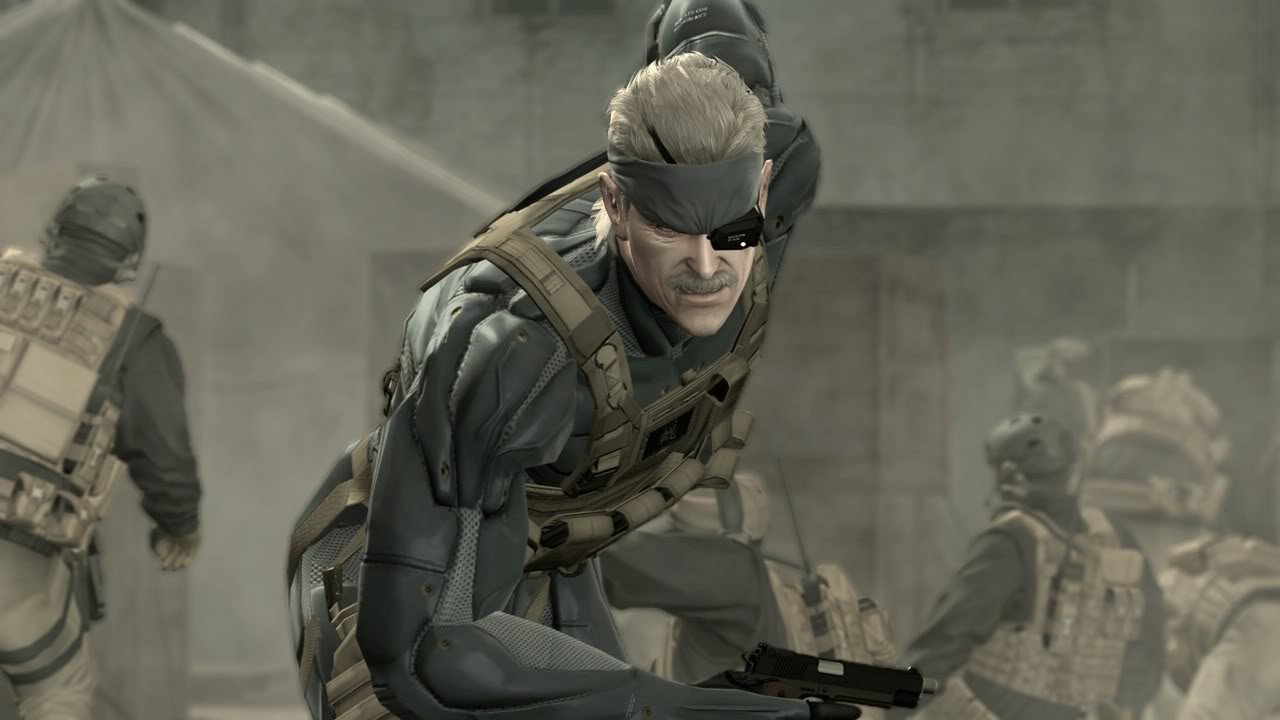
Since the mid 1990s, games have used pieces of cinematic animation to bridge levels and create motivation to drive the story forward, which demonstrates that the industry clearly wants to tell stories. Ever since the plot moved on from “the princess is in another castle,” games have wanted to create new forms of narrative that drive the player forward.

Cut-scenes can provide a default way of showing the personality of a character, which can be a particularly fickle trait in something as subjective as gaming. They provide a canon, stability, and a solid story arc in a game filled with thousands of options for each player.

But is it time for the industry to outgrow cut-scenes?


They may very well provide a method for giving solid narrative, but the use of in-game narrative has grown over the past decade, a trend which primarily started with Valve’s Half-Life in 1998. This was one of the first titles to never break away from the viewpoint of the main character, which made all of the story elements filter through the player’s gaze.

The advantages of this are obvious with the main benefit being that you can direct the gamer down a certain path and make them take note of certain elements within the story, or simply tell them while having them retain control.

Because after all, the importance of the game is control. Developers want gamers to be in control at all times, and that is much, much superior to having them watch a cutscene.

But a number of different disadvantages reveal themselves when you simply relying on cutscenes, especially when new titles are becoming so good at using in-game and in-character narrative.
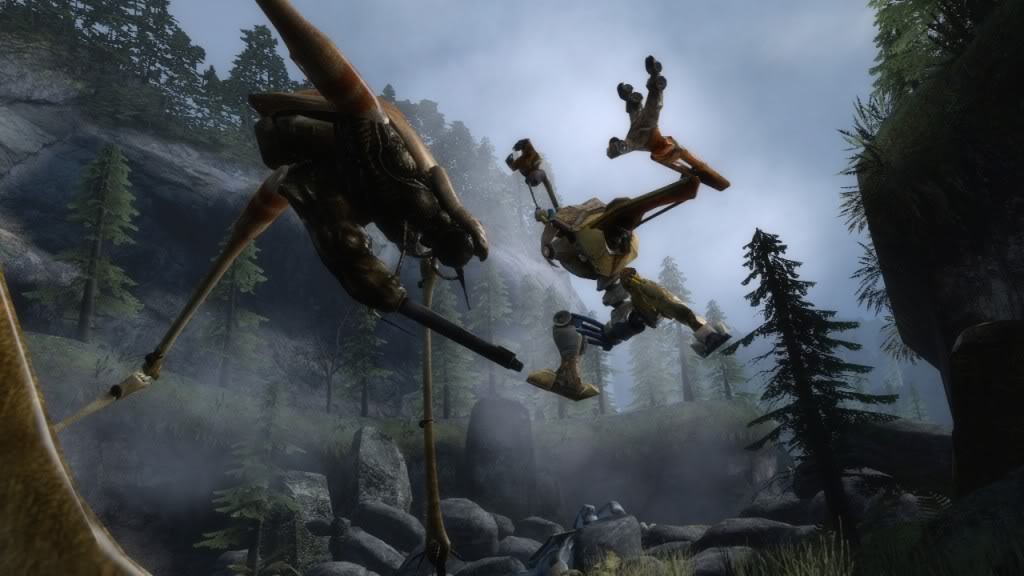
Firstly, cut-scenes are used far too often. As previously stated, the purpose of the game is to interact, play, and feel control. Cutscenes detract from that feeling, and they need to be used sparingly as a result.

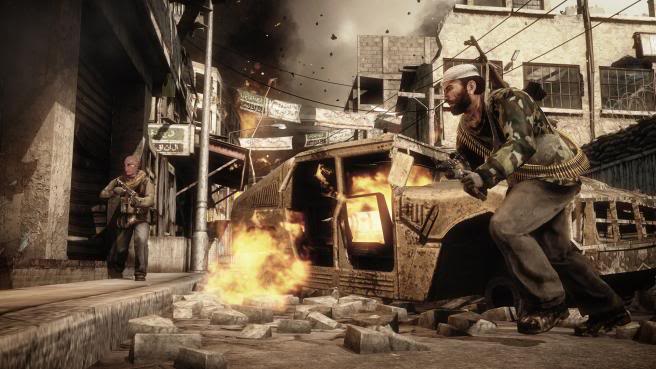
Secondly, cut-scenes are often used for little or no purpose. The most recent Medal of Honor sported several cut-scenes that provided no other information than watching the character stab or shoot someone. What is the point of this? Why can’t the gamer have done it herself?

Finally, cut-scenes can distract the gamer from her actual goal. When she sits down to play a game, she doesn’t necessarily want watch a film. She has a DVD or Blu-ray player for that. Rather, she wants to actually engage and control a character.

She want to dictate exactly how she handles herself, uses weapons, talks, jumps, or runs. And she wants to feel that power at all times. Cut-scenes break that power and turn the gamer into a passive agent once again; in some ways, it directly contradicts the purpose of the medium.
Debate surrounds Activision Blizzard hinting that the publisher may at one point take all the cut-scenes from Starcraft 2, stitch them together, and sell them as a movie. They estimate they could make millions of dollars doing this. They are probably correct. Gamers would pay through the nose to see this type of “film" -- if this product could even be called that at all.

But in theory, that plan shouldn’t even be allowed to work. Cut-scenes need to be a tool in the writer’s arsenal -- not the means by which they tell an entire story.

Just as a screenwriter does not rely entirely on either dialogue or on-screen action to completely tell a story, games must rely on both in-game action and well-crafted cut-scenes to provide the full breadth of characterisation and action the narrative deserves.

Both tools cannot make sense without the other present -- they must work in tandem. The perfect scenario would see Activision Blizzard’s film be nothing more than a group of shots that have no context when put together.
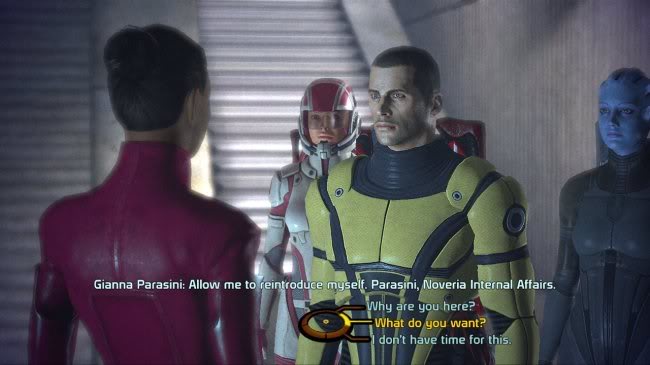
The best examples of games that properly use cut-scenes are Mass Effect and Knights of the Old Republic. For the most part, these games rely on cut-scenes when the user controls the action. She choose the dialogue the character speaks -- and to some extent, the response -- and then what happens next in the narrative.

In this situation, the gamer has at least some essence or perception of control about what is happening directly on the screen, even though she cannot control the actions of the character at that particular time.

And that is the purpose of the cut-scene -- to provide a cinematic experience that gives the gamer some excitement without completely losing that element of playability.

 
1 2 Nextarrow
Problem? Report this post
PATRICK STAFFORD'S SPONSOR
Comments (13)
Dscn0568_-_copy
December 16, 2010

I had a big cutscene offender in Fist of the North Star: Ken's Rage. In the TV show the game is based on, Ken fights a villain on the side of a pyramid. This is shown in the cutscene. The ACTUAL game fight takes place on a platform with the pyramid in the background. Worse, the game switches from platform boss fight to the the pyramid cutscene several times. 

Img_3899
December 16, 2010

It's frustrating when that happens, isn't it? Alpha Protocol had a similar problem, if I recall correctly.

Photo_on_2010-08-03_at_16
December 16, 2010

Personally, I disagree, though opinions are mixed on this issue for many people.

For me, cutscenes are a reward. They offer you the opportunity to sit back, relax and enjoy the fruits of your labours -- the difficulty you may have had getting through a level, or a particularly tough battle, or whatever. I like having opportunities to let the story unfold. And in certain types of game, it makes no sense to keep the player in control as it would look ridiculous. This is also the reason that a lot of cutscenes use moves that aren't possible in normal gameplay -- animations optimised for gameplay and motion-captured animations optimised for cutscenes are very different beasts. Yes, the difference is jarring sometimes, but it's there for a reason.

You note Half-Life as an example of keeping the player in control; yes, kind of, but in fact, all Half-Life does is lock you in a room while Plot Is Happening and then let you proceed. It's still a cutscene, and Gordon Freeman's muteness means that he's not actually interacting with anything. All you're doing is controlling the camera's position.

Fable II and III also have scenes where you can continue to control your character. I find this tremendously distracting -- it makes it harder to concentrate on what the person is saying. Jumping to a cutscene for exposition or explanation may take the player out of control for a moment, but it allows the developers to direct the scene in the way they want, and the player to concentrate on the information that is important.

I'm surprised you didn't mention Heavy Rain -- a game that is one long cutscene/quick-time event. That wasn't to everyone's taste, but offered a good balance between interactivity and cinematic direction. It wasn't perfect, but it showed that having an almost completely-directed experience can still offer people the opportunity to make significant, game-changing choices throughout.

Img_3899
December 16, 2010

Pete, those are excellent points and worth considering.

But with regards to your point - "in certain types of games, it makes no sense to keep the player in control as it would look ridiculous" - could you perhaps expand a little? What type of games do you mean? I ask because in a game like Dead Space, which completely relies on in-game action to tell the story, I thought it worked very, very well and showed that cutscenes aren't a necessity for every game.

Photo_on_2010-08-03_at_16
December 16, 2010

Sure thing. What I mean by it looking ridiculous is largely to do with the impatience of a lot of players these days. There is no reason that the main character would be running around, jumping or smashing shit up while Plot Is Happening, but some people just can't resist doing that. It detracts from the gravitas of the situation. Sure, it's funny. But you don't always want your games to be funny, and developers sometimes don't want the stories they're telling to have even the slightest opportunity to be misrepresented as "silly". It's also the reason why narrative-based co-op games are pretty flawed, because when you're playing with a buddy you usually want to talk shit with them and dick around. Again, not the best environment for SRS PLOTZ.

This is one of the things that bugged me about Fable II in particular -- someone can be having SRS CONVERSATION with you while you're Cossack dancing in front of them. A lot of Fable is about the silliness, but there is a plot there, and I can't help thinking that the plot of Fable II would have carried more weight if it were a more "directed" experience. That's not to say it should ditch the relative freedom that Fable's gameplay typically offers. But I believe there is a time and a place to wrest control away from the player, however temporarily.

Img_3899
December 16, 2010

I would agree with you to a point. My problem is that I don't particularly think it's helpful when the game takes full control away for too long. Cinematic cut scenes are great, but if they are to be used, (and I think they should be), they should be used sparingly and deliver a real reward, which is what you said before.

Photo_on_2010-08-03_at_16
December 16, 2010

Yes! I agree with this. When your cutscene reaches double-digit minutes territory, that's too long.

Default_picture
December 17, 2010

One of the worst (and earliest) cutscene offenders I'd ever played was Rogue Squadron 3 on the GameCube. I bought it based on my love of Rogue Squadron 2, but 3 turned out to be one of the most unfun, cutscene-loaded games I've ever played. it seemed like after every 30 seconds of action, I was in the middle of an unskippable cinematic. 

Me04
December 17, 2010

I'm generally not in favour or opposed to cutscenes, so long as they work with the gameplay to create a worthwhile package as a whole then I'm happy.

But are cutscenes ruining videogame stories? Hell yes, in some games. Metal Gear Solid 4 is the worst offender. As someone who is a huge Metal Gear fan, I consider MGS4's cutscenes the worst of the series. At least in 1, 2, 3 and Peace Walker they kind of have a purpose, whether that be moving the story forward or making a demonstrable point that fits in with the theme or ideas of the game, and the cinematic gameplay that KojiPro/KCEJ was trying to push. MGS4's cutscenes were just horrible, shallow wastes of time that totally ruined that game's story.

I don't think we should be moving against cutscenes in all games, though. As Pete said, sometimes they break up the action and give us a visual reward for beating a hard segment. I know I thoroughly enjoyed the opening of Chapter 12 on Final Fantasy XIII after beating the difficult boss just before. Say what you want about that game's plot, but the most visually exciting cutscenes were really well-placed to break up the difficult bits.

Robsavillo
December 17, 2010

You dance around this, but I also want to add that I like the way Heavy Rain approaches interactive storytelling. While not exactly cut-scenes, the concept that you can fail a sequence yet the game marches on means that Quantum Dream solved the inherent narrative dissonance with linear, story-driven games.

Wile-e-coyote-5000806
December 17, 2010

I think of it as a design choice.  You could just as easily argue that all games should be FPS because it's more immersing, but that just wouldn't work for many experiences.

I agree with Pete and would add that cut-scenes allow the developers to give the player character some personality.  I really enjoyed Half-Life 2, but Gordon Freeman is a blank slate of a character.  Contrast that with the Uncharted series, which imbues the characters with tons of personality.  Sure much of Nathan Drake and company's personality comes during gameplay, but they would not be nearly as interesting without the moments in the cut-scenes.  Who can forget when Elena introduced herself to Chloe as "last year's model"?

Like I said, it's a design choice, and I appreciate both schools of thought on this issue.  I like games like Bioshock, but I am also the guy that sat through a 1 hour 15 minute cut-scene in "Xenosaga: Episode I", then reloaded a previous save to watch it again.

Default_picture
December 18, 2010

When cutscenes are well done, they make a game shine. The best way to do them however is to push (actually nudge would be a better word, Xenosaga decided to use a bulldozer to push the story) a story in the way you want it to go, because people are an unpredictable lot. If a developer is hoping to use it as a means of engaging the player though, then they are clearly missing the mark.

Using it to tell the whole story is a bad choice as well, as then the player just feels like they're walking from page 126 to page 127, with obsticles in the way to make it even more of a trudge than before. If I want to watch a movie, I'll buy a movie. If I want to play a game, there had better be a reason for what I'm doing than to simply get to cutscene no. 365 for the game to tell me my motivation.

Sometimes it's limitations that involve it though. Some of the crazier stuff that Dante or Bayonetta do in the cutscenes just aren't feasable in game, but those are just to show how off the wall they really are. However, if you see stuff they're capable of in the game engine itself being stuck in a cinematic, then any type of show off effect is lost because the player then feels it's been watered down.

The biggest issue I see with cutscenes is that they're not made for the players, they're made for the marketing people. Consider the advertising for a game with heavy use of cutscenes. You'll find that the cutscenes are used almost exclusivly to give the impression that that's the way the game really looks like, then people put it in only to be dissapointed. Naturally, this is after the companies involved have taken the money and ran.

I suppose it's why I prefer small budget games more, because they don't have the resources to devote to 50% or more of the game being cutscenes and instead allow what the game is really like to show.

Default_picture
December 19, 2010

I love Metal Gear Solid 4.  It scratches an itch I can't get, or don't want from other games.

There doesn't need to be a long discussion about cutscenes. With Game Design, there's room for an infinite variety..  We should encourage that variety.

Yeah, let's point out tired trends, but don't be pointing fingers where it's done well. I like movies. I don't mind watching hour long cutscenes, and I feel Metal Gear has always done it right. If it's not your shtick, maybe there's another game you could play and enjoy more.

I'm also an enormous fan of Demon's Souls, which has virtually no cutscenes.. For Demon's Souls, telling the story passively works so much better.  It really depends on the vision for the game.. I guess the problems and mediocrity occur when the vision for a game isn't very strong and it follows the popular examples.  Bad cutscenes in bad game aren't very nice.. Good cutscenes ina  good game are great. Hell, good cutscenes in a bad game are great too.  I suppose I'd tell the developer, please don't bother with cutscenes unless you can make them awesome and first consider whether cutscenes are necessary or ideal for the type of experience you wish to offer. 

You must log in to post a comment. Please register if you do not have an account yet.