Games journalism failed us with Amy

Default_picture
Monday, January 16, 2012
EDITOR'S NOTEfrom Jason Lomberg

I’m not sure I share James’ belief in games journalism’s innate credibility, but he does provide a deft summary of the mechanisms that produce a stinker like Amy. Early hyperbolic preview coverage gives way to radically divergent reviews once critics see the finished game (as distinct from the bits and pieces that PR reps let them see).
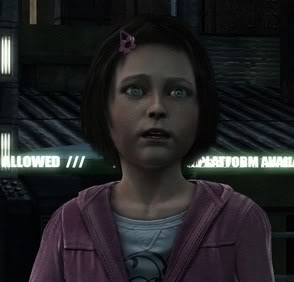
AmyAmy is a complete mess. It is a barely functioning interactive nightmare that I had absolutely no fun playing. 

And yet all preview coverage seemed to be positive. But the finished product didn't quite pan out. IGN demoed Amy at E3 and dubbed it "brilliant" (before giving it an abysmal 2/10 review). It seems rather odd when you juxtapose the early hyperbole with IGN editor Colin Moriarty's critical analysis ("easily the worst game I've played in recent memory").

It's no secret that games journalism is publisher run. I do not mean that reviews are paid for or anything ridiculous like that. But if a publisher doesn't want to show their product, then they do not have to. Amy is an example of this taken to a crazy degree. Vector Cell showed journalists a small portion of the game, and the major publications had little to go on.

So the preview editor had to give an honest opinion based on what he saw. But the piece that IGN's Michael Thomsen saw was not in fact indicative of the game as a whole. And Thomsen presumably had no opportunity to see more. That may not sound like such a big deal, but that positive preview quote still exists and can be used to the detriment of the consumer. 

Let's say, for example, that Amy actually did come out in a box. What's stopping Vector Cell from using the positive preview quotes as praise for the game? They wouldn't even have to mention how the review turned out. Naturally, this belies professional integrity, but I wouldn't put it past most publishers. The untrained consumer might see those quotes on the box and spend their hard-earned money on an inferior product.


The possibility of our trusted games-media outlets being used against us is troubling. It all has to do with access. We are not entitled to coverage of a game. The publisher's job is to sell the game, and they get to decide how much early access is appropriate toward that purpose. 

This is not a problem unique to video games. Almost every entertainment medium deals with this. Movie trailers are the most understood mirror to games previews. How many times have you seen a movie and realized that the trailer revealed the only good parts?

We need to be vigilant and understand previews for what they are. I believe in games journalism, and it is sad to see it manipulated so badly. 

 
Problem? Report this post
JAMES PUGH'S SPONSOR
Comments (18)
Tim2
January 16, 2012

The problem with previews is it's hard for someone to be too critical of something that isn't complete yet. The previewer in question may have had issues with what he played, but could've been told that those would be addressed before the game is released. A lot of great games have demoed like crap before coming out but had it's issues fixed prior to release. A previewer usually has to give the benefit of the doubt to the developer and give his or her impressions of what the game could be.

Previews are a weird thing to begin with for video games which is why I tend to ignore written previews and listen to podcasts for preview coverage. Podcasters tend to be a little more candid about what they played when talking about it in a less formal setting.

Mikeshadesbitmob0611
January 16, 2012

By that note, when I eventually give Amy a try, and if I decide I enjoy it, then this piece will have "failed" me by saying it's a complete mess.

See how it can keep on going? The problem is that people are treating previews/reviews like Gospel. Tastes difer, and people's tolerance of technical issues difer. It explains why so many hipster indie games can be so popular while simultaneously being technically abysmal.

Maybe they got a bit hyperbolic with the preview coverage, but if a game journalist can't get excited about a game concept that looks solid and seems to play decently, then why should we? They may have let the wrong stuff through the "gate" but to call this a failure seems a bit much to me. Especially in this case, where you're afforded a demo before you purchase the game that happens to be more than adequate for figuring out if it's your thing or not. The industry only "fails" in this way when people put aside their own decision making skills and leave the autopilot up to the writers.

Default_picture
January 16, 2012

I think this article could be considered hyperbolic as well. In the end, we all write from our own persepectives, and the ideas we put to paper are only an individual's opinion.

I'm glad you took the time to write this, since I value critical thought and the art of writing. But I'm a bit sad that you feel the entire industry of game journalism has failed you somehow.

And thanks to the editor for bringing this to the front and help promote discussion!

Default_picture
January 16, 2012

I think James made it quite clear that he believes in games journalism (more so than I do) as a whole. He simply doesn't like this particular facet of it. And the "failure" part refers to coverage of Amy specifically.

Default_picture
January 16, 2012

I don't believe gamers should depend on a preview or review. It was already stated that everyone has their tastes and preferences. I rent before buying, or download the demo in this case. I also don't think it's the journalist's job to make the decisions for the consumer. It's their reaction and outcome after playing it.

With that said, it's way early to even grace on quotations. Bubsy 3D and Turok Evolution quotes on their boxes were misleading, simply because the statements were from a preview in which magazines claimed prior to the full experience. In that case, I see manipulation; or cheating the game as a publisher.

Default_picture
January 16, 2012

I disagree with your statement that reviews are not paid for. I think by now that most big publishers pay for good reviews for their AAA titles, whether it's through advertising (see: Gamespot) or more direct methods. Take Modern Warfare 3 for example. A number of review sites gave it extremely high marks, even though it had very few differences from Black Ops and Modern Warfare 2. Any other series would have been torn apart for refusing to innovate and for basically being the same game as the last two. It's something to think about.

Default_picture
January 16, 2012

I always hate the certain case in journalism where a preview is only permitted, rather than an actual review. Obviously, some press relations person was counting on some juicy quotes for the actual release. At least it's clear that people really hate this game.

This happens to almost every awful entertainment release. The publisher always needs some way to cover up an horrible bludgeon on their record. Of course, nothing stays hidden for long. Transformers: Revenge of the Fallen was by far the worst movie that I've ever reviewed for my college newspaper. Thankfully, everyone usually knows which movies/games are absolutely terrible.

So I don't think this is a complete failure for gaming journalism. It does happen though. And it especially hurts whoever became suckered into this type of preview. Whether the person is a journalist or a reader, anyone deserves to rage over such a deplorable facet of entertainment journalism.

Default_picture
January 16, 2012

Anyone who's foolish enough to "DAY ONE" a game after reading a preview deserves what they pay for. Previews are as far as you can get from the final word on a game. The point of a positive preview is to say "This is one to watch out for," not "You should buy this."

The glowing previews for Amy isn't a result of anyone "failing" us; the publisher/developer wanted to put their best foot forward with a game they thought was interesting (they had no reason to adhere to the game otherwise, since it wasn't an entry in a long-running franchise), and editors played it and thought it looked cool. The game's problems (a bevy of technical issues and poor long-term design choices) are the kinds of things previews either aren't capable of letting you see or, in the case the tech problems, something that anyone who's seen a number of games would think be ironed out.

And at a show where sequels are plentiful something that promised to offer something different is likely to get a bit of praise.

So, you're right. We need to understand previews for what they are. I read those same previews for Amy and was planning on playing it, but after reading the reviews, I decided it probably was not worth my time. An anecdote doesn't prove a process works, but in this case, again, if you decided to pull the trigger on Amy from the first word you read about it, you can't blame a preview for something it's not intended to do.

Default_picture
January 16, 2012

Publishers often use previews to give a misleading impression of a game. I'd argue that those at the top deliberately hid the bevy of faults by showing journalists a small snippet. I disagree that publishers always have a positive impression of their own product.

Sometimes, PR people realize, for whatever reason, that their "client" is a dud. To use the film analogy...surely you're aware that certain movies aren't screened for critics, correct? Sometimes, the film is simply "critic-proof" and does well at the box office regardless. And sometimes, it's a total effin' dud and the PR folk want to avoid any bad press.

My point is that the publishers/developers aren't as idealistic as you'd paint them. Whether it's the publishers' cynical desire to sell what they know is a crap game, journalists' distinct lack of critical analysis, or some broken mechanism that involves both, the consumer gets screwed by receiving a misleading impression of the overal product.

Publishers treat games journalists like another arm of PR, and games journalists comply by...acting like another arm of PR.

Default_picture
January 17, 2012

It's true that PR reps don't always have a positive opinion of their product. But I don't think previews are where everything is laid out. If the journalist took a look at the game and thought it looked great, it's not the journalist's fault. Similarly, a publisher isn't to blame for putting its best foot forward. Negative previews are great and there should be more of them, but you can't force people to have foresight. If the publisher fooled journalists, what were journalists supposed to do? Somehow divine that Amy was terrible from the snippet they played? Should the publisher lay out the entire game, warts and all, at a preview event? I don't think so -- that's what reviews are for. Previews in any industry are about elevating (or in some cases, tempering) excitement.

Default_picture
January 17, 2012

When I think of PR reps, I always think of the scorpion and the turtle...PR reps will always do what is in their nature to do (which is to sell their product or service, no matter how terrible it is). But journalists ought to do a little digging, not take everything at face value, and tone down the hyperbole--especially with previews. It makes games journalists look foolish when they act like giddy fanboys during the preview stage then pan it in the review. This standard operating procedure exemplifies the worst of the "enthusiast press".

100media_imag0065
January 16, 2012

Great read. I've always thought about this to myself. Preview coverage is a touchy thing. I always imagine is like some sort of slime. You always want to grab it, study it, mold it and hold it close, but as soon as you reach for it, it falls through your fingers and back on to the floor. Previews are slime to me, and I just can't seem to grasp them.

One of the things that always, always drove me absolutely nuts about previews is the way they are written. They are always so bland. The writers, who always have personalities that shine through in their reviews, are often just a shadow of themselves when writing previews. They are too scared to be too kind, or too critical of what they are previewing, so what we are left with is not a preview, but a "What I played today and how I played it" article.

How many previews have you read where personal opinion is nowhere to be found? How many previews have you read that literally read like a retelling of events that the writer experienced? And worst of all, how many previews have you read that ended like this...

"But, when all is said and done, X seems like it's shaping up nicely, and hopefully developer X can pull everything together and polish it up a little more before launch"

Almost every preview seems to end with a sentence similar to the one above. In most previews, you can just scroll to the bottom and read the last few sentences since that is the only place where you are going to find anything resembling actual opinion.

Lately though, I have noticed a change on IGN. About a year ago, I started reading previews on IGN that were being pretty brutal. They were litterally telling us not to buy a game, even though the game wasn't coming out for a few months. They were previewing games, and then tearing said game apart when it wasn't shaping up nicely. I was floored. I couldn't believe what I was reading. Honest...opinion...in a preview.

Had the world gone south? To my horror, the commenters were tearing the writer apart for not waiting until the review to voice his opinion. These were the same people who complain and complain that previews are so stale, with little personality. And as soon as the writer gives them exactly what they wanted, they tear him apart for voicing the same opinion they claimed they wanted because he hadn't played the entire game.

He was dead right in the preview by the way, when the game came out a few months later it was terrible. So I gotta ask. What is it we want?  Do we want stale, dry and empty preview coverage that reads like a timeline of in-game events? Or do we want previews that let the writers personality shine through, where they don't sugarcoat the problems? Previews where they tell you loud and clear wether they think the game will succeed or not?

What is it we want?

Default_picture
January 17, 2012


I couldn't agree with you more about IGN actually taking a stance when previewing a game. Greg Miller basically told Insomniac that he didn't like Ratchet and Clank: All for One.

The response in the comments was so.........disheartening and it really floored me. If readers are not hoping to know what to avoid and look out for then the premise of the entire article is void. 

Well said.

100media_imag0065
January 17, 2012

I remember when Greg did that! I was squirming in my seat while watching that poor guy from Insomniac. He didn't see it coming, because he expected the interview to be the normal, boring questions where he would give the normal, boring PR answers.

It turned out that I really enjoyed that game, if I remember correctly Ryan gave it an 8.0, which I agreed with for the most part. And even though I felt sorry for the guy that Greg had targeted that day, I was happy he was doing it. He was letting his personality shine through in all the things he does for the site, not just reviews.

Default_picture
January 17, 2012

Yeah looking back maybe he was a little too hard but I agree it was a good thing.

Yeah I am a huge Ratchet and Clank fan so while I didn't agree with what Greg I still support him taking a stance. I liked the game too it was fun but I really wanted a normal RandC game.

100media_imag0065
January 17, 2012

Very true. After playing it I went back and replayed Tools of Destruction and A Crack in Time, both of which are some of my favorite games of all time. I've been waiting patiently for Sony to re-release the PS2 versions in HD, but they are sure taking their sweet time. At least we got Sly Cooper, which was incredible, and Jak & Daxter is hitting ina  few weeks.

Default_picture
January 16, 2012

I like to think that the honorable Mr Jeff Green had the last word on this problem with his satyrical piece on the upcoming Cludgel of Zanthor. I have never been able to read a preview afterwards without  thinking only

"This MAY exist in the future in some form, but maybe not"

Default_picture
February 06, 2012

I was at lexis numerique's quarter of a booth at E3, and I will tell you the exact thing that my EIC thought when we left their demos: looks promising.

"Looks" being the operative word as we didn't get to even touch the controller. Did the combat look bad? Yes. Was there atmosphere? Yes, surprisingly. It looked like a nice PS2 game and seemed to play like an early PS1 game.

But ultimately, we never wrote a preview on the game because... well, what the hell was there to say about it? It was a 10 minute demo, some of which was spent on trying to find the file to boot from. It was chaos; the way E3 is. And although I've only done two tours of the show now, I can say that what happens at a demo at E3 isn't at all a clear indicator of what is to come. Things can easily go either way at demos as well as the final product.

I think the biggest thing to point out is that Mike and Colin are quite different from each other. You don't even have to meet them to know that from their writing and philosophies on life (I'd argue two extremes in general). Removing everything else, you have two different people talking about some of the same content. 

I don't think game journalism failed anyone here. If anything, Mike didn't approach a preview like he probably should have: with facts, not impressions. IGN should be more specific because it reads like an impressions piece (which is not the same thing as a hands-on or preview coverage), but they aren't. But the very title of his preview reads to me at it is a cool idea and not "go buy this game; screw the actual review".

You must log in to post a comment. Please register if you do not have an account yet.