Do triple-A games have a future?

Default_picture
Friday, September 14, 2012
EDITOR'S NOTEfrom Rob Savillo

Graham wants to know: Can the industry continue to support triple-A development into the future, or will it be crushed under the weight of high budgets?
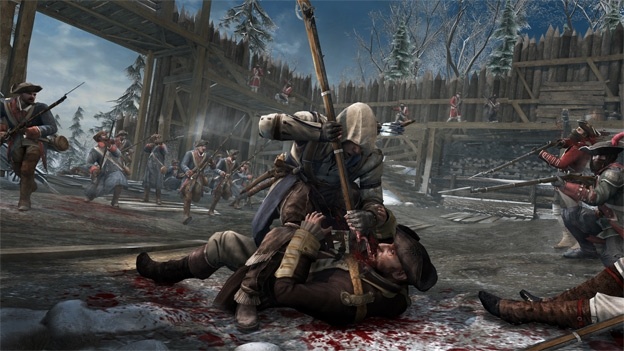
Alex Hutchinson, creative director of Assassin's Creed 3, recently went on record as saying, "We're the last of the dinosaurs .... We're still the monster triple-A game with very large teams [and] multiple studios helping out on different bits. There are fewer and fewer of these games being made, especially as the middle has fallen out."

Now, his perspective is obviously biased. I would never call Assassin's Creed 3 the last triple-A title, not even close; however, I look at the world of gaming as a whole and take something into consideration: Can we really keep this up?


I say this first with earnestness that unfortunately cannot be properly transcribed to the Internet: I am not writing this out of a need to fearmonger or to shock or for any other negative reason. I speculate now to achieve an aim: to go forward into the future with eyes open.

I've commented in the past that triple-A games aren't inherently good or bad, but when so many resources and so much humanpower gets funnelled into a game, the consequences of success or failure increase manifold. There have always been last ditch gambles, like Square's Final Fantasy and Tecmo's Dead or Alive, each franchise so named because if they hadn't found success, they would likely have been their respective companies' last endeavours. Still, these days we seem to be reaching a threshold where even exceptional is no longer good enough.

When I make that comment, my mind is going to the fate of Radical Entertainment, which saw closure this year after Prototype 2 failed to sell to expectations despite the fact that it was a well-received game that topped the best-seller list in the month that it debuted. While it is true that the sales for that month had decreased a drastic 42 percent, to think that having the top-selling game for the month would still result in the studio behind it being shut down is far from a comforting one. It's also hardly the only troubling sign I've seen as of late.

This year has seen THQ hit hard, and even giants like Electronic Arts are struggling and weighing their options. You can dismiss EA's recent woes to the idea that the company is not well liked among gamers, but there must be more to it than that, considering the success of titles like the Mass Effect, Dragon Age, and especially the Battlefield series. So what is happening here?

I believe that the answer lies in a one-two punch of ever increasing production costs and ever diminishing returns. It seems that these days a lot of mainstream titles have a choice: be a huge, unparalleled successes or fall by the wayside to make room for games that can be. The current climate seems more unforgiving then ever before, with little to no margin for error.
Not only is the current high-stakes way the industry works a problem for the big guns, but the small fries are going to suffer as well because of this. It's true that the indie scene is strong and continues to produce good, if niche, titles; what concerns me is the fate of games that have been great experiences in the past.

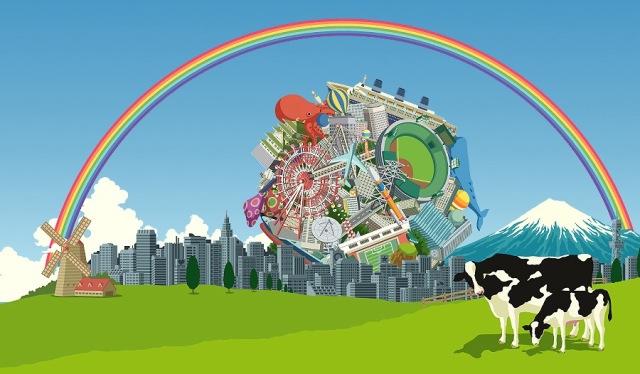
If we keep going, will we see titles like Shadow of the Colossus, Beyond Good and Evil, or more recently series like No More Heroes and Katamari Damacy? It's hard to speculate, but the more resources that the "next big" titles demand, the more unwilling studios and publishers will become to try and take a risk on anything that isn't a guaranteed hit.

Maybe I'm making a mountain out of a molehill. I hope I'm wrong. I really do. I don't think that this -- even if it is as big a problem as I'm speculating it to be -- will cause the industry to crash. What I do think is that this is going to cause everyone involved in gaming -- from the big three to the major publishers to the developers to, yes, even us as well -- to take a long hard look and reevaluate just what's important in games. Technology is great -- amazing even -- in what it can provide, but I think that perhaps it's come at a cost of losing some of the core premises of what make games great to play.

Perhaps it's just my cynical nature talking when I make the above comments, but I think that some introspection certainly couldn't hurt matters. If we can still have great games that don't need six hundred strong teams and budgets that are growing to rival and beat blockbuster film costs, then that can't be called a bad thing. This stands a precipitous moment. We're on the edge of the next generation after all. If the trends continue, then the technology will demand greater and greater investments, and while it may not prove completely untenable, it's certainly far from the best solution to the problem.

Will any of this come to pass? I certainly am in no position to say one way or another. I'd be lying if I told you that this train of thought didn't worry me greatly, and the reason for that is, of course, the fact that I care about games, they've been an integral part of my life, and I know I'm not the only person that considers that a truth.

Still, I believe that the paths we walk on are by no means set in stone, and perhaps this would even be a good thing ... a new beginning? Again, I cannot say, but whatever the results are -- even if there are none in particular -- I will be sitting, watching, and playing. 

 
Problem? Report this post
BITMOB'S SPONSOR
Adsense-placeholder
Comments (6)
100media_imag0065
September 14, 2012

The reason sales are slowing down is the very reason they always slow down around this time. People are tired of the consoles we have. We've had them for way too long and people have lost interest. This always happens, and every single time people run around panicked that the industry is collapsing. Remember when everyone said that about the PC market? Remember when everyone said tha about the handheld market? Remember when everyone said that about the console makret everytime a generation slows down?

Protoype 2 may have been a best seller the month it came out, but all that means is it sold better than everything else, but if everything else has taken a huge drop because of a lack of consumer interest in old consoles, then being the best selling game doesn't mean much. What does it mean, that it sold 200,000 copies? That not a lot at all. THQ is another example, the industry and AAA games have nothing to do with their collapse.

Their collapse came from trying to appeal to a casual audience with their U Draw tablet, which sold miserably in stores for the PS3 and Xbox 360. That is what killed them, and the fact that they have moved the whole company around to only focus on core games shows the confidence they have in the AAA market to bring them back. THQ gambled on the casual market and lost, now their only hope is the AAA market.

Any developer who tries and says AAA games are dying is desperately trying to force people into the manipualtive F2P market. They are trying to move everyone into that scam of a model since it may or may not get them more money. AAA games still sell incredibly well when people actually want the games. Skyrim is a great example. Borderlands 2 already shattered pre-order estimates. These are games people want to play, and to say that these industry drivers are somehow going to vanish to make way for micro-transactioned F2P games is absurd on so many levels.

The AAA market isn't going anywhere.

Default_picture
September 14, 2012

I can see the point you're making here. They've spread themselves too thin, and gambled in markets that didn't pay off.

Still, I think that the ever-inflating budgets of really big games is a point to be worried about, if not exactly at the moment then surely in the future. I remember reading an article on Game Politics wherein Capcom claimed that 600 people were working on Resident Evil 6. Even if that number is exaggerated, it's still kind of ludicrous to me.

I'm not buying into the mindset that "the next generation of consoles will be the last", that some people are espousing, either. It would take something major happening for that to come to pass. At the same time though I think that even with games selling really well like Skyrim and Borderlands that there's still less profit being made then before, simply because it now costs more to make these games.

Perhaps it's an overreaction on my part to think that it's something unsustainable, but I am worried that eventually it will take record breaking sales numbers every time for something to still be considered a viable game or franchise. Certainly Prototype 2 didn't sell well enough, but what about if a time comes when selling half a million, or even a million copies isn't considered good enough anymore?

I really hope it doesn't come to that, but I'd be lying if I said I wasn't concerned about it.

Default_picture
September 14, 2012

I really think too many developers are focusing on big, triple-A titles for all their profits. The creator of Final Fantasy, Hironobu Sakaguchi, commented in an interview that too many current titles focus on high-resolution graphics when they really need to focus on the gameplay. Very few games are pushing new, exciting gameplay styles. They're all focusiing too much on the same generic characters and realistic graphics.

Developers really shouldn't have to work this hard to create a product that may not become a hit. Personally, I'm disappointed by the boring control styles of today's non-Internet games. They need to show me something new. I'm getting bored of realism. We have every reason to stay ccncerned about the future of this monotonous video game market.

Default_picture
September 15, 2012

I think fixing this problem will require some changes on the design/production of video games.  Engines need to be developed to allow development to be quicker, without sacrificing quality.  Unreal Engine 4 has promised some features like this that could very well help cut down costs.

We also need to break away from this trend of trying to outdo the last guy.  More explosions, more gore, more cursing, more more more more more.  I'd much rather have a plain-looking, but smartly designed, game than the bombastic on-rails experiences we are getting a lot of nowadays.

These games get budgets of millions of dollars and therefore need to sell millions of units to break even.  It keeps climbing but the limits have been reached.  If companies don't learn to tone down the budgets of their titles, and the expectations, we will reach the breaking point where no AAA game is profitable.

Also, good on you for knowing the real meaning of AAA.  Too many people just think it means a top of the line game.

Default_picture
September 17, 2012

Simple answer, yes, yes they do. I just find the comments by the fella at Ubisoft selfish and innaccurate in many way. 

Default_picture
September 17, 2012

Yeah, Ubisoft has foot-in-mouth disease. At least they aren't trying to pitch Duke Nukem Forever to us.

You must log in to post a comment. Please register if you do not have an account yet.