

Last time I took a look at the silent protagonist and the ways in which our imaginations can give that character life. To further the trend of storytelling in games, I’d like to examine moral choices in games.
These days it’s all the rage to have some sort of morality system in the game. However, many gamers complain of the binary nature of such systems and the fact that typically these choices have little to no effect on the story or gameplay. I’m here to argue that these choices don’t need to.
Let’s take a look at Bioshock. The game’s key morality choice focused on the decision to harvest for release the little sisters. If you did, you got more Adam and the game’s ending cinematic would differ. Many claimed that there was no real moral consequence, that the decision was a matter of what ending do I want and how hard do I want the game to be.
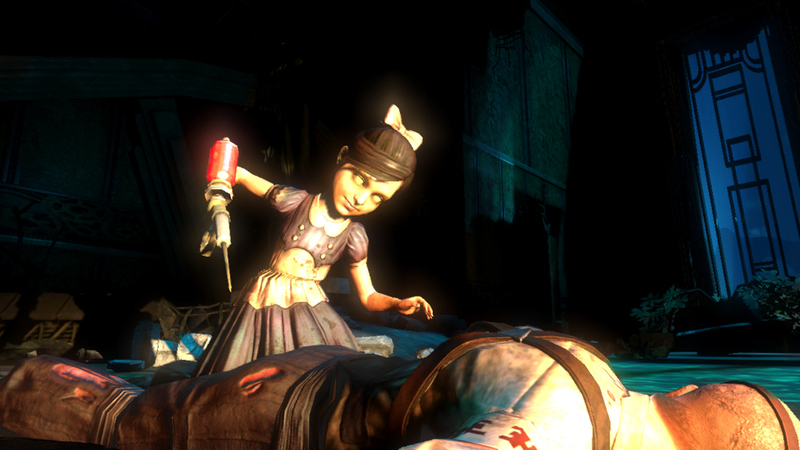 But in truth, these decisions can drastically shape the character you’re playing. Bioshock features a (mostly) silent protagonist. He’s really a blank canvas for you to paint. If you decide to save the little sisters, you’ve created a character that is a good soul. By this logic, all of his actions are now motivated by a desire to save himself and the other innocent denizens on Rapture. If you decide to harvest the little sisters, you’ve created an evil, power mad anti-hero who would stop at nothing to gain ultimate power and control of the underwater city no matter who he hurts along the way.
Now doesn’t that sound more interesting than one of two pre-rendered cinematics? It gets even more interesting if you actually care about the relationships between your characters. Many people viewed the romantic relationships in Mass Effect as little more than an excuse to watch some soft-core digital porn. But if you play up those relationships in your head during the entire game, great moments can occur. If Liara is in your party and you’ve been created a romance with her, then anytime you do something in combat to save her or help is now motivated by that love.
We don’t need a tangible result for these choices. It should be enough to have our perception of the characters altered. Is Wander right or wrong when he takes down a Colossus? Is it right or wrong to nuke Megaton? Is it right or wrong to hug your Fable II wife or fart in her general direction? The ending may be the same, but the journey there is completely different. It’s the means to an end, people!
Tune in next time when I tackle player movement and interaction in the first person perspective. It’s more interesting than that sounds, I promise.