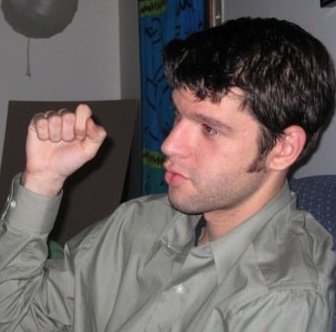


Review Crew Survivor was my idea, back when I was working on EGM. (Yeah, I wan't above cashing in on popular trends at the time....) I'm glad the winner, Aaron Koehn, stayed in touch with me over the years. It's interesting to see how his career's progressed. See how he's done in the world of freelancing, and check out his great advice!
If you’re reading this, you love video games.
There’s no other way to explain why you’d click on a link that led you to a simple and modest piece from a guy you’ve never heard of. And since as a writer I benefit from having as many people as possible read my work, your passion will ever so slightly boost my sense of self-worth.
So who am I? I’m essentially a nobody -- or at least a person whom you’ve likely never heard of.
To be blunt, I’m just a guy who has toiled for several years as a gaming writer and made a very meager living doing so. But like you, I’m enamored with this medium. And so for that reason I’m totally willing to sit at my computer 'til two in the morning, writing pieces that few will possibly read, with the hope that someday I’ll be able to make a living doing this.
My story about gaining entrance into the freelancing fraternity is an unusual one. So I thought I’d share the details regarding how and why I came into this crazy vocation, as well as a few tips I’ve gained along the way on how you can better position yourself to make monies writing about this medium which we are both so passionate about.
My interest in gaming journalism was piqued several years ago when Electronic Gaming Monthly advertised a contest called the Review Crew Survivor. The contest was aimed at individuals who wanted to write reviews for a gaming publication, and contestants would compete by pitting their written work against one another online. Then as a prize, the winner would receive the opportunity to write several reviews for EGM.
From a submission pool, EGM selected 15 finalists to participate, and then every few days, the contestants would submit a review of a game of EGM’s choosing. After they posted the entries online, readers would then vote for the review or reviews they thought were the worst. The reviewers with the most votes would then be eliminated from the competition.
I was a senior college student at the time, and I had absolutely no idea what I wanted to do after school, career-wise, life-wise, or monetary-wise. I felt totally unprepared for what my parents termed “real life,” yet I felt lots of pressure to assimilate and become the proverbial wholesome member of society. When I saw the advertisement for the contest in EGM, it didn’t resonate at all that this could or would be some sort of career-initiating move. I really was just kind of aimless at the time, and this seemed like a good task to devote myself to.
In the end, I won the contest. And I then came to a decision that many of you have probably also reached: that I would do everything I could to write about video games occupationally.
That was 2004, and in six years the progress I’ve made toward achieving that goal has been marginal. Nevertheless, my appreciation for the medium has only grown and so with that I’m further compelled to keep trying.
A GamePro editor once told me that, " Any editor worth his salt will listen to a good freelance pitch,” after said editor opportunely contacted me to do an interview pertaining to my victory in the Review Crew Survivor contest.
Now I don’t know if that statement is completely true (the same editor once told me that Saved by the Bell was “the greatest TV show to ever be filmed”), but those words have always given me the nerve necessary to contact those scribes when I think I’ve got a quality idea to share.
Ultimately, it’s advice like that which has always proved so beneficial in my attempts to get published. So with that in mind here are a few more tips I’ve gleaned over the years to help other prospective writers get a foothold in this industry.
Freelance pitches
If freelancing is your goal, you’re most likely going to have to reach out to a publication and inquire about writing for them. Since most magazine staffers list their contact information at their respective gaming website, it’s never too difficult to find ways to get a hold of them.
Yet, I’d recommend using a bit of tact or polite discourse when attempting to pitch an article. It’s a good idea to ask if they’re open to potential article submissions before shooting them a two-page list cataloging the societal impact Super Mario Bros. has on children.
Remember, if an article you write for an editor/publication does well and is well-received, they will also benefit from its success. So you should never be too apprehensive to reach out to those professionals, because your work for them should be mutually beneficial for both parties. But again -- and this is critical -- make sure you’ve got competent ideas to sell. If this seems intimidating, remember that “editor salt line” that I was told, and know that some of the onus regarding whether quality freelance work gets published rests on a quality editor and not totally on you.
Rejection and criticism
Also, don’t get too discouraged by rejection. This business, and writing on the Internet in general, has allowed me to develop a fairly thick skin. A skin which has been invaluable not just for dealing with idea dismissals by editors but also for dealing with reader’s comments once I got published.
By nature, the anonymity of the Internet has turned the passive reader into an active, and often surly, media participant. And it is in the nature of those who are surly to be more eager to voice opposition than agreement with your piece’s viewpoint. The last thing you want to do, and something that markedly demonstrates unprofessionalism, is engage in a shouting match either with a reader or a prospective editor whom you don’t see eye to eye with.

Rejection can be a difficult pill to swallow. I’ve personally never been particularly good at accepting it (even with all the help I received from girls in high school), but it’s vital to get past it if you’re going to persevere in this field.
Your proposals
Lastly, and again this is advice I got from several long-time veterans when pitching ideas, don’t write lengthy proposals that will ask too much of the editor’s time. Now I don’t know this from firsthand experience, but apparently editing things is a very time-consuming vocation. This means if an editor receives a lengthy pitch that is wordy, over-complicated, or long-winded, he will be much less prone to taking you up on it or even reading it for that matter.
Keep your pitches succinct. Otherwise you might run the risk that your great ideas might not even get looked at. You should also cite or provide links (if you’re able) to other pieces you’ve done, which should quickly relay your competence.
Now these are the ideas and items that have worked for me over the years, but I wouldn’t blame you if you are hesitant to take advice from a “nobody” like myself. If you’re considering leaving a negative comment at the bottom of this piece, however, know that I’m making a list of everyone who has disparaged me over the years. And if one day I am fortunate enough to become an editor, said list will come in real handy when I’m deciding on the freelance pitches I’m going to approve (as you can see, I’m still working on that thick-skin bit).
Good luck, and maybe someday in the future we’ll meet up at an actual professional video-game function, as full-time, paid employees.