Separator

Keeping your game: The threat of the trade-in

Sunglasses_at_night
Sunday, February 27, 2011
EDITOR'S NOTEfrom Omar Yusuf

War! Publishers are devoted to extinguishing the growing problem of reselling games. And yet, the cash incentive is enough for retailers to stay the course, selling used games and reaping the rewards again and again. Jon plays arbiter and introduces some clarity to the topic.
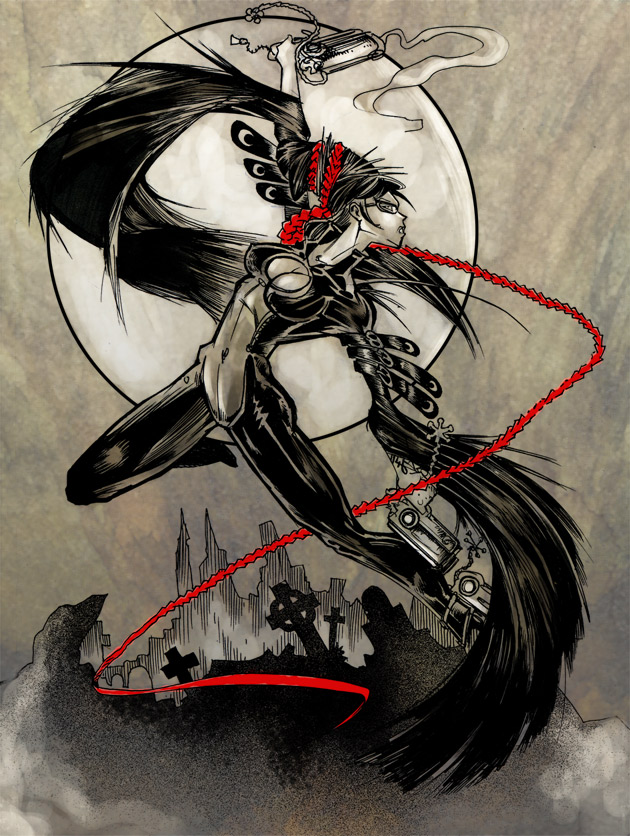
BayonettaThe war between publishers and retailers is a well-documented and yet strangely ironic struggle. Publishers love the fact that retailers sell their products, but they aren't keen on those very same retailers reselling games over and over. While the publisher gets paid once for the initial purchase, the retailer stands to profit repeatedly. It's no surprise that the conflict continues to this day.

As I see it, two solutions exist to remedy this issue that is currently dividing the industry.

Electronic Arts is responsible for championing the first solution: online passes. Any title which employs this feature will ask players to insert a code before accessing the game's online portion. This code is free...but not without a catch. You have to buy a brand-new copy. In effect, the requirement of an online pass will increase the cost of a preowned game by a considerable margin. As a result, publishers will force retailers to cut their profit margins if they want to keep the price of a second-hand item below that of a new one.

The second solution involves a robust, replayable online element. The idea is simple: A fun multiplayer mode will keep people playing for the intervening months until the launch of the series' next game. The thinking here is sound, but the execution is more than often lacking. After all, a tacked-on multiplayer component is often worse than the absence of one. Developers invariably design the best multiplayer modes when they focus on this feature, and as such, a two-pronged approach is ill-advised with titles more designed for solo play.

These approaches are worth mentioning because their existence indicates how much publishers are worrying about the problem. Interestingly enough, Bayonetta seems to have found a solution to the dilemma in a way which is neither morally dubious nor costly. It simply involves some clever design.


Yesterday, I returned to Bayonetta. I consider this to be both one of last year's finest games and one of the best titles ever made. I go back to the action title because I haven't finished it. In fact, I've beaten Bayonetta's campaign three times. Boredom wasn't a factor either. Instead, I picked up Bayonetta because (even after 30 hours of logged play) new features, weapons, areas, and scenarios still remain hidden or unexplored.

While Bayonetta may be tough as nails on its two higher difficulty levels, it’s also incredibly replayable. I don't mean to say that it’s rewarding simply because it's difficult. Bayonetta also keeps you interested by doling out pretty sweet extras like new characters and weapons.

These items are certainly neat, but they would be worthless if you’d already seen everything the game had to offer. This is not the case. Bayonetta offers opportunities to use hard-earned unlocks in the form of side quests and narrative scenarios. It’s strange to think that this is a design choice that seems to have eluded other developers in the past. If you're lucky, you'd have a troupe of bodyguards by the end of Grand Theft Auto: Vice City. But with nothing more to challenge you, the entourage felt kind of pointless.
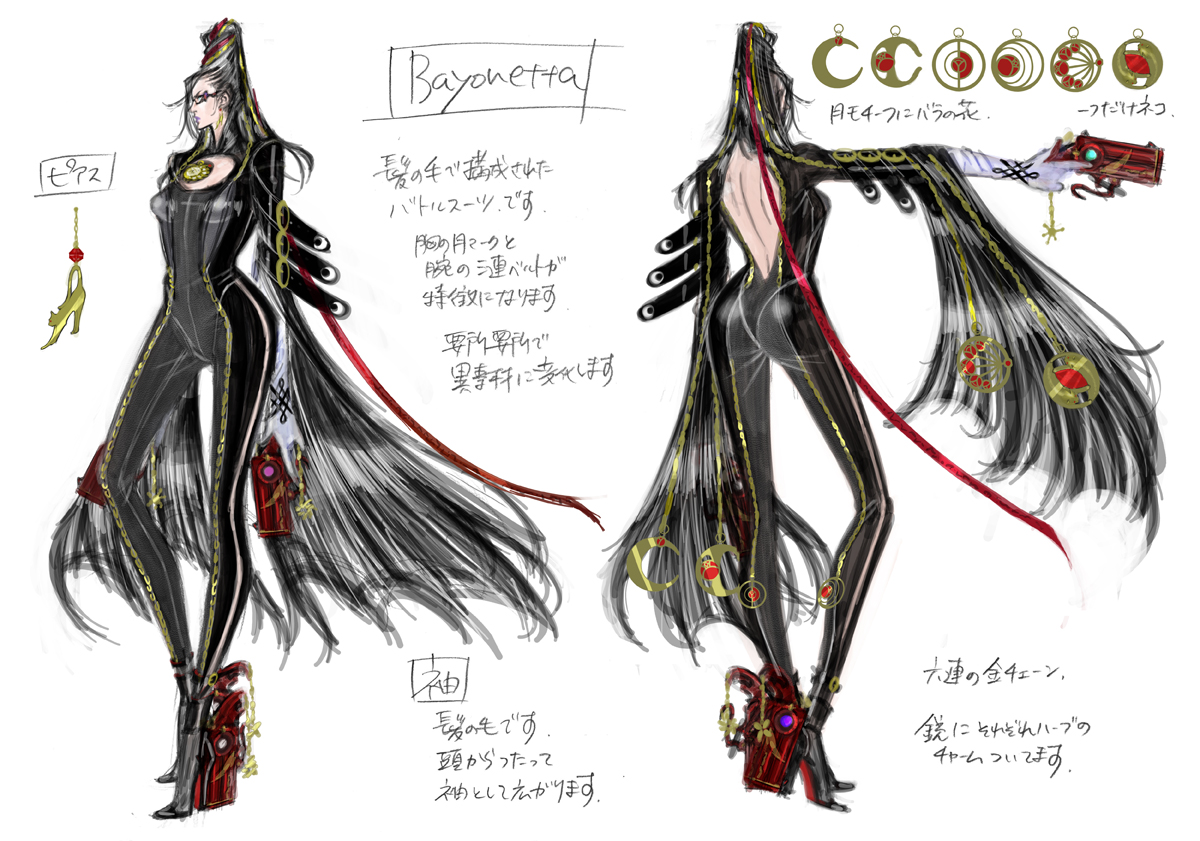
It’s also very helpful that Platinum Games, the developers of Bayonetta, chose to put more effort into scaling difficulties instead of simply boosting the enemies' health. A higher difficulty setting in Bayonetta not only produces stronger enemies, but new ones altogether. Slow motion -- a pivotal weapon in your arsenal -- is completely absent on the Extreme mode.

Bayonetta does a few things wrong. It doesn’t indicate the locations of these highly desirable items very well. It offers no shimmers, faint outlines, or light sources to indicate the existence of these nifty collectibles. It would have been criminally easy for me to miss them entirely and retire Bayonetta to the shelf permanently. Some players may like keeping these sorts of rewards as a surprise, but I’d argue that 90% of the people who end up unlocking them will have seen them on the Internet first. Show me the item, tell me what it does, and then tell me how to get it, please. Get your marketing department involved if you have to, but make me want it!

As much as I’m picking up on these design choices, the simple truth might unfortunately be that I want to return to this one title over and over primarily because it’s good. Sure, it’s nice to know I’m working towards a great payoff, but in the end, I care about it because I love the core of the game.

So although I’d love to see unlocks dropped into everything this side of Tetris, it might be the case that in order to prevent people from trading in, developers just need to make better games. All the unlocks in the world wouldn’t stop you from trading in Superman 64, but then again, neither would online multiplayer. If you find a way of explaining all this to profit-obsessed executives though, then please get in contact with me.
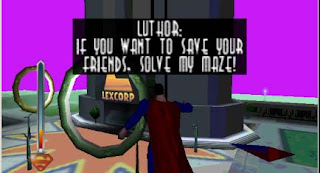
Still, imagine Superman with a lightsaber, and tell me that wouldn’t be sweet.

 
Problem? Report this post
JON X. PORTER'S SPONSOR
Comments (8)
100media_imag0065
February 27, 2011

I make it a point to buy used any game from any publisher that requires an online pass. Not only do I make sure to play the game without giving a dime to the publisher, but I am aware of many groups that will pirate a game only because of the online pass business model. I guess it is their way of fighting back, since they normally would have purchased the game new. I myself do not pirate, but I won't stop them from doing so.

I feel it is my duty to actively avoid supporting publishers who go out of their way to punish honest gamers. Buying used is not a crime. Trying to save money in a tough economy is not a crime. Forcing people to pay extra fees on a game simply because they purchased it used, or borrowed it from a friend, should be a crime. If a mother buys a used THQ game for her two sons, she would have to pay the Online Pass fee TWICE if both of her sons wanted to play the game online on their profiles.

That isn't just absurd, it is evil. I even filed a complaint with the BBB aginst THQ, but they have yet to respond to it. When I sold my iPod Touch 3rd gen on Ebay to help pay for a new one, Apple never demanded I give them money for selling it used, or demand the person who bought it from me pay fees in order to unlock it. When I look around my house and at all my belongings, I do not see a single product that, if I wanted to sell used, would force the maker to demand payment.

Video game makers think they have a right to subsequent sales of any of their products. They do not deserve, or have the right to any fees after the initial sale. I don't care that they have to pay money to keep servers going. I really don't. I have ZERO sympathy. You don't think Apple has to pay in order to keep the App Store running daily, just like developers have to pay to keep servers running? Still, Apple does not demand money from customers buying their products used. What makes companies like THQ think they deserve anything?

Greed? Probably. Whatever they can do to create new revenue streams and keep their investors happy, they are going to do it. I have a right as a consumer to do what I want with the products I buy as long as it is not against the law. Buying, trading, lending, borrowing games is not against the law. So technically forcing fees onto consumers for purchasing a used game, when no such fees exist if the consimer purchases the game new, should be against the law.

Someone needs to take them to court to stop it before it gets out of hand. Forcing a family to pay the fees multiple times is evil beyone reason, as an example, and I am absolutely shocked nobody has stood up to stop it yet. If we don't do something now, you can expect to see this sort of fee tacked on to single player games as well. Soon, you will loose all your rights to the video games you buy.

Bithead
February 27, 2011

Am I crazy for wanting to play Superman 64 after seeing that screenshot?  Great piece, Jon.

Default_picture
February 27, 2011

Ed: The difference with the app store is that they actually sell things in the app store. If publishers have a game with free online multiplayer, that game isn't bringing in any revenue beyond its retail sales, whereas the app store entices people into buying things from Apple. There may be loads of free stuff in the App store, but I'm sure the benefit Apple gets from app sales easily justifies allowing free content. It's just not an even comparison. 

However, that's not to say I'm against the used games business. At the moment, almost all the games I play are bought used or borrowed. I'll probably buy mostly new in the future when I have the money, but for now I stick with used.

Default_picture
February 27, 2011

Publishers have no right to a game past the first sale (hence the first-sale doctrine). Buying used does not in any way hurt the publisher. In fact, it indirectly helps them. Used games=huge profit margins for retailers. Publishers need said retailers to sell their games. It's a symbiotic relationship, and whenever I hear publishers equate used games with piracy, it smacks of ignorance.

Avatarrob
February 28, 2011
Ed: No-one is forcing a family to pay anything. I agree that the online pass concept is a bit difficult to swallow, but as long as it's made clear by the retailer that the used copy lacks multiplayer without an additional fee, I think that's fair game. Your comment that you don't care that the publishers have to pay to keep the multiplayer servers up cuts to the core of the issue. They do care, and while I don't particularly like the practice I think it's fair that if they're making no money on the sale - which in used games, just like any other used product, I think we all agree the publisher has no right to - and yet are still expected to provide the service as if another customer had bought it, they should be allowed to charge for access to the entirely optional section of the game which requires online servers. Jon: Excellent article; I do have to wonder in the case of Bayonetta whether the unlockables are the primary reason, or just a secondary contributor by comparison to the near-perfect difficulty curve which runs through that game. The Angel Slayer arena battle is inspired, but primarily in showing off just how sublime the mechanics of the game are.
100media_imag0065
February 28, 2011

@ Tristan

You are forgetting about the louds of DLC that publishers regularly force developers to release for their games. This is the same as Apple making money on Apps. Publishers use the excuse of having to pay for servers to justify charging fees to people who purchase the game used, but they completely neglect to mention all of the DLC that they profit off of on a regular basis.

Most of them will simply release a multiplayer game so they have another bullet point to throw on the back of the box. Now they have another reason to tack on multiplayer, so they can use it as an excuse to charge you extra fees if you purchase used.


@ Rob

I disagree. It is their decision to include or not include multiplayer. If they don't want to have to pay to keep servers running, then don't include it. They make plenty of money off of DLC and advertising. They are completely blowing their money woes out of proportion in order to justify tacked on fees. Like I said in my comment, I can not think of a single other product that would ask anyone to pay fees if it is purchased used.

Every company on the face of the planet has to pay fees for their products after they release it on store shelves. They don't just make a product, release it, and start earning money. They have a ton of people to pay. Take franchises for example. Say I buy an Electronic Store franchise. If I sell someone a computer, that money needs to be reported to headquarters as well as the fees I owe them. These are mandatory fees.

If nobody comes in to buy anything, I still have to pay franchising fees. If that person decided to sell that computer I sold them one year later, I can't do anything about it. Yet, I still have to pay fees for the franchise. Once they leave that store with that product, I can no longer do anything about it. And the maker of that computer, say HP, has to regularly spend money on making and issuing patches and fixes and updates to the computer to make sure it remains up to date.

It costs HP money to do all of that work, but they wouldn't dare as me to pay them any fees for buying one of their computers used. Every company has to pay fees. The video game companies are no different. Don't let them fool you into thinking they are special and that server fees are expensive. They aren't. They are manipulating the situation. They are no different than any other company and they have no right to demand fees for ANY subsequent sale of their games.

Default_picture
February 28, 2011

Ed: Yeah, I suppose you have a point. Maybe DLC just didn't occur to me because I don't buy it. Though it is possible that the return from offering a free service that entices users into paying for other things isn't as great for video game publishers as it is for Apple. But you probably don't accept that possibility. Also, simple economics says that they're going to sell something for as much as they can get out of it. Why let a whole family play from one copy of a game when they're willing to pay a fee for each user? You probably don't buy that argument either, though. I don't really like the implications of it. But I don't think there's really anything that can be done to stop it unless consumers as a whole just refuse to pay.

Look on the bright side though: Sony still allows account sharing. I have games on my PS3 that I didn't purchase just because Sony allows people that trust each other with their account information to download each other's games. Stuff like that gives me hope that not everyone is going to be utterly ruthless on this issue.

Default_picture
March 01, 2011

The simple solution is quality DLC, even if its not free. The way i see it is, I would keep my Metal Gear and God of War if i knew i would be getting DLC mission/content/stages in the near furture. Right now i practically give away games after i complete them, much less sell them to resellers.

I am not talking about a stupid weapon as DLC but worthwile content. Maybe additional mini storyline. I am sure a lot of players will be willing to dish out $5 for additional stage in God of War or any other good title. Most players i know in the community willingly paid for the Street Fighter 4 costumes.So I doubt money is the main issue affecting gamers rather I believe is that most DLC is crap. If publishers charge for  DLC they bring in revenue and even if they dont charge they keep the game off the reseller market. win win!

You must log in to post a comment. Please register if you do not have an account yet.