


The Internet is great. It lets us access information instantly, communicate with far-away loved ones without having to actually speak to them, and view an infinite amount of adult content.
The Internet also sucks. It eats up our free time, fills our heads full of nonsense, and desensitizes us to a normal sexual lifestyle.
Inspired by OMG Lists' 9 Good Things the Internet Has Ruined Forever, we came up with our own Top 10 Bad Things the Internet Brought to Gaming Journalism. And don't worry -- even though we just ran Matthew Erazo's Top 10 Hardest Games of All Time last week, this won't be a regular thing for us. We won't be miring down the Internet with endless, inane Top X Lists. Who needs all that traffic anyways?
And regarding our list below, for the record, we're on this same Internet. We may very well be contributing to some of these problems. No glass houses here -- hell, we'll even cite some examples from Bitmob.
10. The constant rehashing of stories
You have to look no further than most gamers' Google Readers to know what we're talking about here. Some of it is everyone reporting on the same press release that just came out. Some of it is one outlet getting a good scoop or an original idea and everyone else just linking to them.
On the other hand: Who are we to complain? Some of our biggest traffic comes from these referring sites.
9. Bad Photoshop/Internet "art"
Magazines take the time to brainstorm an art concept and find a professional illustrator, artist, or photographer to carry out the vision (month-long deadlines and actual budgets help). Like this:

Bill Mudron's "Seek and Enjoy" in EGM.
But online, we get stuff like this:
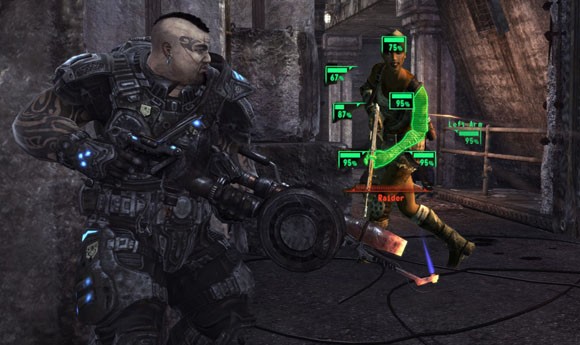
Hey, we do it, too:
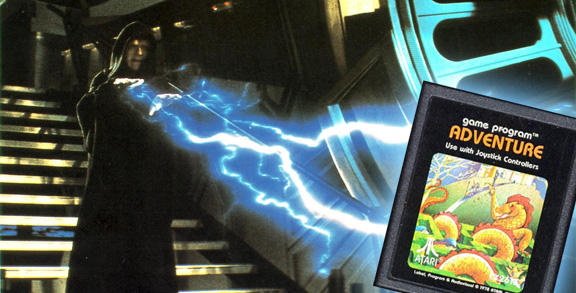
On the other hand: It's still not art, but what more needs to be said about this?

Goes great with 9 out of 10 Internet stories about anything.
8. Metacritic
What better way to negate all the hard work of dozens and dozens of reviewers than by averaging all their scores together into one soulless number?
These aggregator sites were the bane of our existence at EGM. Game companies would complain to whoever had the lowest scores on the list, saying they didn't match up with the average. Of course someone had to be below average! The world wouldn't make any sense if Metacritic (or GameRankings) averaged the scores of all the different outlets...if they all scored exactly the same thing...at that average score.
On the other hand: You're at Best Buy, and because you have a grade-school education, you know never to listen to their sales people's advice. You don't have time to read a 6,000-word IGN review on your iPhone, so what's the quickest way to find out if a game's any good?
Metacritic.
7. Scans
Yeah, yeah...free flow of information and all that, but scanning a magazine's exclusive story and passing it around the Web for people to check out for free directly contributes to that publication's decline or death. We should know.
Magazines need to sell issues to survive, and they're not selling issues when the best parts are freely available online. So think about that the next time you see a request for "scans pls" in your local forums.
Scans of April Fool's jokes getting passed around, however...now that's funny.
On the other hand: All it takes is one individual somewhere, anywhere in the world with a scanner and a Flickr or Photobucket account and boom...that magazine's exclusive is the world's exclusive. It's an unstoppable virus, so magazines shouldn't even try to contain it anymore.
6. The Top 10 list-ification of game writing
Uh...no comment.
5. Crappy Internet writing
Intentional strikethroughs aren't funny anymore.
"Pwn," "FTW," "noob," and all related terms remind people that you haven't grown up yet (even well-respected sites aren't immune).
Emoticons represent not happiness or tears or angelic innocence but lazy writing because the author doesn't know how to convey his thoughts in any legitimate ways.
On the other hand: Internet shorthand is how we all primarily communicate these days, so some of this stuff is bound to leak into our more serious writing now and then. :(
4. Good scores ="exclusive reviews" = good scores
It's no secret that a game company is more willing to let a media outlet publish a review early, before the normally scheduled embargo date, if the review score is high enough to help generate positive buzz. Conflict of interest? You betcha.
These types of conversations go unchecked sometimes, perhaps the most publicized example being ex-IGN editor Doug Perry's handling of a Prey exclusive (Video Game Media Watch has the full story).
On the other hand: All traffic indications point to exclusive reviews being mini gold mines for websites, so legit or tainted (even unintentionally), exclusive-review deals are not going away...ever.
3. No surprise
First-look artwork, first screens, teaser trailer, first-look preview, first hands-on preview, video trailer, more previews, direct-feed footage, more artwork, exclusive reveal of how many fingers a character has, exclusive reveal of a new bullet type, impressions, final preview, the full review...heck, who needs to play the game when we're inundated with all this coverage?
Gamers have very few mysteries to discover now when they bring a game home. We're not talking about a storyline twist in BioShock -- we're talking about the theme, setting, graphics, and wonder of BioShock, period. You've already seen, heard, and read all about it before the game has even hit store shelves.
On the other hand: You want it, you're going to get it. Media outlets are only feeding readers and viewers what they're hungry for. And the companies are happy to provide the access because it helps sell games.
How many of you knew what this big guy was called before you actually touched the game?
2. Unprofessional news reporting
Check out this headline: BioWare Sees a Future of Games Without Combat as the New Shit.
Or this news blurb from a clear nutcase: "Dragon Quest 9 wants to frustrate you. You can reserve your future cursing for Dragon Quest series creator Yuji Horii -- he was recently quoted as saying that the upcoming DS role-playing game will be really hard. That is, if you suck. Luckily, we've been questing dragons for decades now, so it should be a piece of Swedish Princess cake for us. Mmm, delish!"
 Not exactly The New York Times, is it?
And don't get us started on the baseless rumors that catch on fire and flame out just as quickly. We've heard industry people complain plenty of times about how "news" outlets will take the tiniest of non-information and twist and deform it into an artificially juiced-up story that will garner more hits. And sadly, people will believe everything they read.
Most online gaming-editorial sites just don't have the time or the will to do thorough, in-depth reporting. Small staffs, low or non-existent budgets, and the daily churn/race to get up as many stories as possible see to that.
On the other hand: But do readers want a NYT of gaming? For colorless commentary, go read GameSpot. Most other sites inject personality into their stories, objectivity or professionalism be damned. Makes for much more delish reading.
1. People
Passionate and opinionated gamers existed long before the Internet came around, but the cyber tubes let their voices to be heard. Dammit!
Is civilized discussion a dead art form? Here's a not-really-random sampling:
"Game magazines suck. Paying for a bunch of half-assed reviews that have to fit on half a page and a preview of a game (where you can read litterally dozens of the same thing online) is stupid. People finally started to catch on. There are dozens of internet sites that give better game coverage/reviews than EGM. (Also 1UP sucks)" - Team Liquid forums user "Ideas" on the death of EGM
"You fail at life and you are also an immature loser. Really, you got your ass handed, you suck." - NeoGAF forum user "Relix"...although we gotta admit, the guy this is in response to sorta deserved it
"Dear Mr. Nintendo guy...F you for my crappy Wii." - Bitmob user Luis Vega (post deleted)
"i'm pretty sure the guy can handle a fire dildo." - Kotaku user "bableebooblah" on...ah, forget it
On the other hand: There is no other hand. Some people never need to be heard from again, period.