
Separator
Why a universal media standard makes sense for video games
Friday, March 25, 2011
EDITOR'S NOTEfrom James DeRosa

Jason breaks down how a single hardware and software standard could benefit both consumers and console manufacturers. Imagine if you could choose an RCA-produced PlayStation 3 that cost $100, a Sanyo-produced Wii that could play DVDs without modification, or a Samsung-produced Xbox that never red-ringed. Oh, the possibilities!
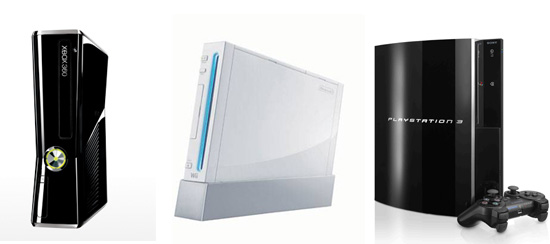
How’s this for a loaded question? Are we headed toward a one-console future? I’d like to think so and always have since I reached an age where I could reason such things out. Think about it: Right now, video games are one of the only media where this type of divide exists. They have no universal standard. You can buy an e-book in proprietary Kindle, Nook, or iBook formats, but ePub is a free, open e-book standard. Music has MPEG 2 Audio Layer III (MP3), and film has MPEG-2 (used for DVDs). All three are channels through which you consume your medium of choice in one, universal form.

Console video games come in all sorts of formats. They are relatively new compared to the other major media. Because of this, I understand that they are constantly evolving and moving toward what they will one day become. But I think that it’s about time we start to look at this topic a bit more logically.

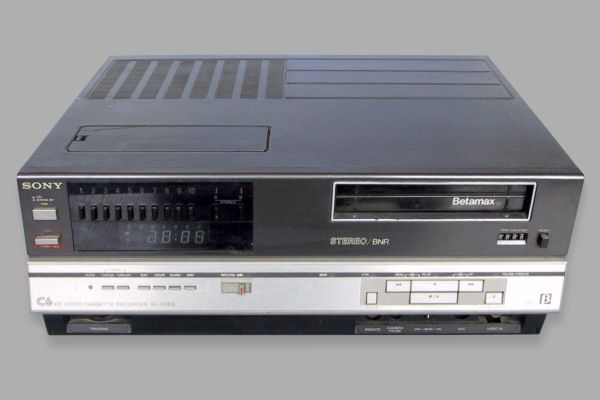
Back when VHS and Betamax were fighting for the industry standard, consumers wanted one thing, whether they knew it or not: Regardless of individual preference, one format needed to die in order for a standard to emerge. Music settled on WAV (for CDs), and something similar is happening with books. (I’m fully aware that this is still an ongoing issue with e-books, but then again, they are newer than video games. In any case, that's not the medium that concerns me.) For a more recent example, look at what happened to Blu-ray and HD DVD. Initially, sales for both were weak because consumers were reticent to support one format over the other. They were afraid that when the smoke cleared, they’d be in the loser’s corner.
 

The point is that these types of choices scare off potential customers. Look at how cable providers fight for our business. Some of them buy channels in order to offer them exclusively on their service. Have consumers benefited from this cable-company war by paying lower prices? That's debatable (probably not), but the fact remains that it's driven many people away. As an analogy, imagine an even more fragmented cable scenario dependent upon the hardware you own. What if a Sony TV only played channels 1 through 50, while a Samsung TV only played channels 51 through 100? Consumers would be outraged. And this is what we accept with our home consoles.

Competition between software and hardware standards has always been a prominent feature of the industry. But does that mean we can’t change it? As an industry we have to evolve. I’ve heard naysayers argue that "one console" would kill competition in the marketplace and lead to higher prices for consumers. I've never understood that. I think that these people assume "one console" means "one console manufacturer." Anybody could produce the "one console," which would have a universal file standard. This would lead to more competitive pricing. Also, software developers would face the same challenges and incentives to improve. Halo competes with Call of Duty, and Uncharted competes with Tomb Raider. It doesn't matter which platform they're on.

As it stands now, many titles are multiplatform, and a good amount of them suffer for it. If we only had one console, The Orange Box wouldn't have burned PlayStation 3 owners, and people with Xbox 360s would have received the best version of Final Fantasy 13 possible.
In a one-console future, the only things to worry about are the accepted file standard, the industry-wide hardware specs, and the quality of the games. Consumers could buy from their favorite manufacturer in the same way I buy Sharp TVs and Hewlett-Packard computers. If Microsoft's hardware has a reputation for red-ringing, you can buy Sony's version. With a universal standard for files and hardware specs, you needn't worry about expensive alternatives or losing out on exclusive titles. And perhaps most importantly, it drops the barrier to entry for someone who is just stepping into the hobby. If we want the industry to continue to grow, we need to find ways other than the Wii to bring in new people.

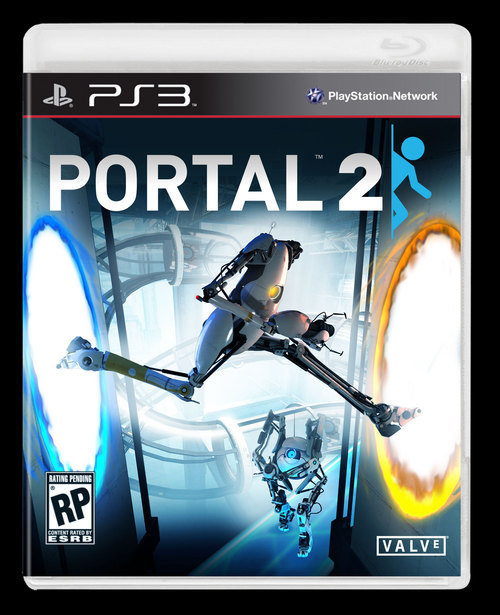
It also makes economical sense: Most companies lose huge amounts of money on their hardware for a very long time. A single console standard would slash research-and-development and console-launch budgets. Companies like Sony, Microsoft, and Valve could push their services and concentrate on making and publishing quality games, which is where the real money is. Development costs would go down as well. Companies wouldn't need to hire a different team to make Portal 2 on the PlayStation 3.

When it's all said and done, I don’t expect this to happen anytime soon. Gaming is in its infancy, but it's worth thinking about the future if we hope to move the medium forward.

 
BITMOB'S SPONSOR
Adsense-placeholder
Comments (8)
Photo3-web
March 24, 2011

Some great food for thought.
The ol' saw "give away the hardware to sell the software" applies here--console manufacturers and retailers will often sell the hardware at a loss (or miniscule profit) and make it back on the software. Many AAA titles are multiplatform (Modern Warfare Series, Mortal Kombat, Mass Effect 2 & 3), so this is win-win for developers.
On the other hand, there's a small number of hi-profile exclusive IPs (Halo series, Uncharted, etc.) that do help drive the sales of their respective systems. I may be alone in this, but I bought a 360 exclusively for Alan Wake. And from the manufacturers' perspective, there's still more money to be had from drawing consumers to their console or buy their version of a AAA title (even if it's identical to competitors'). I see this happening over Nintendo, Sony, and Microsoft's respective dead bodies.
 

Dscn0568_-_copy
March 24, 2011

I think the difference between video games and HD-DVD/ Blu-Ray is that in the latter battle most consumers didn't care about the technical differences of the two and just wanted something they can watch high-def movies with. With game consoles there are controller differences, interface differences, graphics differences, price differences, differences with how online is handled, etc. Even before you get to console exclusives there are a lot of things that can make people go for one or the other. I think a better comparison is between PCs and Macs.    

Robsavillo
March 24, 2011

What you're really asking for here is not a one-console future, but a media/software standard, and I wholeheartedly agree.

Using the music and film analogies: A CD will play in any CD player, no matter who manufactured the player. Similarly, a DVD will play in any DVD player.

But video games are special in that there's no standard media. We have Sony PlayStations that only play PS3 Blu-ray discs, Nintendo Wiis that only play Nintendo's proprietary DVD format, and Microsoft Xboxes that only play Xbox DVDs. What we don't have is a generic video-game console that plays any video game put into it. The PC is probably the closest thing, but it's still primarily a Windows-based OS environment, so that's the software standard.

But I doubt we'll ever get this because the existing walled-garden model allows different manufacturers to shield their hardware from some competition. Imagine if Phillips could make PS3s for half the cost, and thus, undercut Sony's MSRP? That type of hardware competition could drive down prices and be a benefit for consumers in the long term, but could be less profitable for manufacturers in the short term.

March 25, 2011

I do think it's an interesting idea to let companies like Microsoft, and Sony, or even Valve still be able to try and sell us hardware with their interface and their controller, as long as they all have the same amount of buttons. Like this I can still use a 360 controller and someone can still use a DS3 if they wanted. As long as they all play nice together. 

Yes, I guess a standard rather than one console.

Default_picture
March 25, 2011

Interesting ideas, but I have to mostly disagree that this will happen anytime soon, or should.  A movie is a movie, is a movie.  Same for music. Therefore, you are right that consumers just want to be able to enjoy thier media.   However, how many generations of technology have these media gone through in thier entire lifetime?  How many competitors in each generation?  BetaMax vs. VHS.  8-Track vs. Cassette.  Home movies as we know them have had about 3 generations including the BetaMax / VHS days.  Music has had about 3 or 4 (if you count MP3 as a "new" gereration) since vinal.  How many generations have games had in just the last 20 to 30 years?  I count about 6 in such a short span of time. 

The hardware capabilities and consumers' desire for the next best thing is still growing rapidly, and I think it is just far too soon to settle for a standard.  Doing so, I fear, would stiffle the innovation of the industry.  Until we get to holodeck levels of realistic experiences, people are going to be hungry for more and will not settle for one standard of gaming.  We would still be having console wars every 5 years or so.  There would be a tecnology breakthrough and manufaturers would again be releasing proprietary machines trying to get thier format to be the new standard, Just like Sony and Toshiba did with HD.  Remember how many people were pissed when hi-def came along because they had just spent fortunes buying thier DVD collections.  Who knew that so soon we would have a new tecnology that was so much better when we were still being blown away by DVD in many cases.  It was too soon.

This kind of standard would make console gaming like PC gaming.  I may own a PC running windows, but unless I have put a butt-load of money put into my machine, I'm not going to be playing Crysis as it is intended or possibly not at all.  Console gamers do not want this.  It's why the PC market is not as mainstream as consoles, and why a one console future is just that.   Far in the future.

Dcswirlonly_bigger
March 25, 2011

I've been bringing up the idea of a one-format future for a while now, but there are still a lot of questions to be answered for how it would operate.

I agree that in the end, it would definitely be beneficial to developers and consumers because it would likely increase competition, driving down hardware and development costs. If more developers made Xbox hard drives, we wouldn't have to pay $100 for 250GB. Knowing that you only need to buy one machine to enjoy the totality of console gaming would also probably help expand the audience. Lastly, it would end most of the fanboy wars.

Of course, you would need some kind of consortium to get together and agree on the standard hardware architecture, format, and control interface. I think it would end up looking similar to PC gaming but with a closed hardware architecture.

Even PC gaming though is essentially Windows gaming. Similar to this is Android - a single OS that runs on many mobile devices. Perhaps this hypothetical one-console-format would be a unified OS that runs on all the console models.

How would digital content be bought and sold? Would there be one app store, or many stores like Steam, Direct2Drive, and Amazon that would sell digital games directly into your machine?

Lastly, how would this effect PC gaming? If there ever ended up being a single format to console gaming, there would be little stopping PC manufacturers from incorporating the hardware into computers. You'd essentially be able to play any console game on a PC, just like you can play CDs and DVDs on your computer.

Lomberg is right thoguh: the one big obstacle to this kind of future is the fact that the current console manufactueres hold the power now and would have a lot to loose from the change. When exclusive games like Halo and Alan Wake define the Xbox, in reality that doesn't benefit anybody but Microsoft. The ecnomics of the industry would have to break down completely before you could convince Microsoft or Sony to move away from their walled gardens. I can't even imagine the Nintendo of today agreeing to something like this unless they were the ones proposing the hardware standard itself.

Dcswirlonly_bigger
March 25, 2011

@Timothy Curran

I also think one thing that would have to happen for this future to ever occur would be for console generations to slow down. They already are.

I think part of the reason gaming is more insular than movies and music is becasue it upgrades so quickly and stays so expensive. As soon as the PS2 went under $200 and Sony finally started making a profit off of it, we get the Xbox 360 and PS3 - $400 and $600 machines respectively, and the PS2 kept selling. If it weren't for the 360, Sony probably could have held onto the PS2 for another couple years. We got into this console generation too soon, and by the time the economy allows for new machines, the current consoles will probably be almost a decade old. Movie and music formats became mass market because they were given time to reach mass market price.

The Wii has also proven that while the most hardcore gamers always want the latest graphics and tech, the wider audience doesn't. Like the main post said, most people just wnat to enjoy their entertainment. One of the reasons most people probably stay away from games is the same reason people got mad when they had to buy new TVs for high definition.

Default_picture
March 28, 2011

While an interesting read, the chance for this idea has passed. The most opportune time was during the DVD media phase. 

Right before certain companies created their own media formats like Sony with Blu-Ray. Do you think Nintendo or Microsoft want to pay royaly fees to their direct competitor  to use the media/decoding software? I don't think you'll see any next gen hardware from either company running on Blu-Ray media technology. And to reverse the secenario, do you see Sony ditching their Blu-Ray cash cow to start using some generic format?

You must log in to post a comment. Please register if you do not have an account yet.