


Parker takes a look back at contributions made to gaming by titles released last year. Do you have anything to add to his list of significant concepts and features added in 2010?
(This article contains spoilers for Red Dead Redemption.)
Last year was a step forward for video games in hundreds of ways. Whether we forayed a little farther in our understanding of plot or environment or explored concepts like sex, violence, or guilt more fully, 2010 is not a year we should be ashamed of. In January, the Internet was rife with articles announcing games of the year and delineating the packages that satisfied us the most completely over the past 365 days. Although I could probably give you a unique viewpoint in that spectrum, it would probably get lost in the ether. Instead, here are a handful of significant experiences and ideas we touched on last year that are worth taking with us into 2011, 2012, and decades onward.
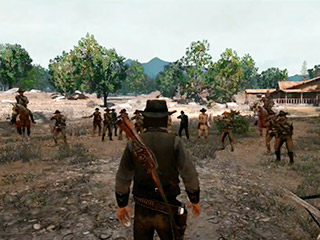
Red Dead Redemption and the fourth act
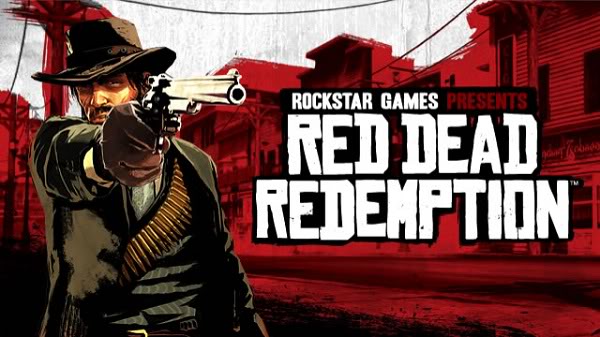
Any one part of Red Dead Redemption does not exude novelty. We’ve seen large open worlds, we’ve played third-person shooters, we’ve played poker, and we’ve definitely gotten sidetracked by needy strangers or random collectibles. It was really only once you took the sum of Red Dead‘s individual parts when it all started to become something more engrossing. The freedom to run around wherever you pleased was nothing new; the tone and holistic atmosphere were.
But Red Dead‘s accomplishments in tying all its elements together were, in the grand scheme of things, only incremental. As with Super Mario 64, Spiderman 2, Grand Theft Auto 4, and virtually every open world game to date, there will more than likely be something in the next couple of years that will make us look back at Red Dead Redemption and realize we’d only scratched the surface of what it means to explore a world.
What Red Dead Redemption gave us in 2010 was an act four: a stopping point beyond the epic boss battle. In Red Dead, as act three ends and John Marston kills his former friend and gang leader, he is released by the government back to his family. What seemed like a natural stopping point for the game was really only the penultimate falling action. The credits did not roll, there was no fade-out, and control was not relinquished to an elongated cutscene. Instead, Red Dead let John hug his family, take them back home, and attend to their modest ranch. The story had ostensibly climaxed and reached its resolution, and yet the game continued. Missions changed from dirty government work to herding cows, shooing crows, and teaching your son how to hunt deer.
This would not be so poignant were it not for the tradition of games to end abruptly. Truthfully, it was uncomfortably unfamiliar, but also one of the most rewarding things to ever be written into code. Act four does not last long and focuses mostly on the more menial tasks of ranching and family life, sort of a slice of daily life akin to Thornton Wilder’s Our Town. The focus is dialed down to the details of Marston’s life, which he, and you, the player, have won. It was an opportunity to wallow in the after effects of everything you’d been working towards. Red Dead Redemption provided not only an end goal, but also the ability to enjoy the reward that accompanied it in a fleeting, peaceful way. It lacked the action of the three acts that preceded it, but as the final few minutes before John Marston was shot to death on his own lawn, it was a satisfying goodbye to one of gaming’s most significant protagonists. Indeed, if Red Dead did anything unique, it was closure.
Heavy Rain and the dilemma of empowerment
Heavy Rain is the most fantastically depressing game I’ve ever played, and I don’t hold that against it. A story about a child’s impending death in which every playable character has the capacity to die is a grim prospect to spend six some-odd hours venturing through. Still, that doesn’t strip a single iota of validity from the experience.
We already knew it was artistically telling to venture through the sad as well as the happy. The real bold assertion of Heavy Rain this year was that gameplay predicated on emotion was as every bit as interesting and valid as gameplay surging with a fire hose of adrenaline. I can think of three instances in Heavy Rain where you can even hold a firearm capable of ending someone’s life, and the input to trigger those firearms has nothing to do with aligning crosshairs or “stopping and popping”: All that’s required to end someone’s life is the single push of a button.
This is the most indicative of everything Heavy Rain is about. Aiming a weapon at someone is incredibly empowering, but Heavy Rain isn’t about empowerment; it’s about the dilemma of empowerment. By removing all the clutter of cover and shot trajectory, Heavy Rain reorients the players focus from the mechanics of killing to the actual act of killing a person and what it might mean.
If Heavy Rain gave us anything to take into the future, it was some morsel of rumination on the act of taking a life. Heavy Rain showed that shifting focus from how well we make a decision to the actual decision making, and all the mechanical intricacies that lead into it, can be as rewarding as the bloodiest of headshots.
Fallout: New Vegas and the human progress narrative
Fallout: New Vegas was an incremental increase in features over Fallout 3. Side by side, they have virtually equal amounts of content and area to explore, and it’s debatable which game is more interesting or successful. In the moment-to-moment experience, the two are extremely similar in almost every facet.
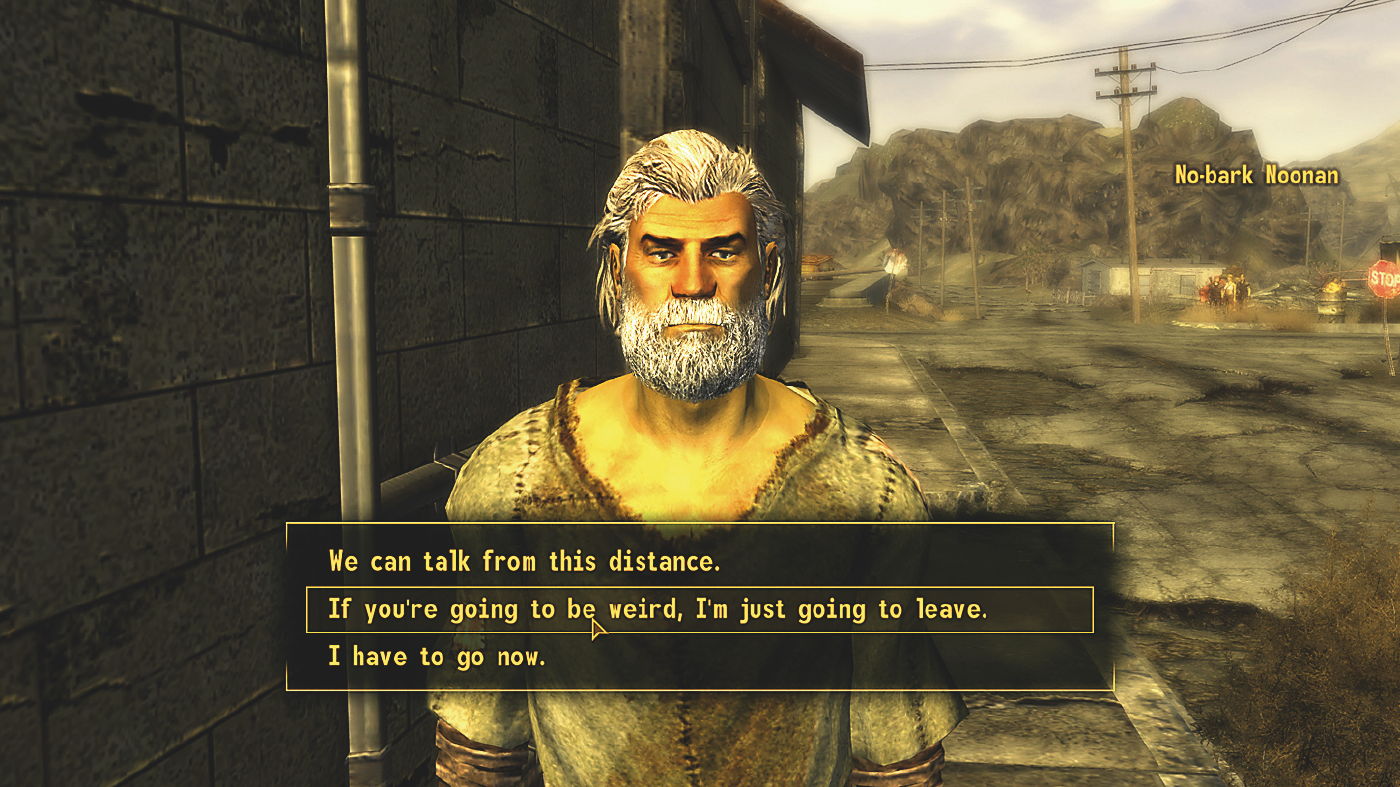
New Vegas differed from Fallout 3 in only one real major area, and that was the structure and purpose of the story. Fallout 3 had us venturing to save the world in a linear story mission with interesting diversions to follow on the sidelines for anyone who yearned for more adventure. New Vegas improved this aspect by creating strands of relationships tied together by one central character: you. The majority of side quests in New Vegas are not standalone bits of interactivity but loose strings of situations you may thread into the larger narrative as you see fit. The system for doing so was not the most elegant nor was it the most polished, but it exists.
Mike Thomsen called New Vegas a “human progress narrative,” and that may be my favorite moniker for its web of relationships. New Vegas indeed gives us a crudely cohesive narrative of human progression, one so huge and empty of anything meaningful but the relationships you forge with the people in it. It’s a game full of disappointments, but perhaps a better way of looking at it is as a vessel for ideas worth developing or a rough sketch for a masterpiece.
Just Cause 2 and the joy of existing
Video games may be the most gratuitous form of entertainment. By virtue of interactivity, games must account for a wide range of player actions. Action is popular, and the easiest way to show action is through violent conflict. Games allow you to kill hundreds upon hundreds of people, mixing up death death animations and complicating violence to elongate your entertainment.
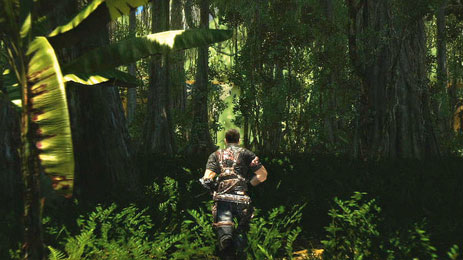
It is refreshing then, to clean your palette amongst all this wanton destruction, especially in games like Just Cause 2, where the emphasis is on chaos itself. Although Just Cause 2 nearly always asks you to be killing people or attaching explosives to big red shiny things, its setting, if you can take the time to notice it, is one of the most expansively awesome (and I mean that in the sense that it inspires awe) places I’ve ever had the pleasure to visit, and the ridiculous traversal mechanics make it a joy to explore.
In between the mass murdering and playground terrorism, Just Cause 2 reinforces the notion, if only for minutes at a time, that an open world should be a joy to inhabit. This is nothing new. It was a joy to run around in Super Mario 64, and it was exhilarating to explore the anthropological dig of Fallout 3. With its inane grapple hook and parachute, Just Cause 2 was one of the easiest games to get lost in this year as you glided through treetops and went skydiving in sunsets just because it was fun.
What did you experience in 2010 that was worth revisiting and taking into the future? What would you like to see looked at more in future games?